The Stopover Strategy - Doha, Qatar
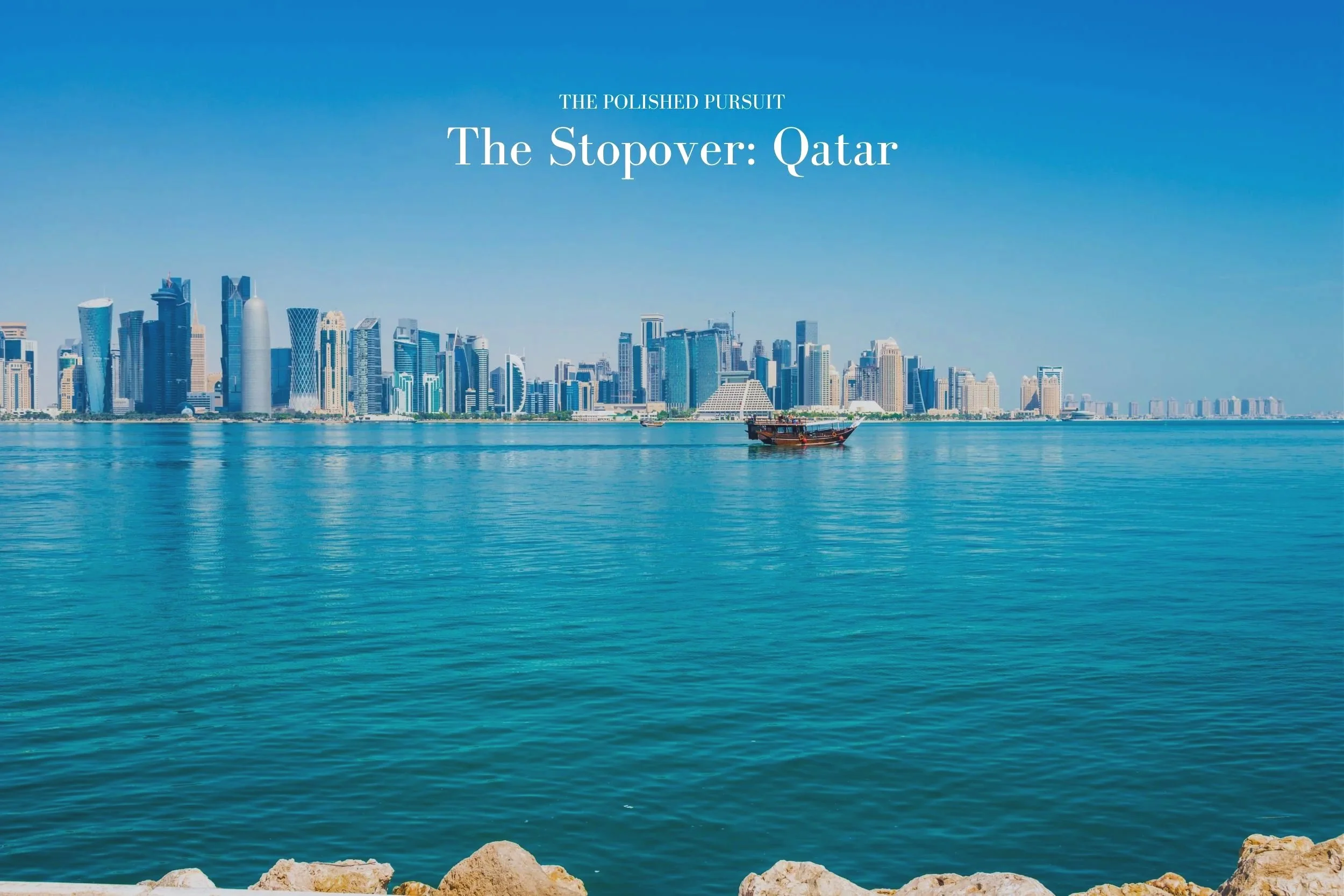
Dispatch: Doha
My husband is no stranger to the Middle East. He has traveled extensively through Syria, Jordan, Israel, Palestine, Saudi Arabia, Kuwait, and Lebanon. But for me, this was uncharted territory.
When we looked at the route from NYC to Almaty in Kazakhstan, the logic of a stopover became undeniable. Qatar Airways offers a dedicated "Stopover Package" (Qatar Airways Holidays) that allows you to turn a grueling layover into a luxury four-day residency for a fraction of the standard cost.
We decided to take it. We were facing a 10-hour time difference and a three-week expedition in Central Asia—including a follow-up leg to Uzbekistan. We needed a place to land, breathe, and adjust.
This is the case for taking the long way.
The Strategy: A "Step-Down" Cure
The hardest part of long-haul travel isn't the flight; it’s the temporal whiplash. By stopping in Doha (which splits the difference at roughly 8 hours ahead of New York), we created a physiological "step-down" period.
We took two full weeks off work for Kazakhstan and Uzbekistan, but we used a week in Qatar prior, essentially as a working holiday. Suffering jet lag in a beach chair, even if you have to work a bit, is preferable to doing so while you try to sightsee and balance meetings.
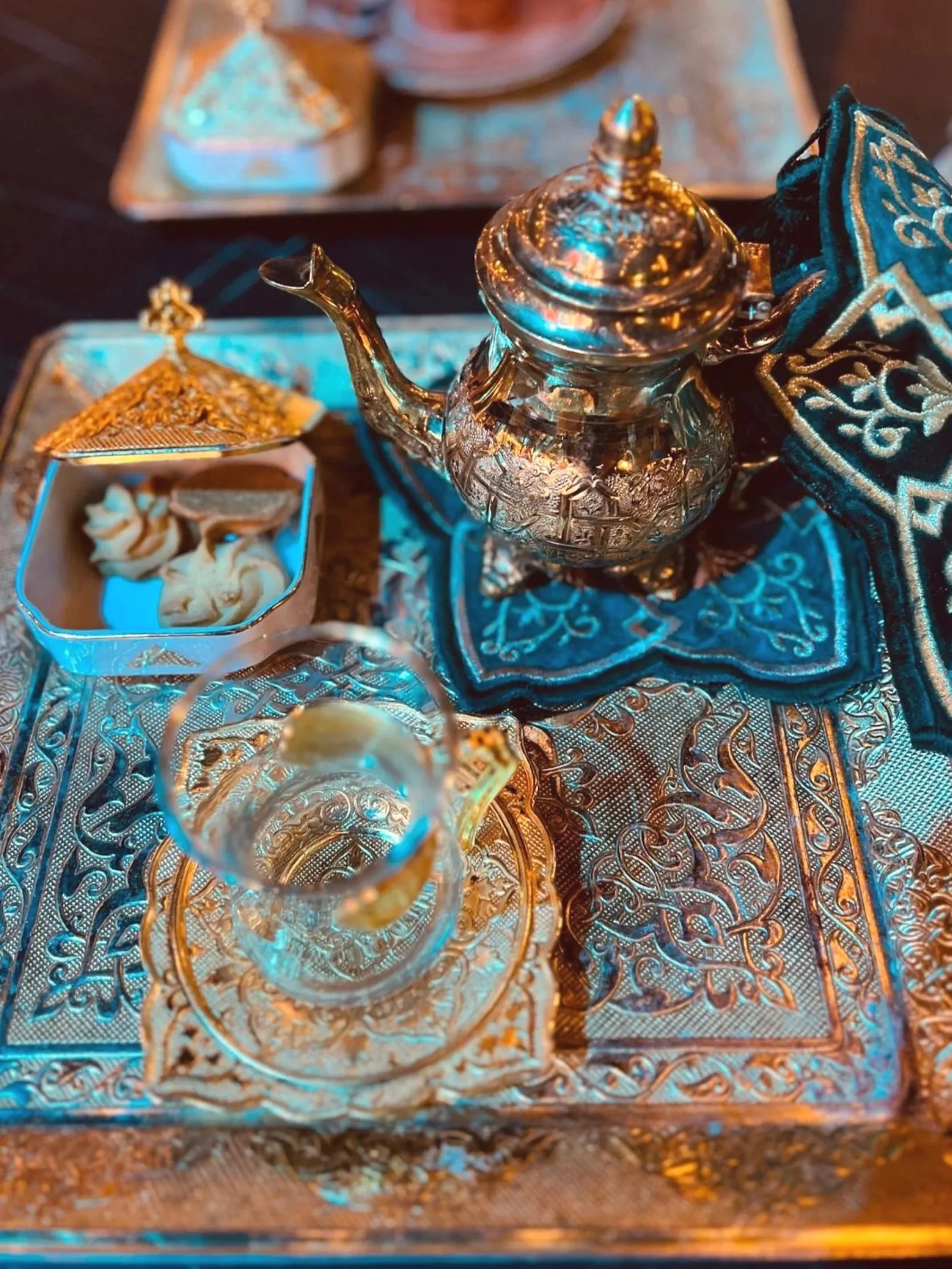
The Context
I was also navigating a physical recovery, and together we were trying to conjure emotional resilience. I had just undergone an egg retrieval procedure and while we traveled, our embryos were undergoing genetic testing. Coming off the hormones I was bloated, tired, and emotionally raw. I didn't need adventure yet; I needed a sanctuary. The Qatar stopover - with its promise of 5-star service and stillness - was the medicine.
The Hospitality: A Double-Edged Sword
We checked into the Grand Hyatt Doha Hotel & Villas. The property was immaculate, and the staff displayed that specific brand of Arab hospitality that is legendary for a reason: it is anticipatory, generous, and deeply proud.
The daily breakfast spread was spectacular—bright fresh fruits, yogurts, and flavors rarely seen in the West. They assigned us a dedicated server to navigate my severe gluten intolerance, a gesture of care that felt incredibly reassuring.
Gluten-Free in Doha
But hospitality can sometimes outpace understanding.
There is a specific "blank stare" I have learned to recognize when I say "Gluten-Free." You start the explanation hierarchy:
"No bread." (Nod of understanding).
"No pasta." (Nod).
"No wheat." (Blank stare - wheat is often viewed as a concept, not an ingredient).
"No flour." (Eyebrow raise).
They insist they understand, but the understanding often stops at bread. The concept of flour used as a binder in sauces or spice mixes is lost. They mean well - deeply well - but the education simply isn't always there.
On our first night we dined in our hotel. I ordered a rice noodle dish with fish, after a confident conversation with the server. He assured me they took allergies seriously and repeatedly insisted “Gluten” with a heavy nod and wide smile. They could make the dish without breading the fish. When the food arrived, the texture of my first bite of fish was suspicious. I asked. He checked. The chef had "forgotten."
In those moments, my anxiety is visceral. My symptoms typically hit 6 hours after ingestion and last for three agonizing days. I didn't get angry - I just retreated to the room. The hotel’s response was immediate and overwhelming. They called an ambulance (unnecessary, but well-meaning), apologized profusely, and later tried to deliver a massive fruit platter and a suite upgrade. We declined - I just wanted to sleep - but the intent was undeniable.
Lessons for eating Gluten-Free in Doha
Stick to whole cuts of meat and simple dishes. And do your research - a simple Google search will tell you if a local dish is commonly made with hidden gluten ingredients or not.
It wasn't until our last night in Doha that I solved the mystery of my symptoms. It wasn't cross-contamination. In this region, minced lamb is often mixed with spices and flour as a binder.
Traveler’s Note: While international hotels are generally safer than local spots, they aren't immune to these cultural culinary habits. In my personal experience I try to avoid hotel restaurants anyway as I don’t feel I experience the culture as fully. But I always eat at my own risk.
The City: Spectacular Silence
Doha is a city of stunning contradictions. It is a place of immense wealth where entire skylines seem to rise overnight, yet often, the stores and streets are quiet. It isn't eerie in a negative sense; it is simply a different rhythm. Stores are fully lit but devoid of shoppers; people seem to gather only for specific family outings.
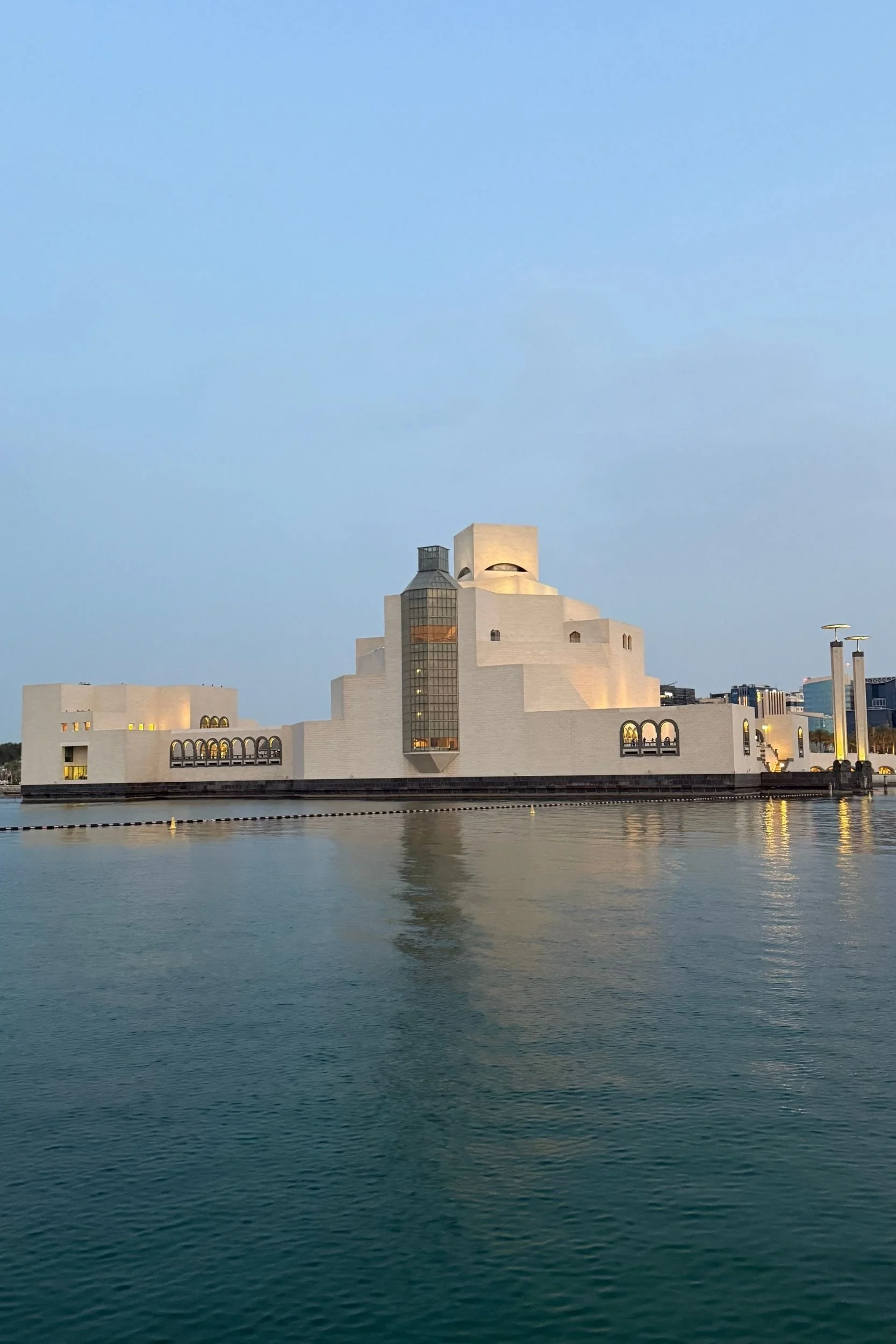
The Sunset Dhow Cruise
To see the skyline properly, we booked a sunset cruise on a traditional wooden Dhow boat via Get Your Guide. There were about 20 strangers on board, yet the atmosphere was defined by a shared, respectful quiet. As we drifted through the harbor, watching the city glow against the water, one landmark dominated the view: the Aspire Tower (The Torch). It’s a massive structure shaped like a colossal torch, originally built to hold the symbolic flame for the 2006 Asian Games. While it later served as a stunning backdrop for the 2022 World Cup, it stands primarily as the legacy of Qatar’s first major leap onto the international sporting stage. We highly recommend the boat ride to see the beautiful city and monuments from the water.
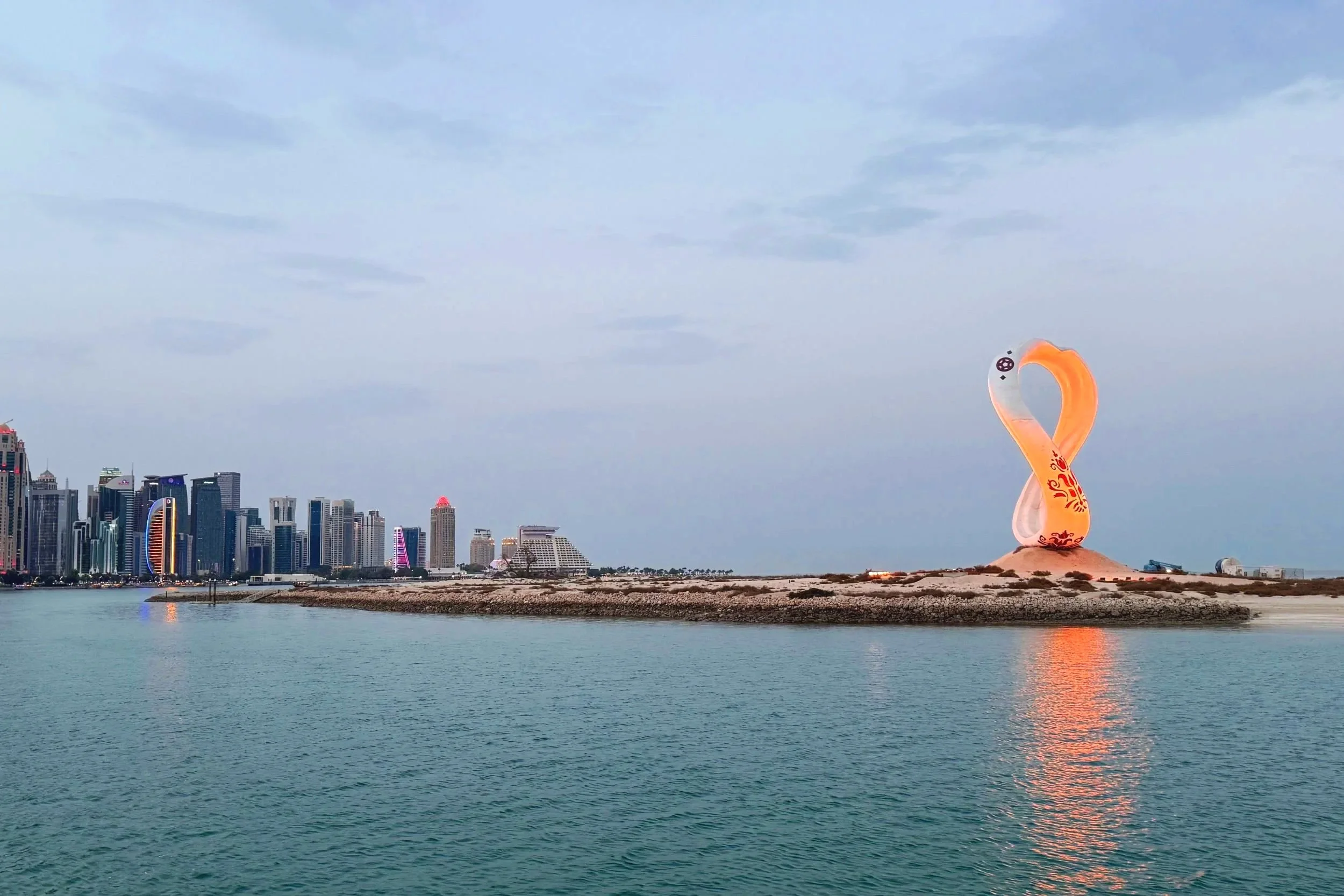
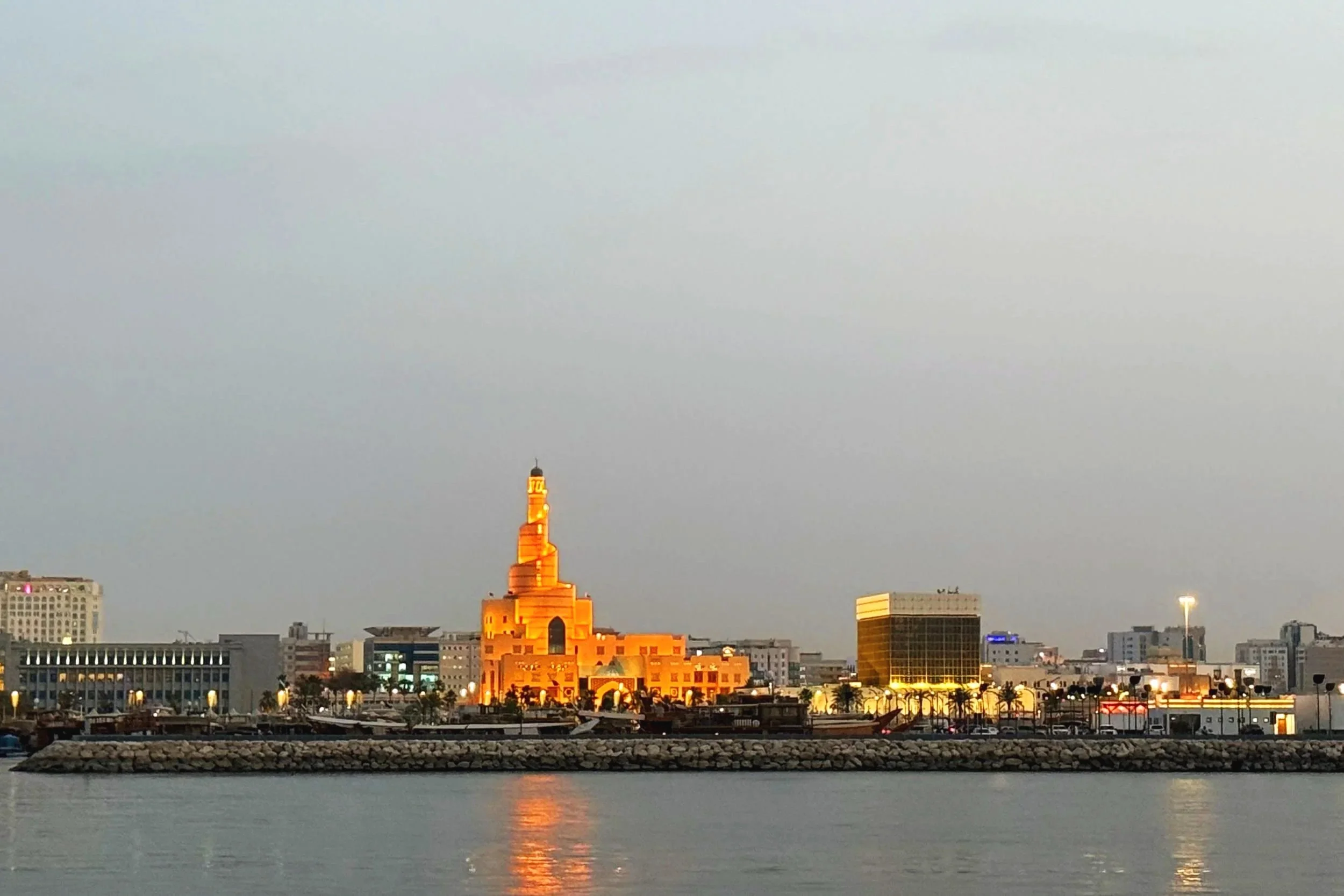
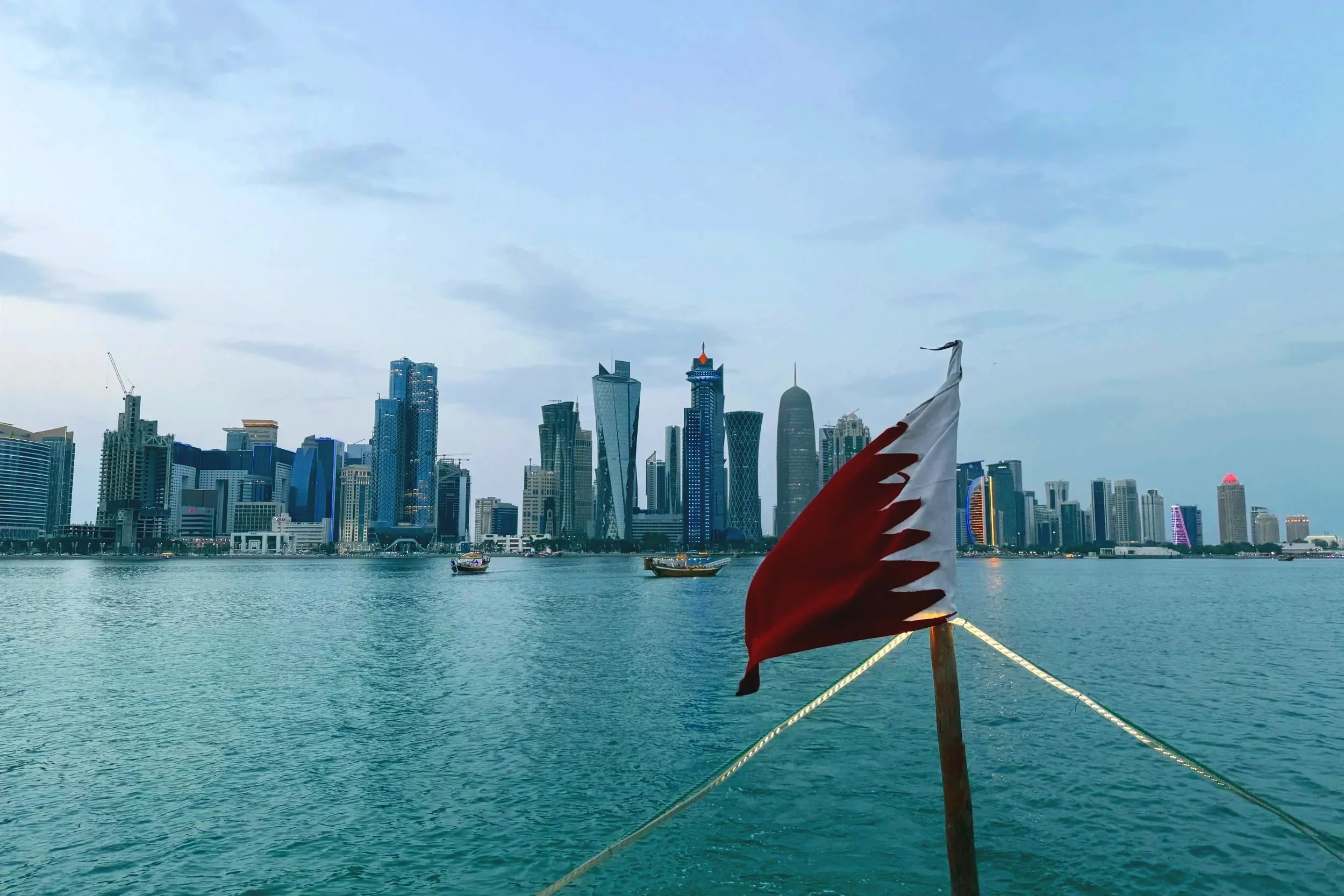
The Pearl-Qatar
We spent our evenings exploring The Pearl, a massive artificial island reclaimed from the sea and designed to resemble a string of pearls. It is a feat of engineering that feels like a city unto itself. One night, we walked back from dinner through its pristine, wealthy neighborhoods. The houses were gated fortresses. Through the iron bars,we could see driveways filled with five or six luxury cars—but never a single person. It felt like walking through a movie set after the actors had gone home. But despite the emptiness and the dark, we felt completely safe.
The Crystal Walk (Gewan Island)
This was the most impressive expression of wealth we witnessed. We took a taxi to Gewan Island, stepping out of the car into the 90-degree heat. One step later, we were freezing. The "Crystal Walk" is an outdoor, air-conditioned promenade. Cold air blasts from hidden vents, cooling a floor inlaid with Swarovski crystal tiles. Locals sipped tea at cafés and nannies watched children in play areas, but the luxury boutiques were largely empty. We looked up the real estate prices for the apartments above the mall - millions of dollars - yet not a single unit appeared occupied. The air conditioning was so strong; were freezing and forgot to take pictures.
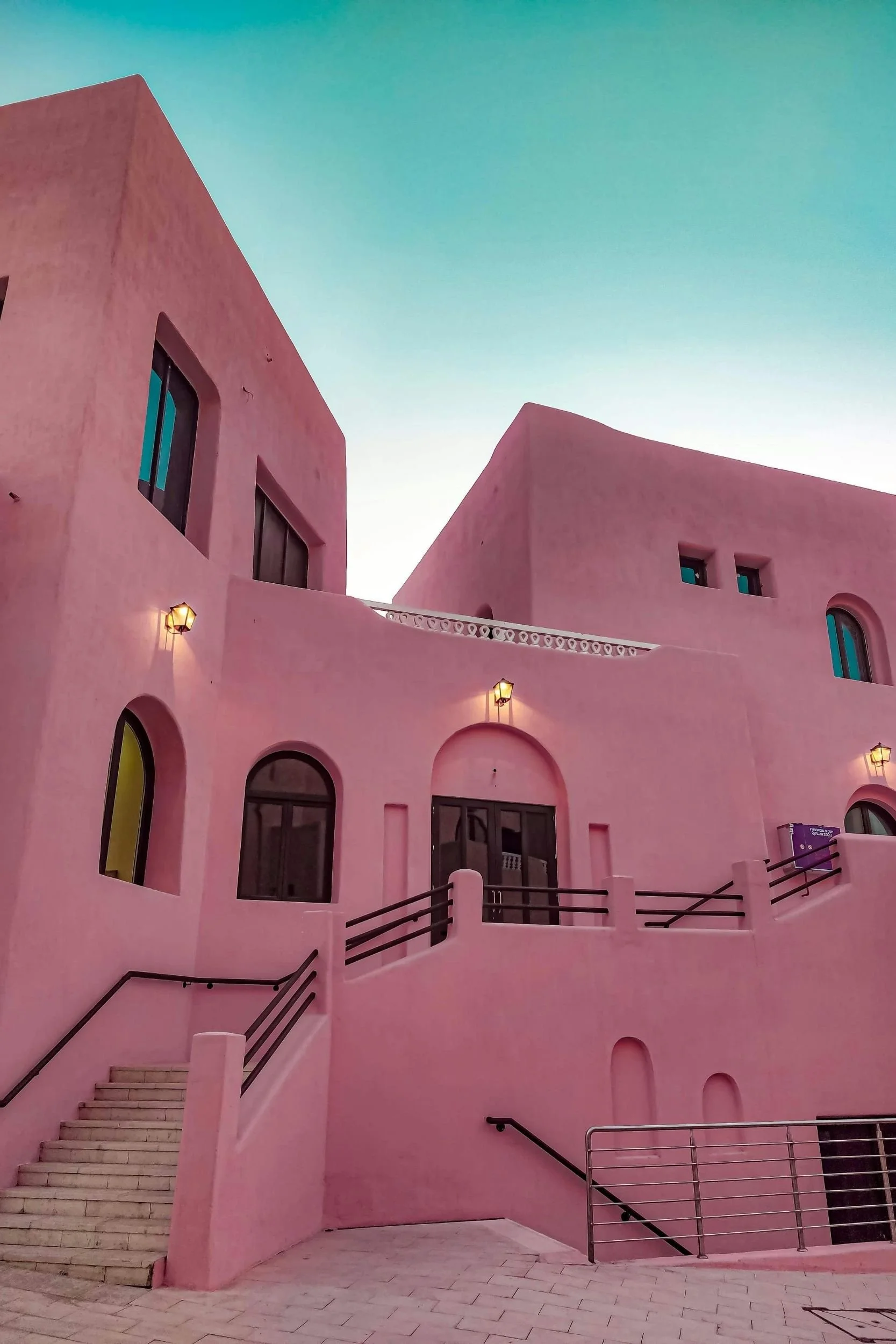
The Mina District
This area feels like a fever dream of Santorini; super colorful buildings painted in pastels in a neighborhood on the oceanfront. We visited the fish market there, an incredible glass structure sitting in the blazing sun. Inside, it was refrigerated to a chill, keeping the catch fresh. The contrast between the furnace outside and the "fridge" inside was jarring—beautiful fish on display in a glass box, with no demand in sight.
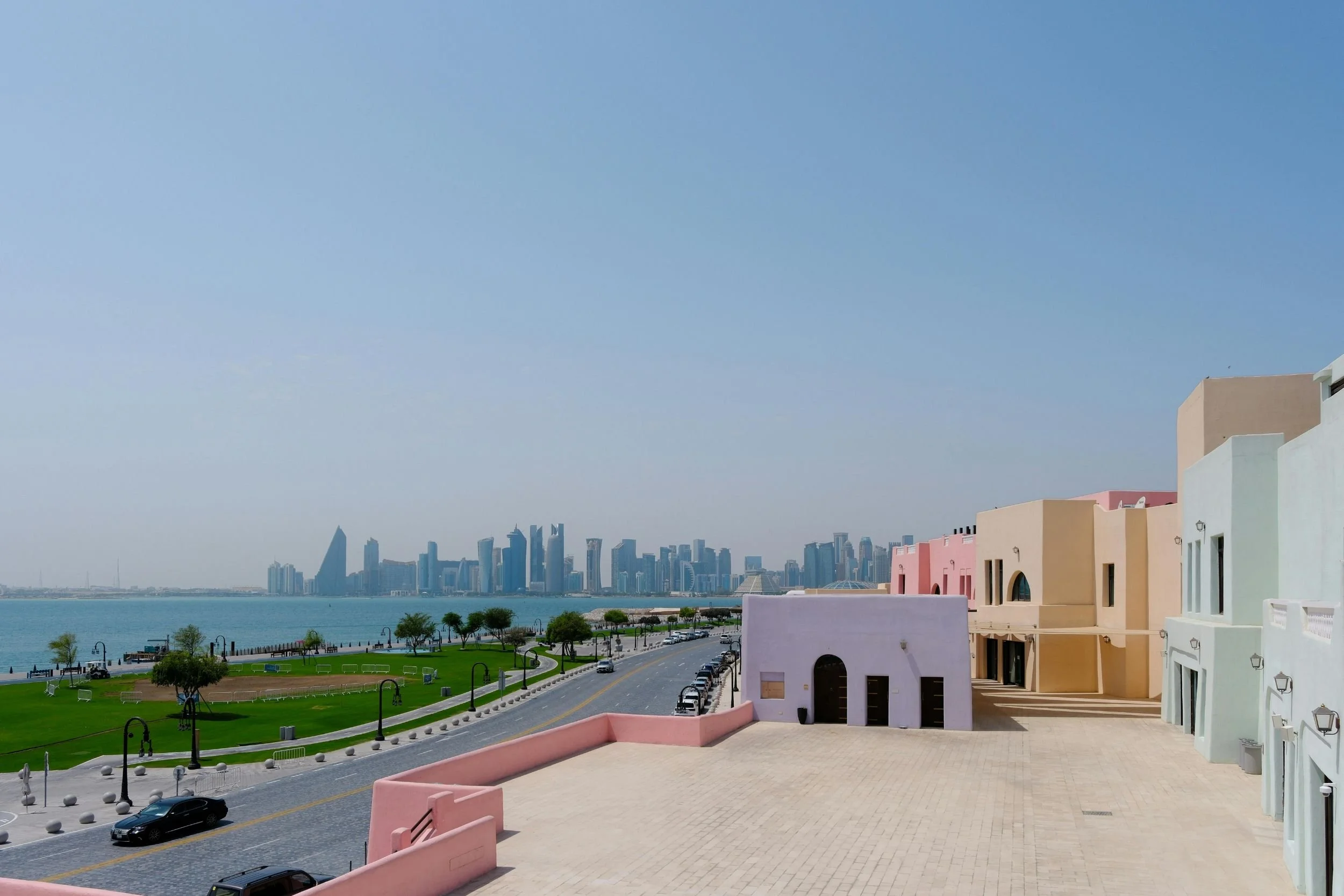
Yasmine Palace Restaurant
For dinner, we went to Yasmine Palace, located at the far tip of The Pearl. This felt genuine. The patio was full of locals smoking hookah, the ocean breeze was warm, and the food was excellent. While the gluten-free request still required the usual explaining and double-checking, there were plenty of safe options. It was a lively, authentic breath of fresh air.
Culture in Glass Boxes: Katara & Education City
Katara Cultural Village
This area functions like a high-end outdoor mall for culture, mixing modern glass structures with traditional adobe-style architecture.
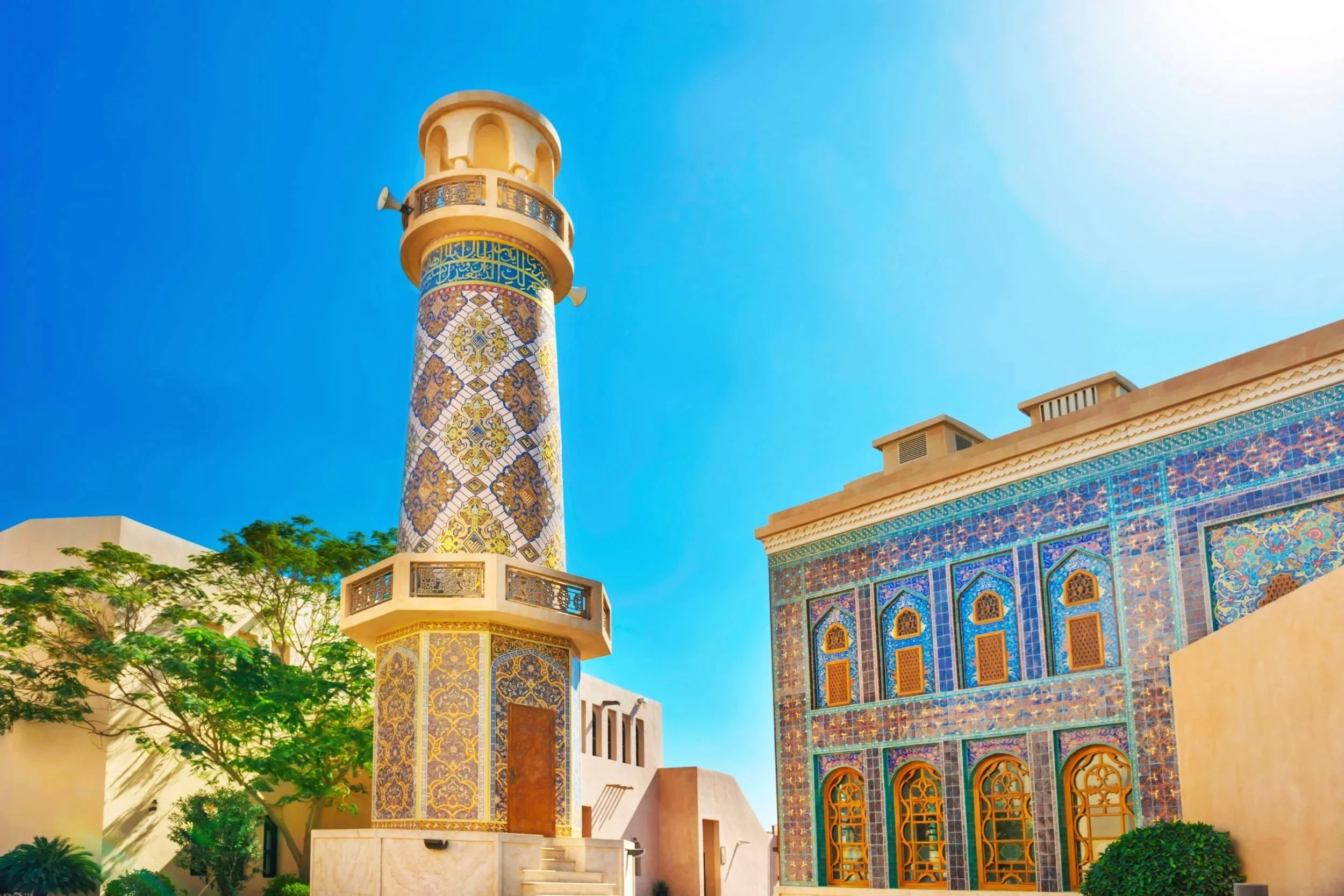
The Blue Mosque (Katara Mosque): We were the only visitors, which allowed a knowledgeable guide to give us a private tour. She confirmed my immediate suspicion: this building is a direct nod to the Ottoman masterpieces of Istanbul. It was designed by the world-renowned Turkish architect Zeynep Fadillioglu (the first woman to design a mosque in modern Turkey). The intricate turquoise and purple tile work was actually created by restoration specialists from the Dolmabahçe Palace in Istanbul. If it reminds you of the Hagia Sophia, that is by design - it has the same architectural DNA.
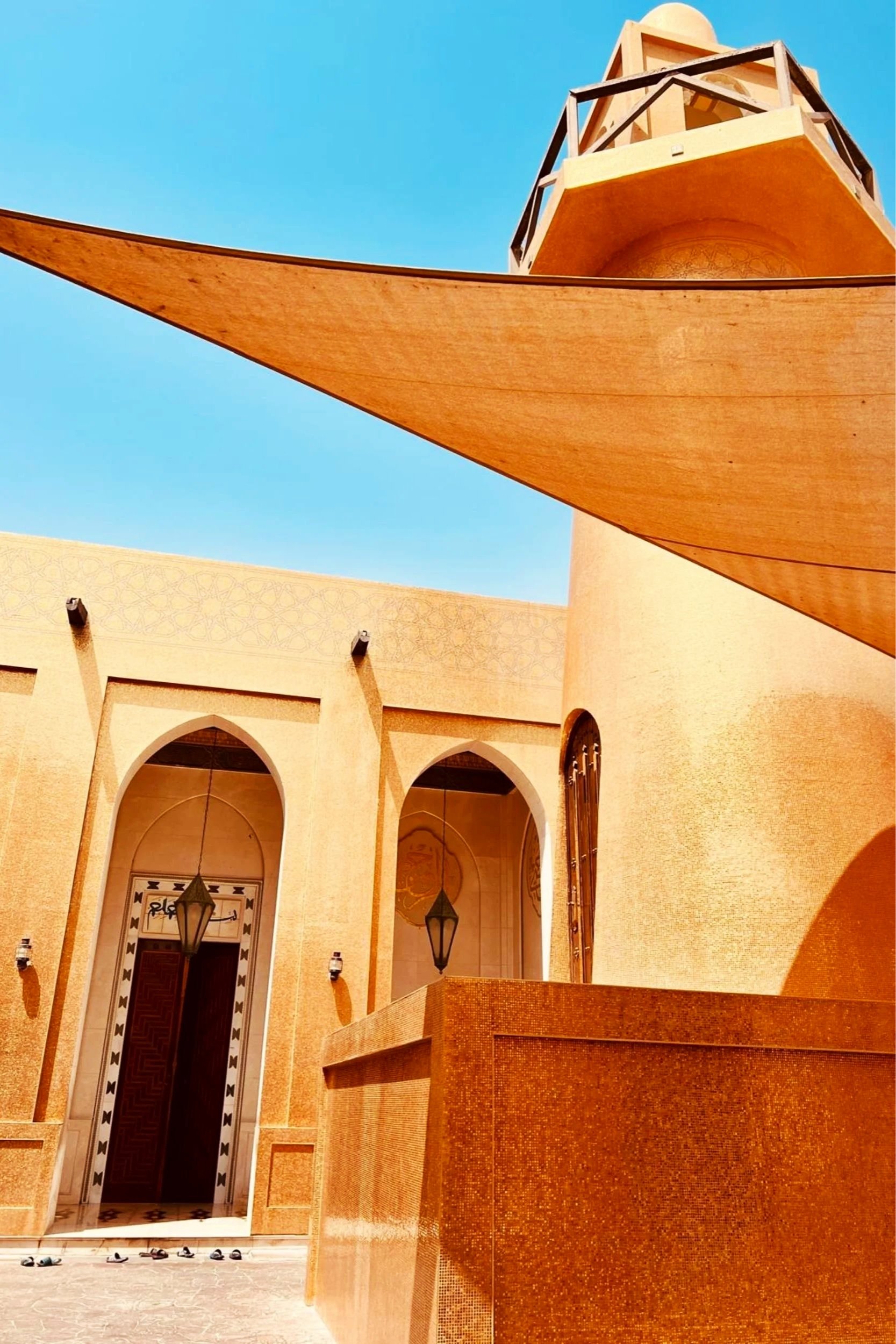
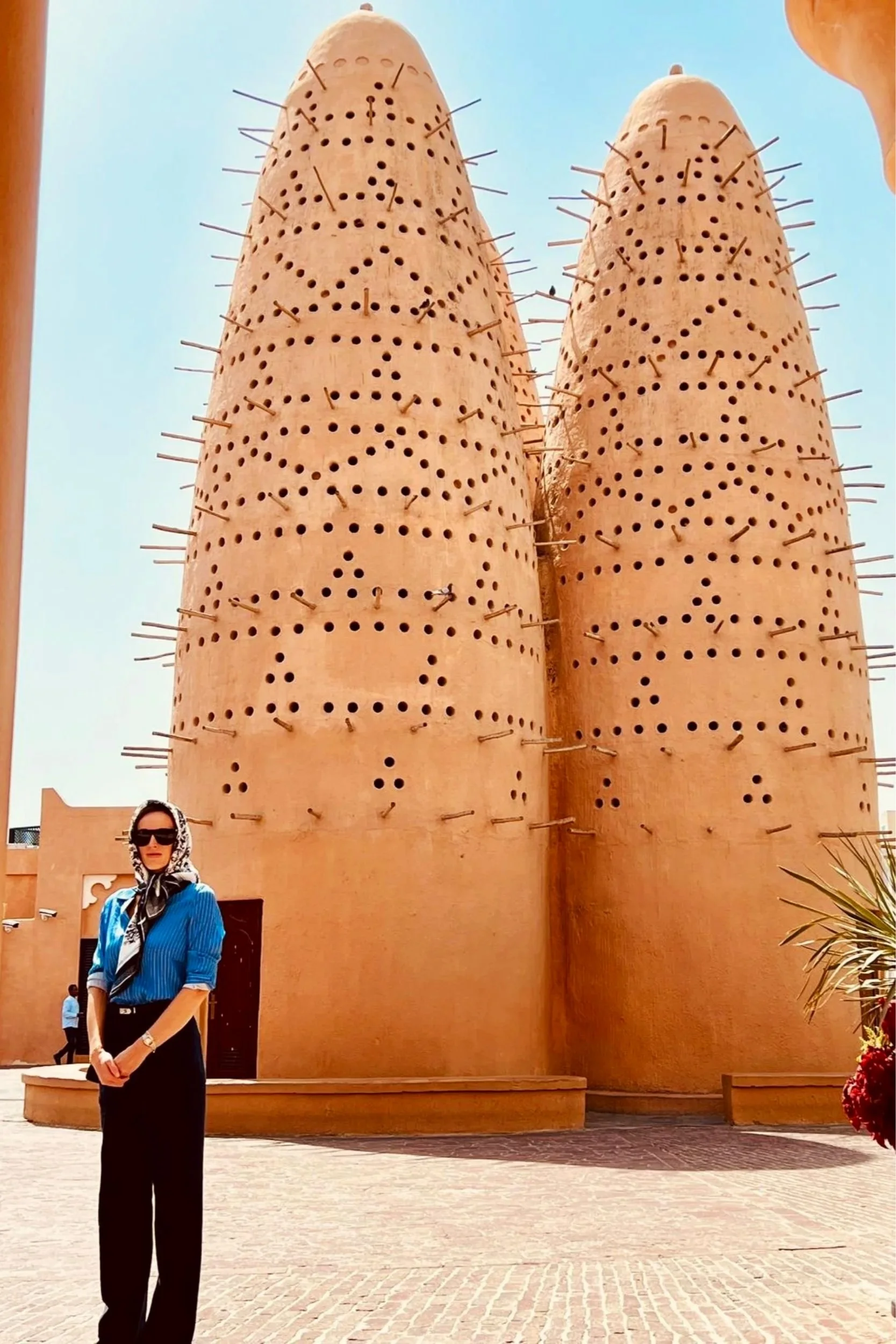
The Golden Mosque: A smaller, ottoman-style structure covered in thousands of golden chips that shimmer in the sun. (1st photo, above)
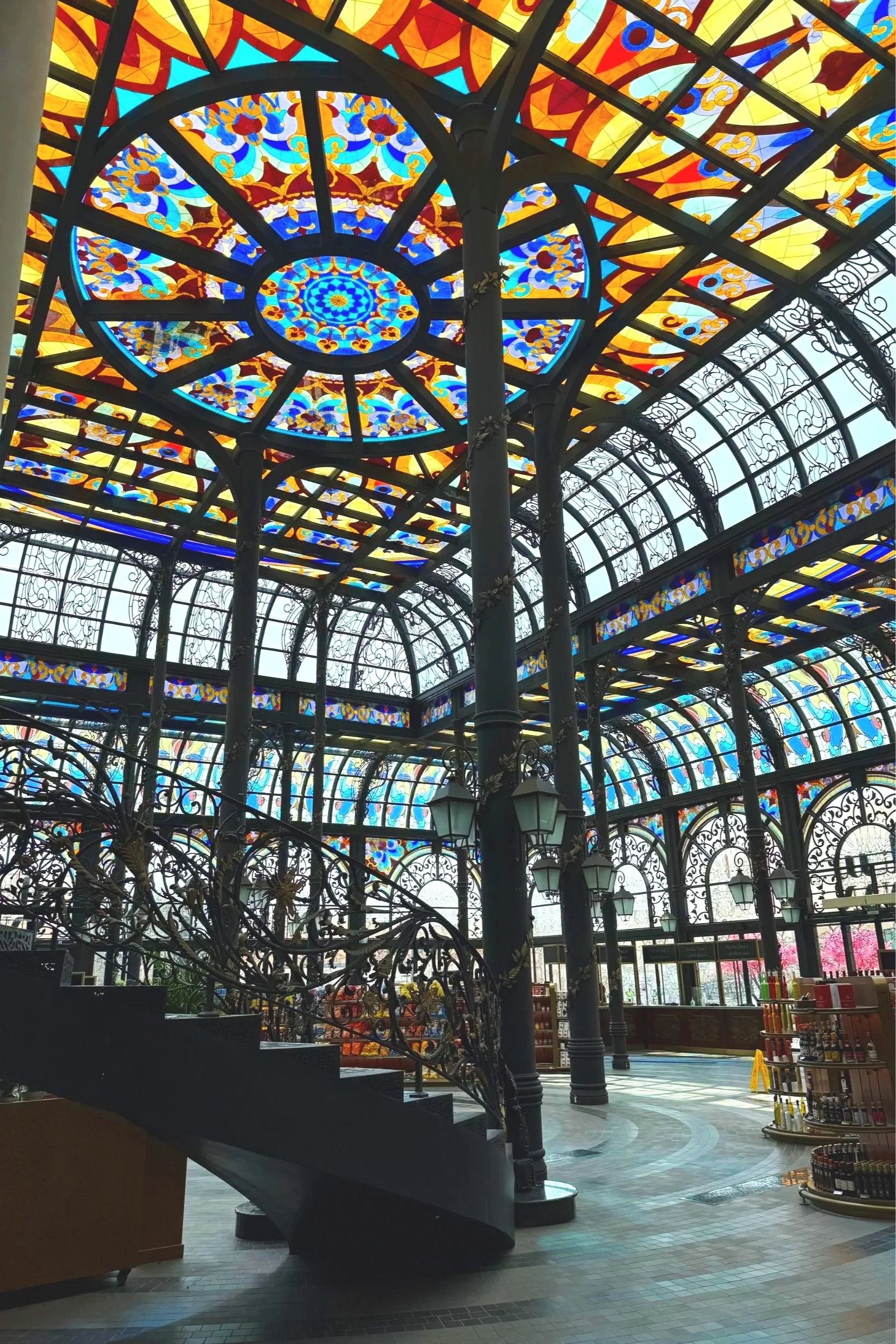
SNAN Food Hall: Picture Harrods, but inside a stained-glass cathedral in the middle of the desert. It is a beautiful glass box filled with gourmet foods from around the world. (3rd photo, above)
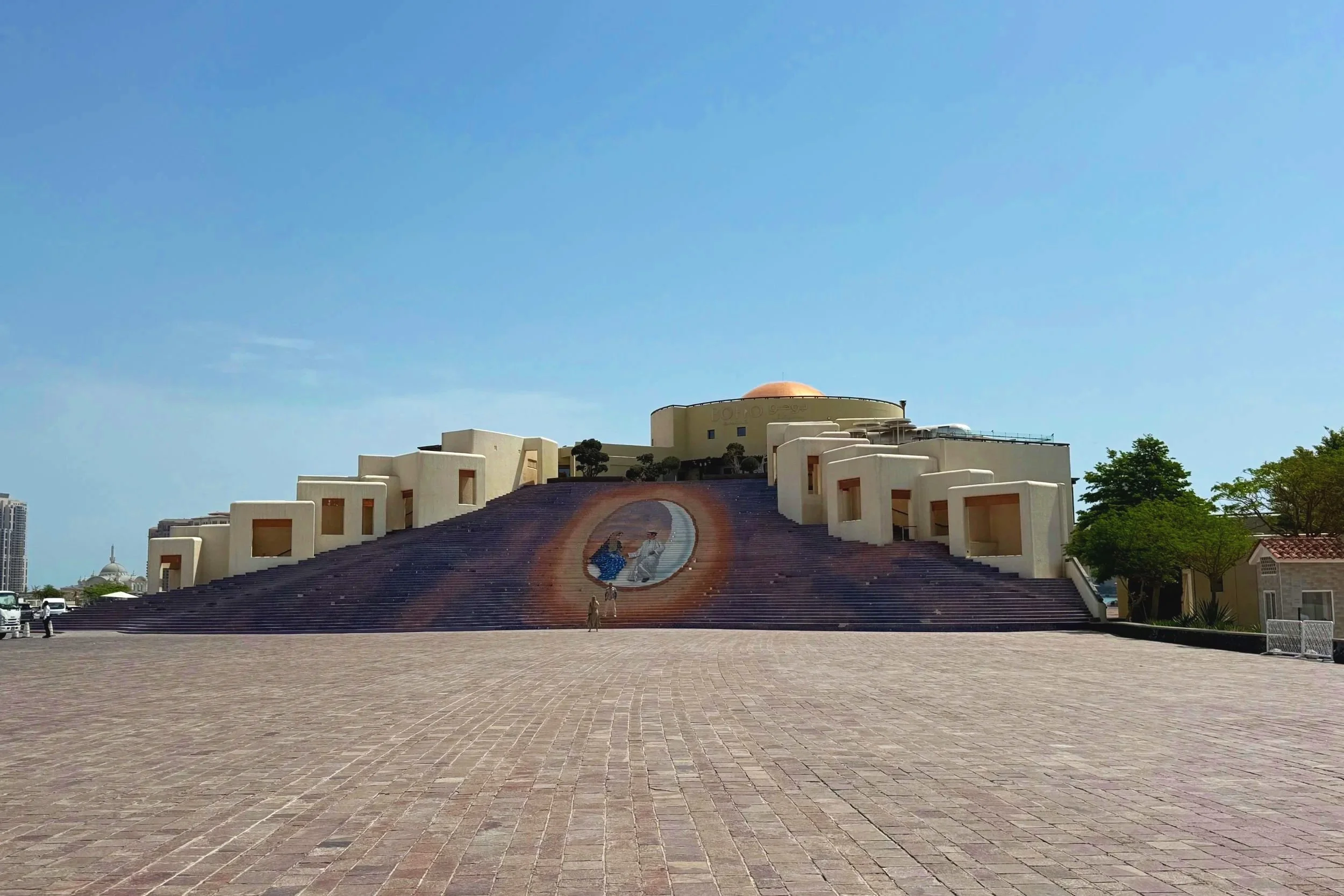
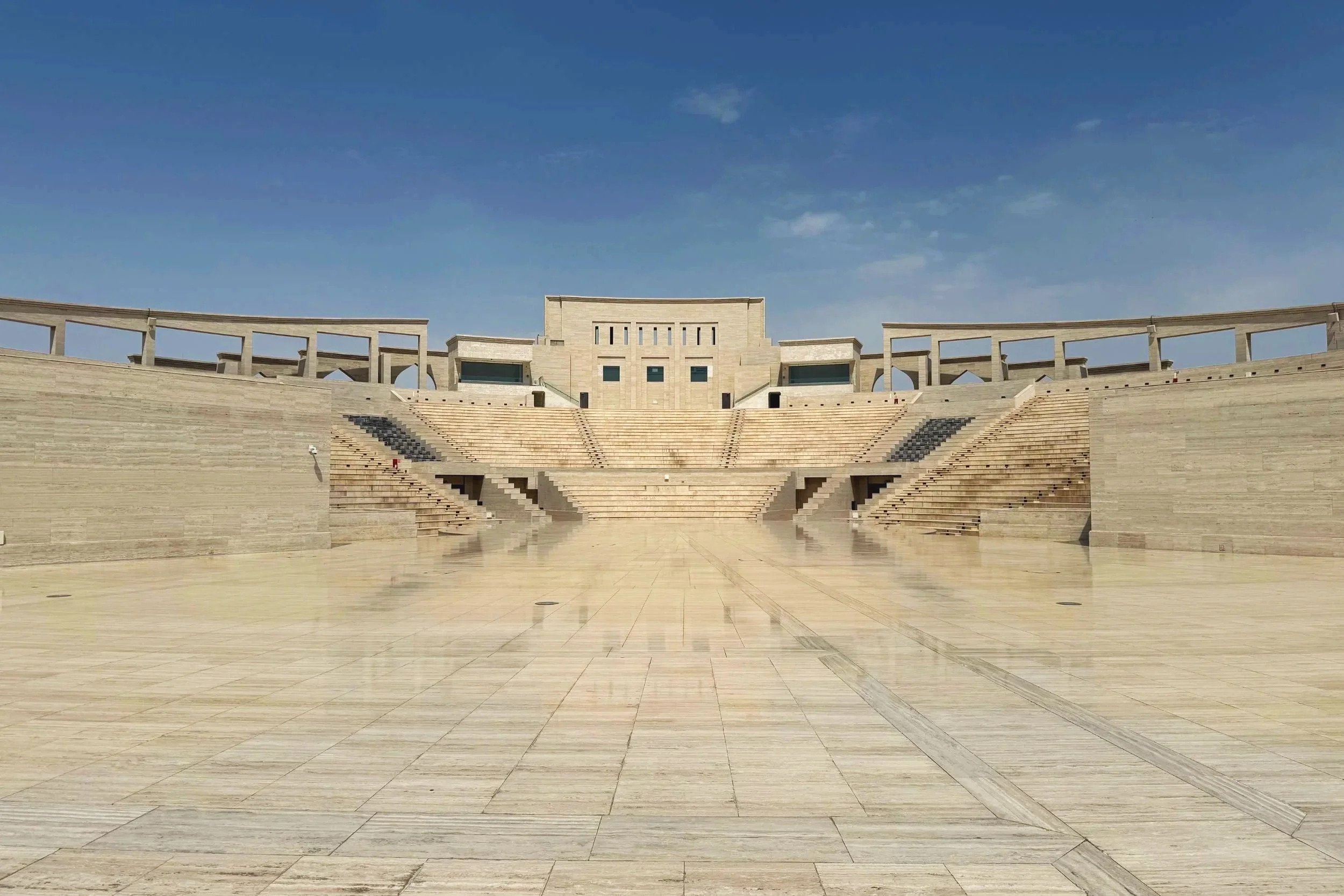
The Amphitheatre: An impressive stone structure that blends classical Greek design with Islamic arches, standing silent and empty against the sea.
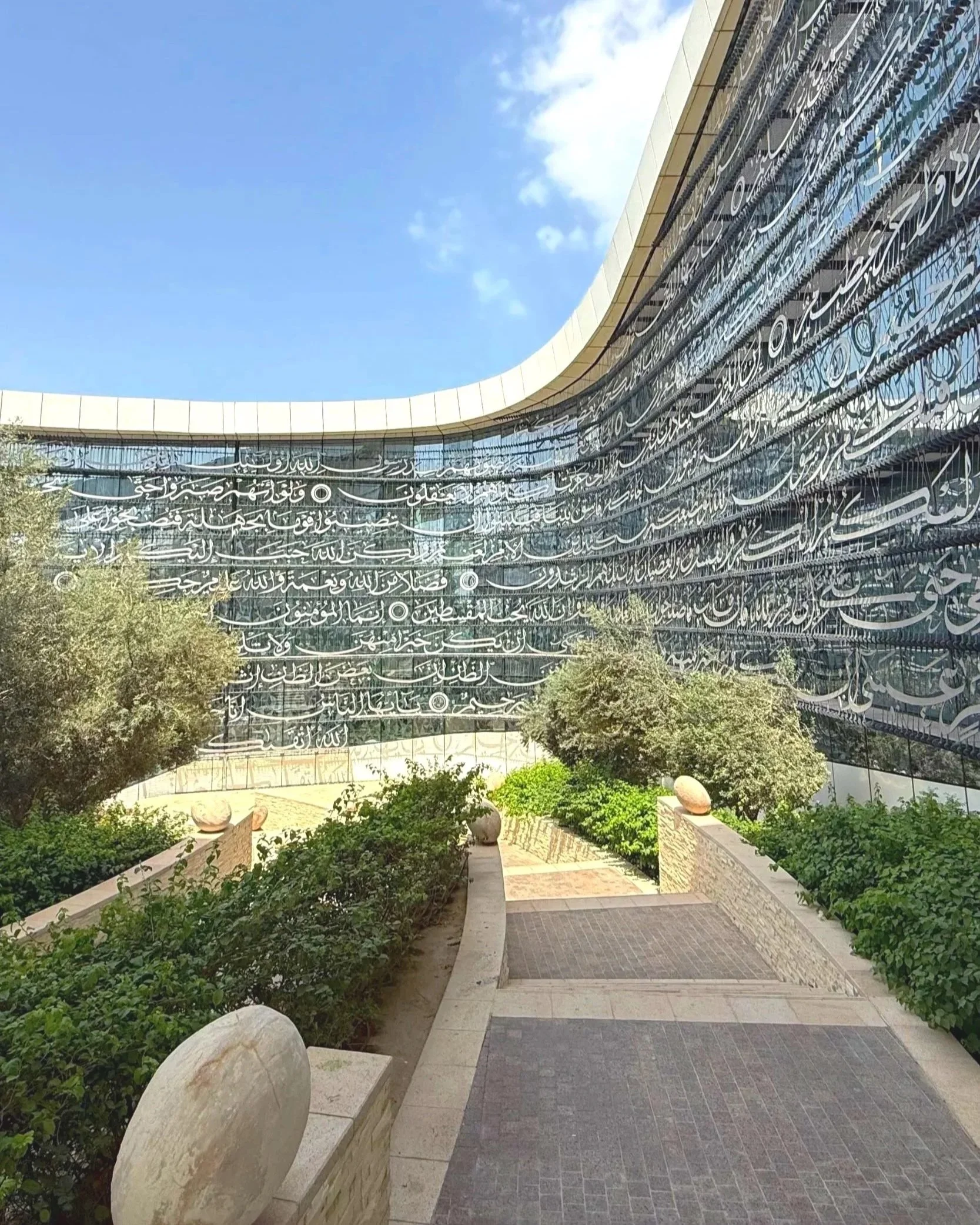
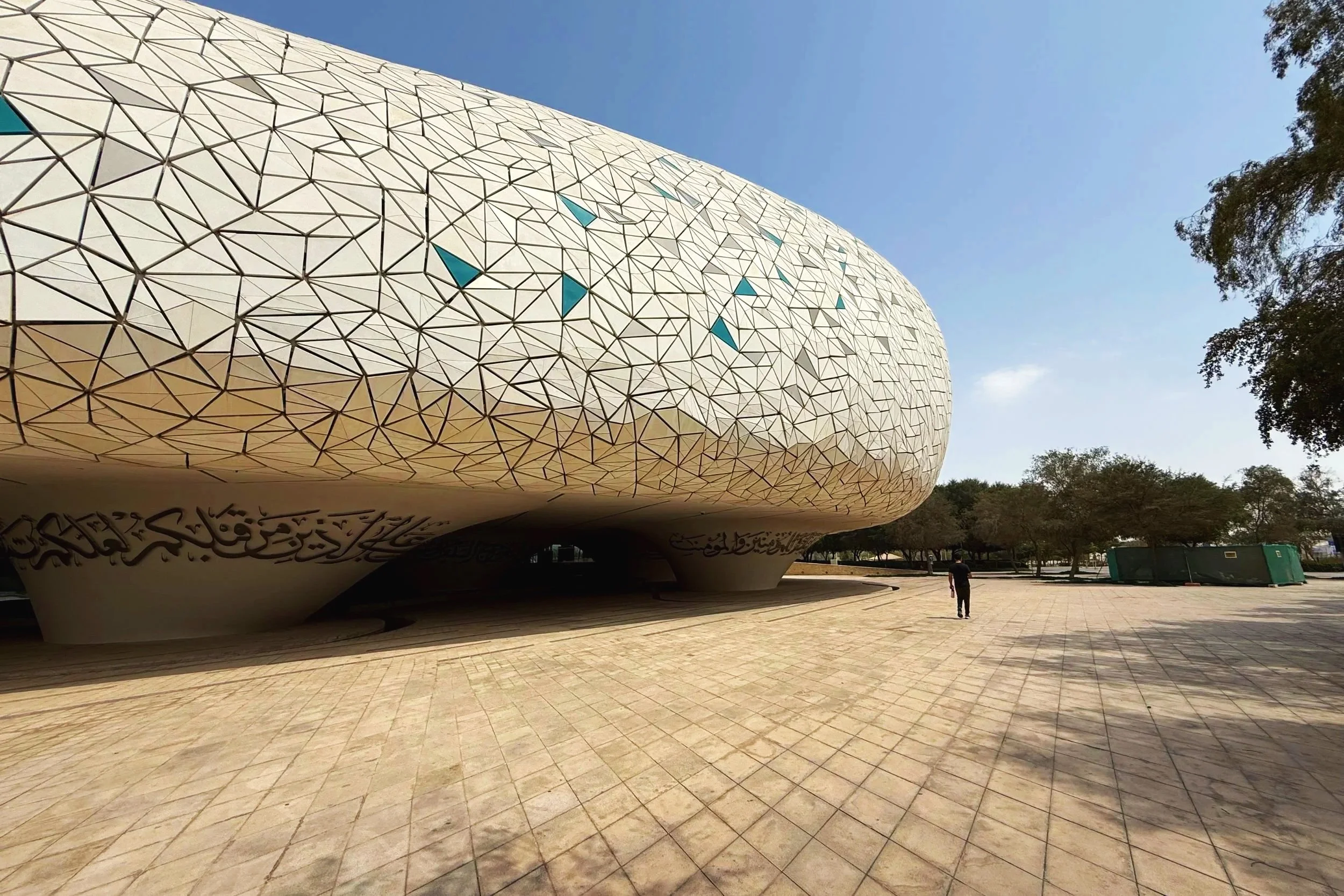
Education City Mosque
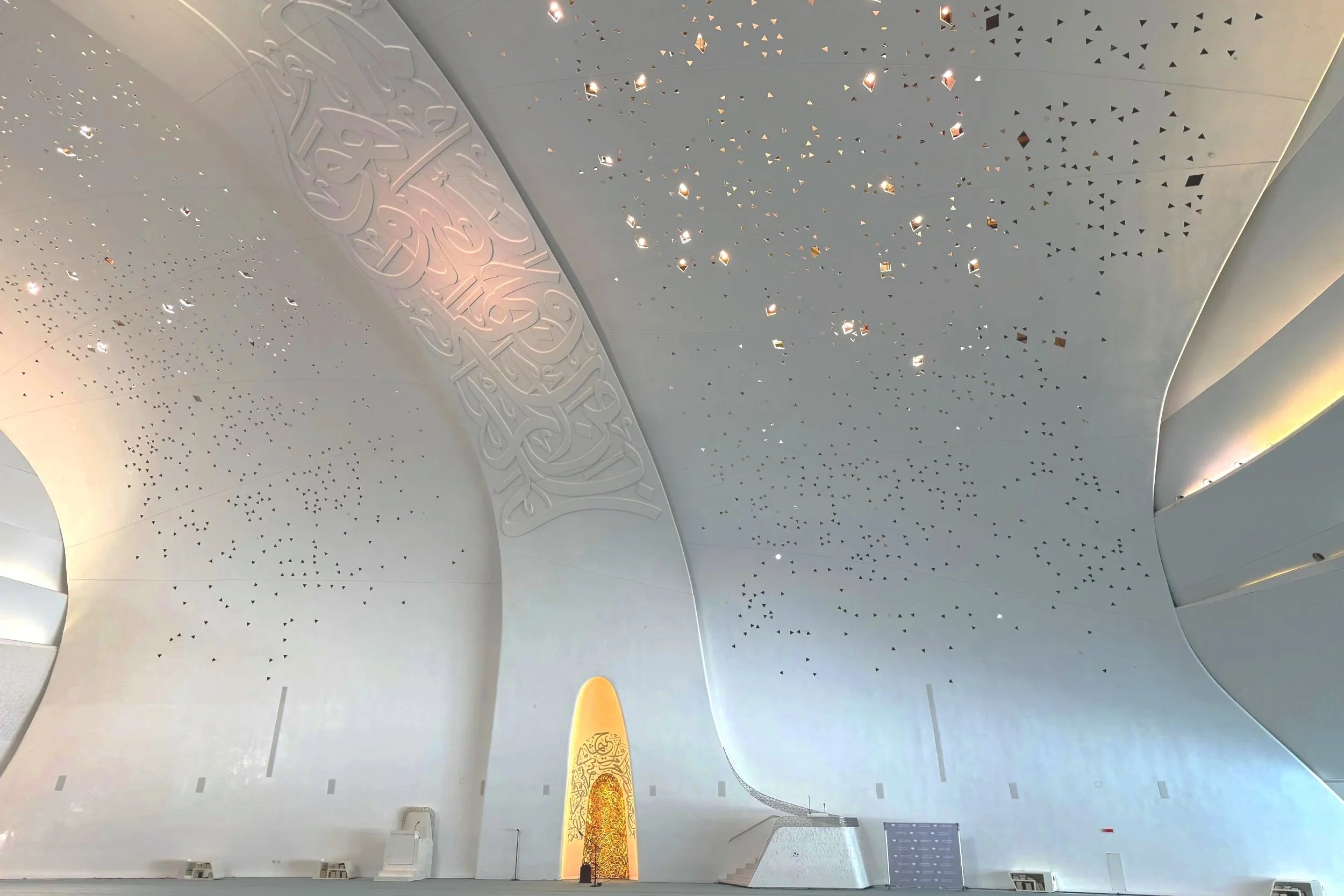
Finally, we visited the Education City Mosque (Minaretein). It is a massive white structure resting on five columns representing the five pillars of Islam. Inside, the lighting details are designed to look like twinkling stars, guiding the eye upward in a contemplation of faith.
Souq Waqif
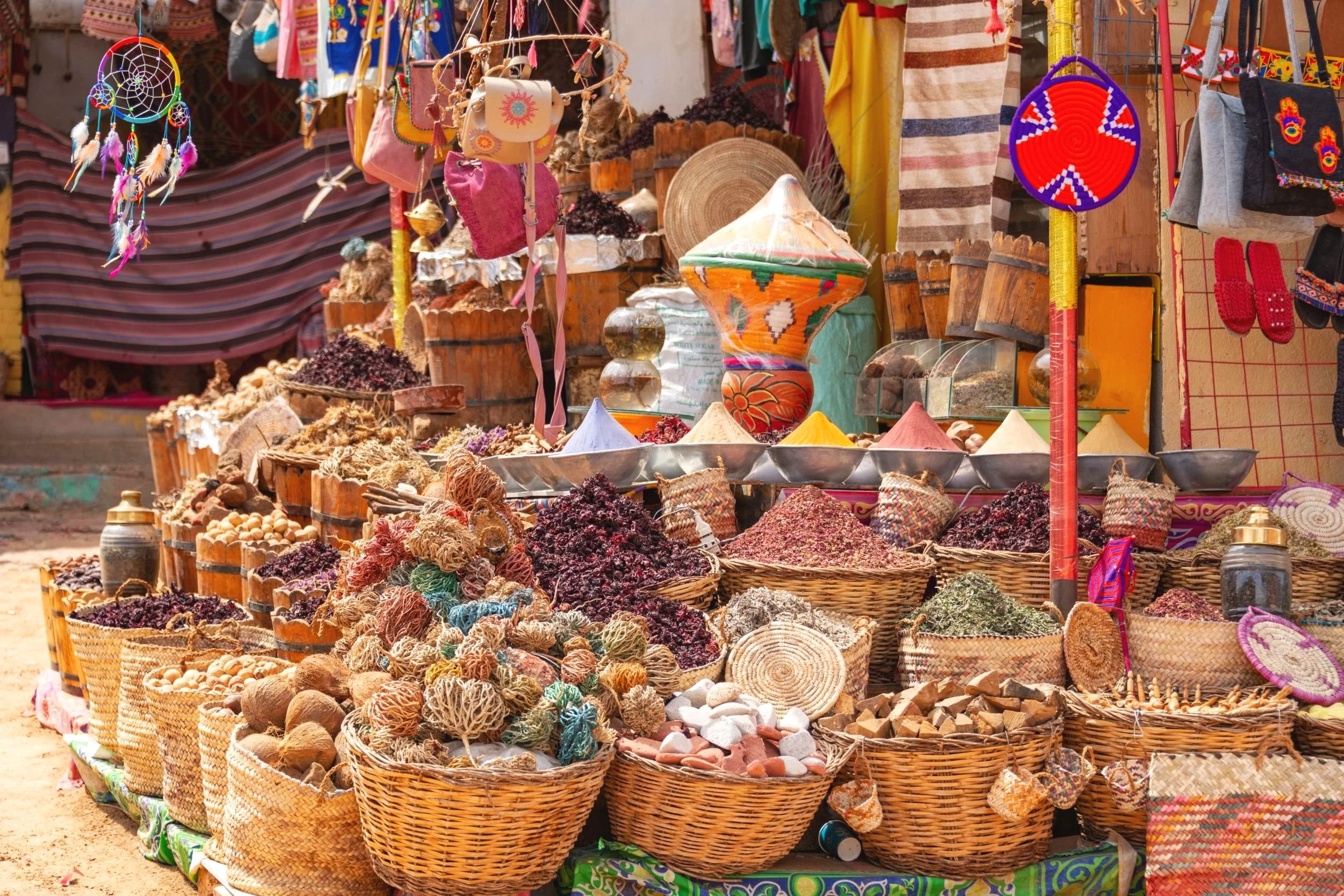
The only place that felt truly "lived in." This market is a maze of stalls selling everything from shoes and wrenches to dried fruit and spices. It is bustling, loud, and human. But the moment you cross the street, you are back in the pristine, lonely expanse of the perfect city.
The Culture: Quiet Wealth & Respect
Qatar is known to be more accepting than some of its neighbors, but it is still deeply conservative. We observed a fascinating spectrum of modesty—from the full Niqab (face covering) to the Abaya (robe) and Hijab (headscarf). These degrees of conservatism coexist peacefully alongside Western-dressed tourists.
Nobody said a word or stared at T-shirts or uncovered shoulders, but I felt the need to cover up out of respect.
The Dress Code: Modest is best. Nobody is flashy; nobody is loud.
The Status Symbol: The only place I saw the wealth "loudly" is on women’s handbags and men’s wristwatches. Unless you are looking for Hermès, Chanel, or Rolex, you might miss it.
The Verdict
Was it worth the detour? Absolutely. Qatar acted as a decompression chamber. It is a place of complex hospitality,impressive silence, and undeniable beauty. It allowed us to shed the stress of New York and the fog of the time zone before tackling the rugged beauty of Kazakhstan.