Samarkand: The Blue Jewel
If Kazakhstan was the rugged, nature-focused prologue, Uzbekistan is the dense, historical main event. This is the heart of the Silk Road—a place of blue tiles, imposing domes, and a history so heavy you can feel it in the heat.
We flew Air Astana from Almaty to Tashkent (a quick 1 hour and 45 minutes). The shift was immediate. While Russian is the lingua franca of Kazakhstan, in Uzbekistan, the nationalistic pride is palpable. Uzbek is the primary tongue, and Russian is fading with the older generations. The communication barrier is higher here, but the rewards are grander.
The Entry Note: For years, this was a difficult border to cross. But as of January 1, 2026, Americans no longer need a visa for stays of up to 30 days. The doors are open.
Tashkent: The Soviet Capital
Tashkent is a city of layers. It is an old Soviet capital where brutalist concrete blocks sit next to manicured parks. It is busy, noisy, and at times gritty, but it holds the keys to the country’s history.
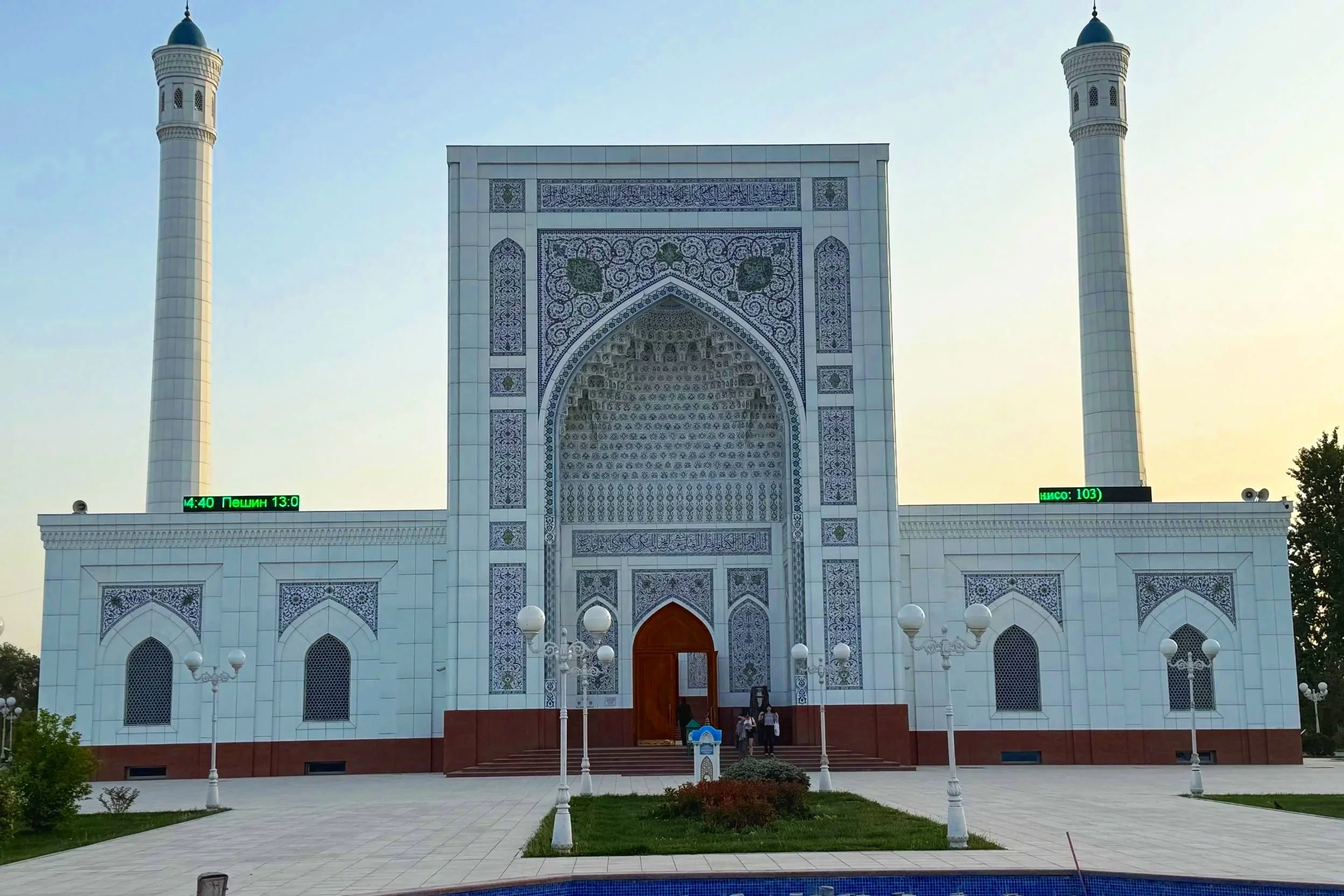
Where We Stayed We checked into the Ichan Qala Premium Class Hotel. It is grand in structure, with high ceilings, massive and colorfully tiled spaces. And incredibly well-priced. It feels like a palace from a different era.
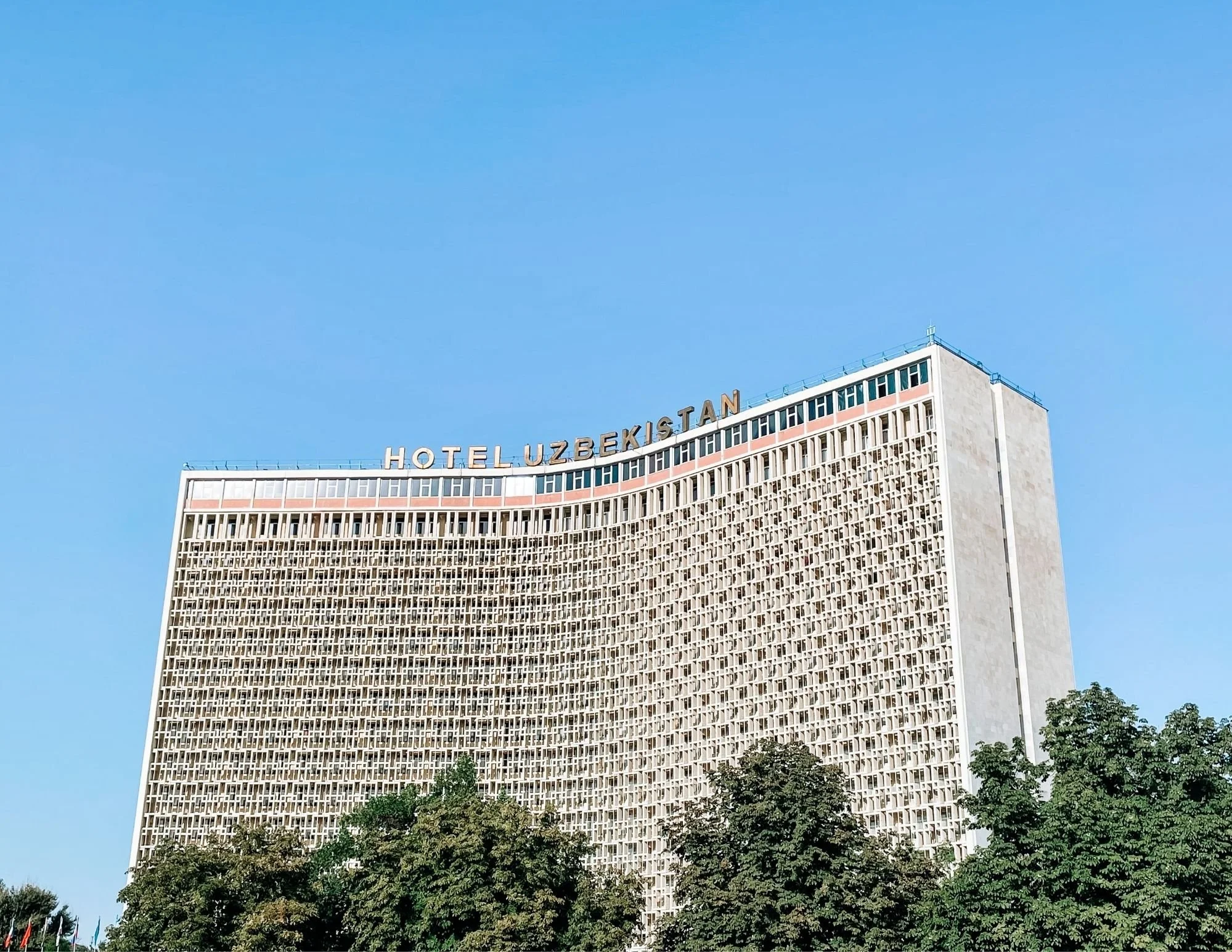
The "Hotel Uzbekistan" Hack
We didn't stay at the famous Hotel Uzbekistan (the massive, open-book shaped Soviet landmark on Amir Temur Square), but we used it. On our final day, needing a place to work with our luggage, we paid for breakfast there. It is a perfect time capsule - faded glory, Soviet scale, and a view of the square that cannot be beaten.
The City Sights
Amir Temur Square: The symbolic center of the city.
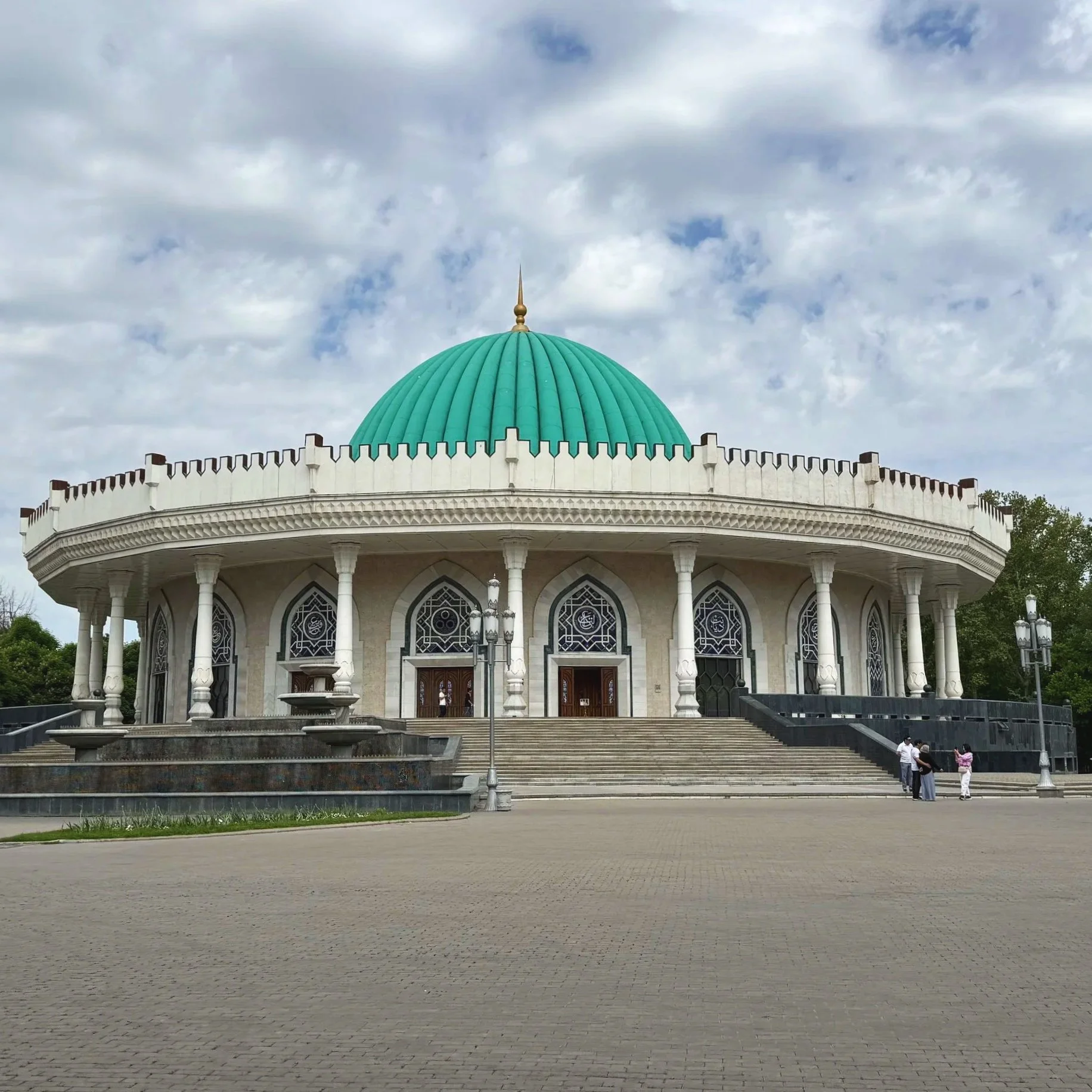
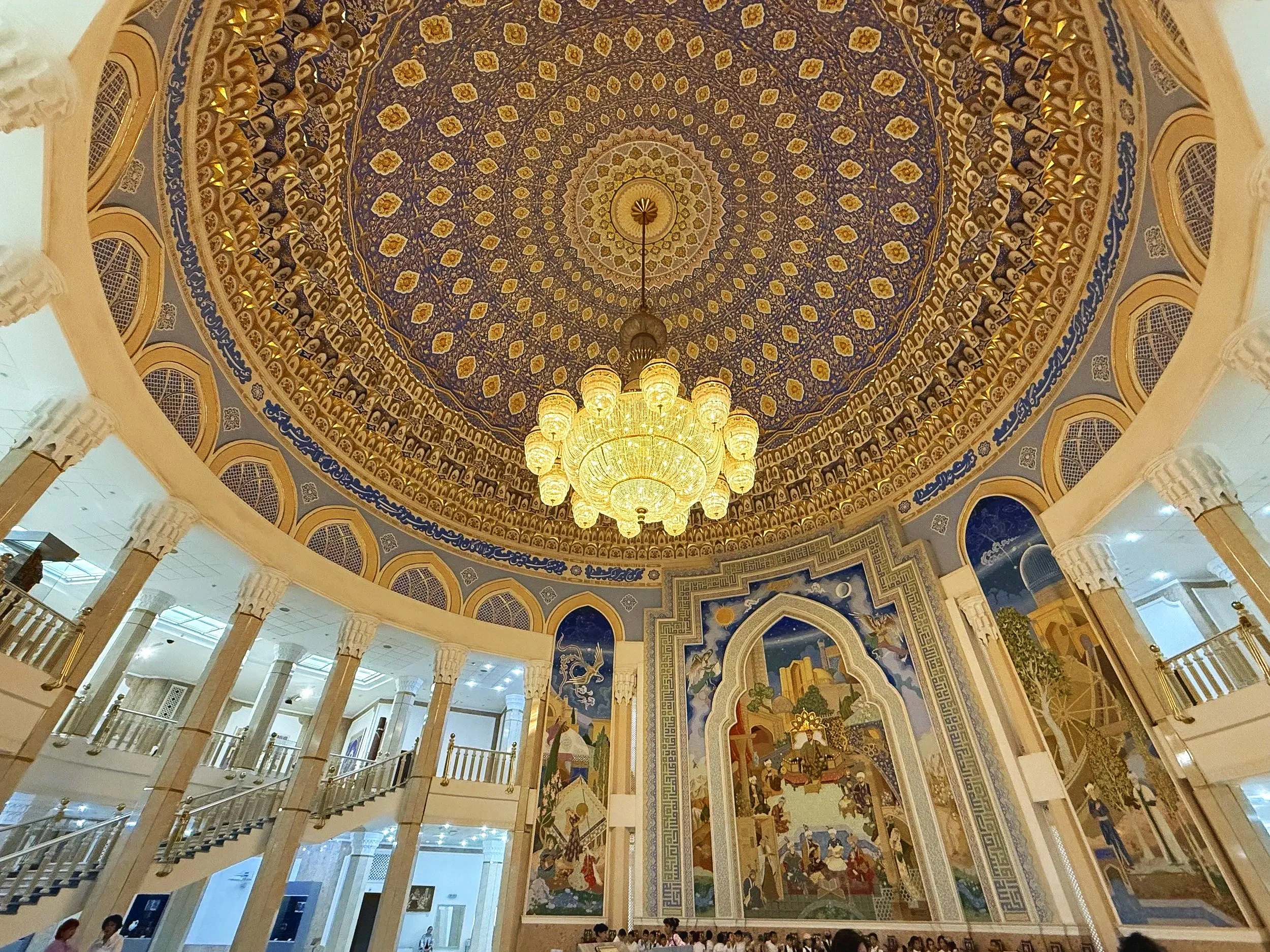
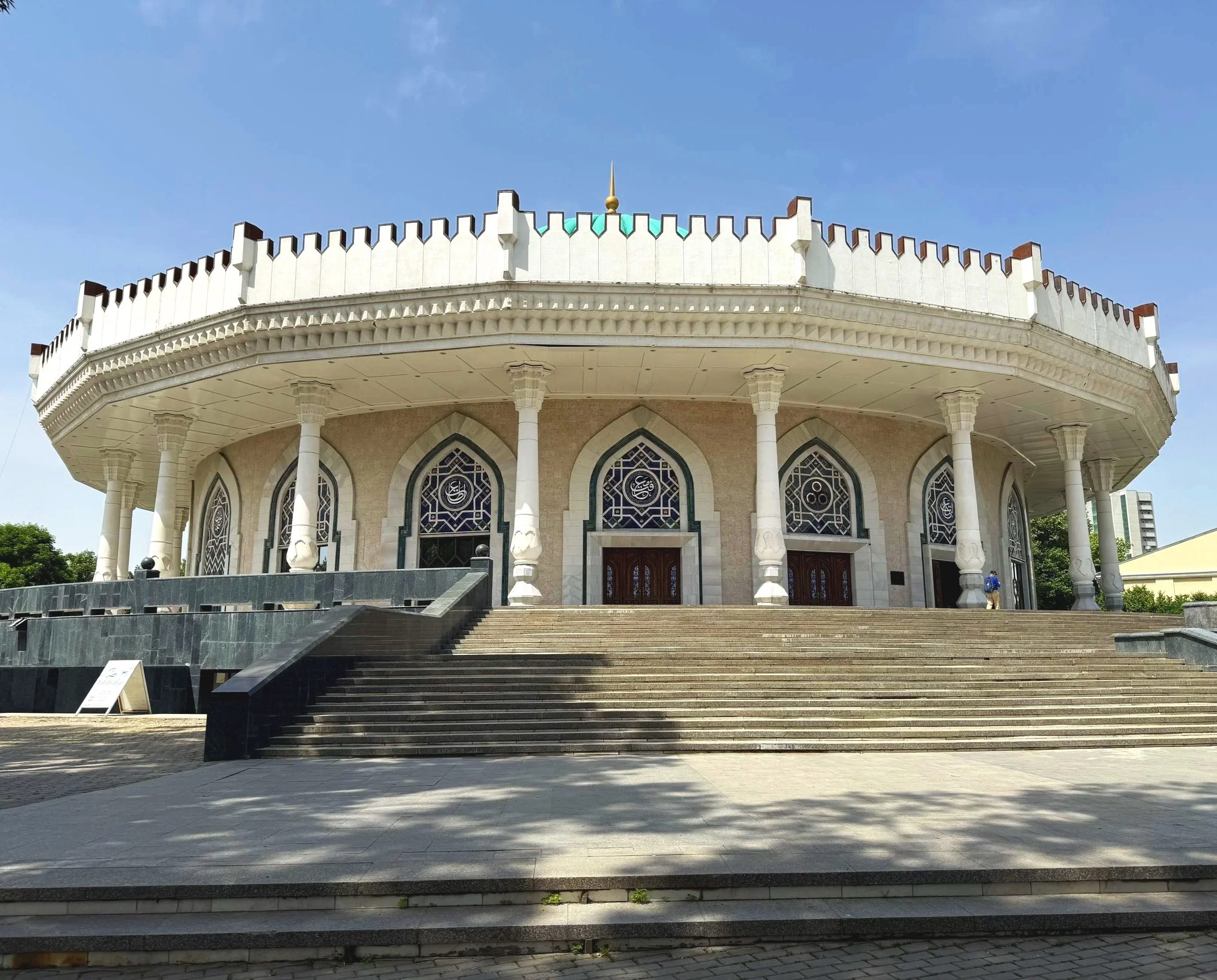
The State Museum of the Temurids: A beautiful round building with intricate interior tile work and paintings depicting the lineage of Tamerlane.
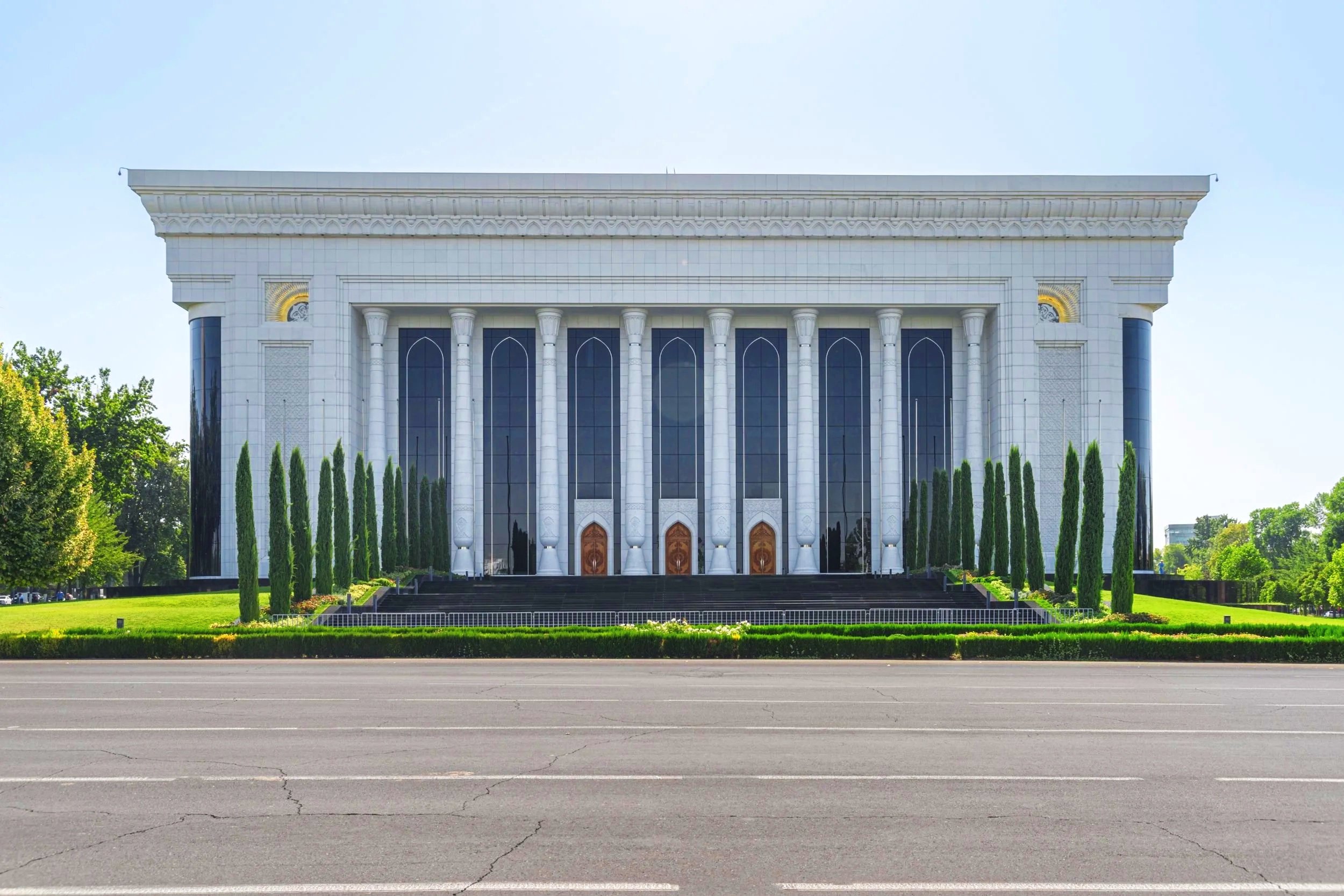
Palace of International Forums: Just across the square sits this imposing white palace. It is the country's most significant ceremonial building—austere, grand, and unmissable.
The Connection: The High-Speed Reality
To get to the ancient cities, you must take the train.
The Pro Move: Book the Afrosiyob (High-Speed Train). It is modern, fast (4 hours to Samarkand), and comfortable.
The Warning: On our return from Bukhara, we accidentally booked the "regular" train. It was an experience - an old Soviet rolling stock that turned into a nap-time decompression chamber. It has character, but if you value your time, stick to the Afrosiyob.
Samarkand: The Blue Jewel
Samarkand is the reason you come to Uzbekistan. It is a city of staggering, monumental beauty that feels almost out of scale with the modern town around it.
The Hotel Verdict We stayed at Hotel Al-Bukhory.
The Truth: I cannot fully recommend it. While the Bibi-Khanym Mosque was walkable, the hotel felt removed from the true center. In a city where walking is the best way to see the details, location is everything. (Rideshare apps like Uber and Yandex Go are excessively cheap and reliable, but nothing replaces a good location).
The Sights The structures here are truly stunning—worth the long trip just to stand in their shadow.
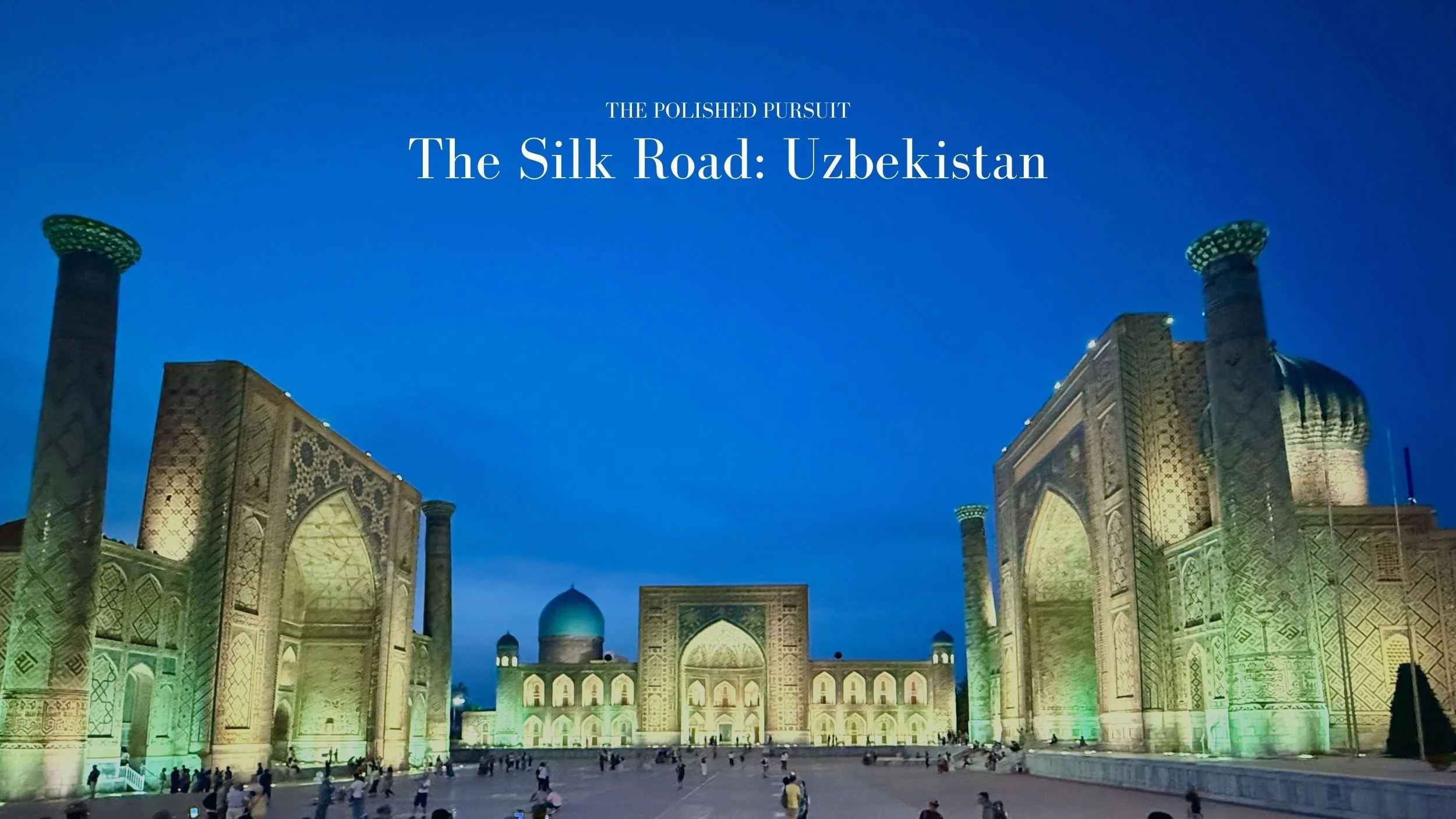
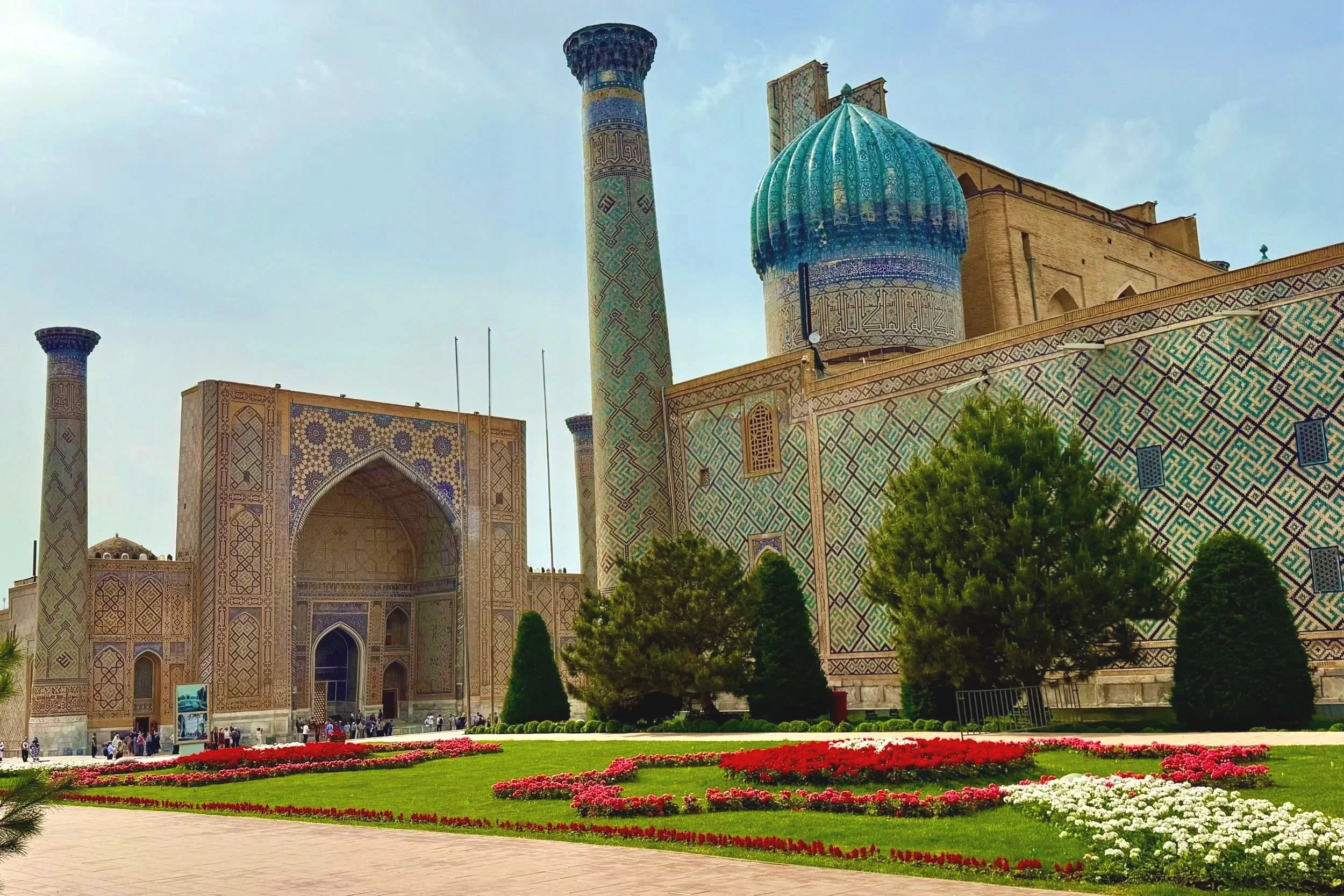
Registan Square: This is the heart of the city and the most magnificent sight in Central Asia. Three massive madrasas (Ulugbek, Tillo Kori, Sher Dor) face each other in a perfect architectural dialogue.
Registan Square
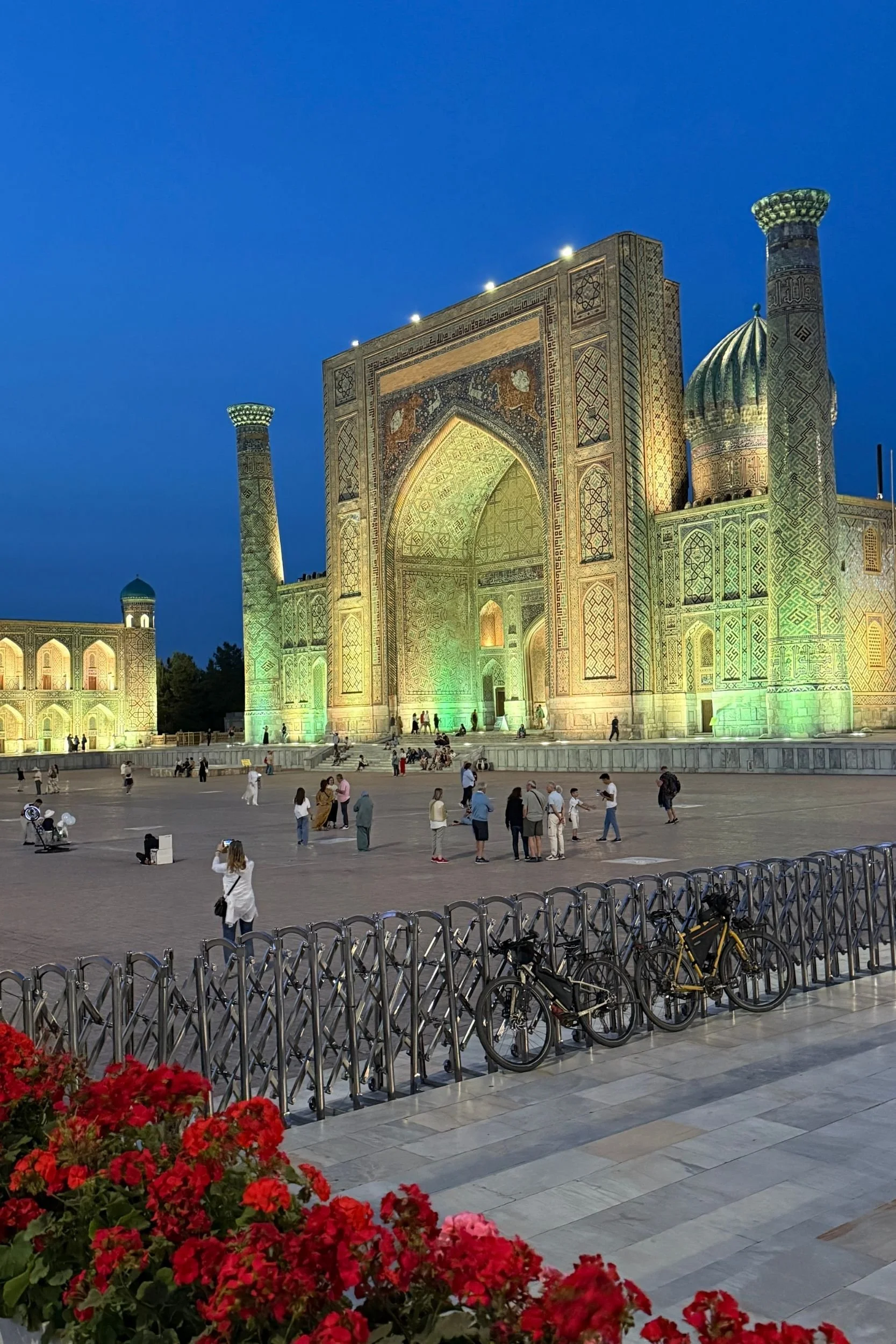
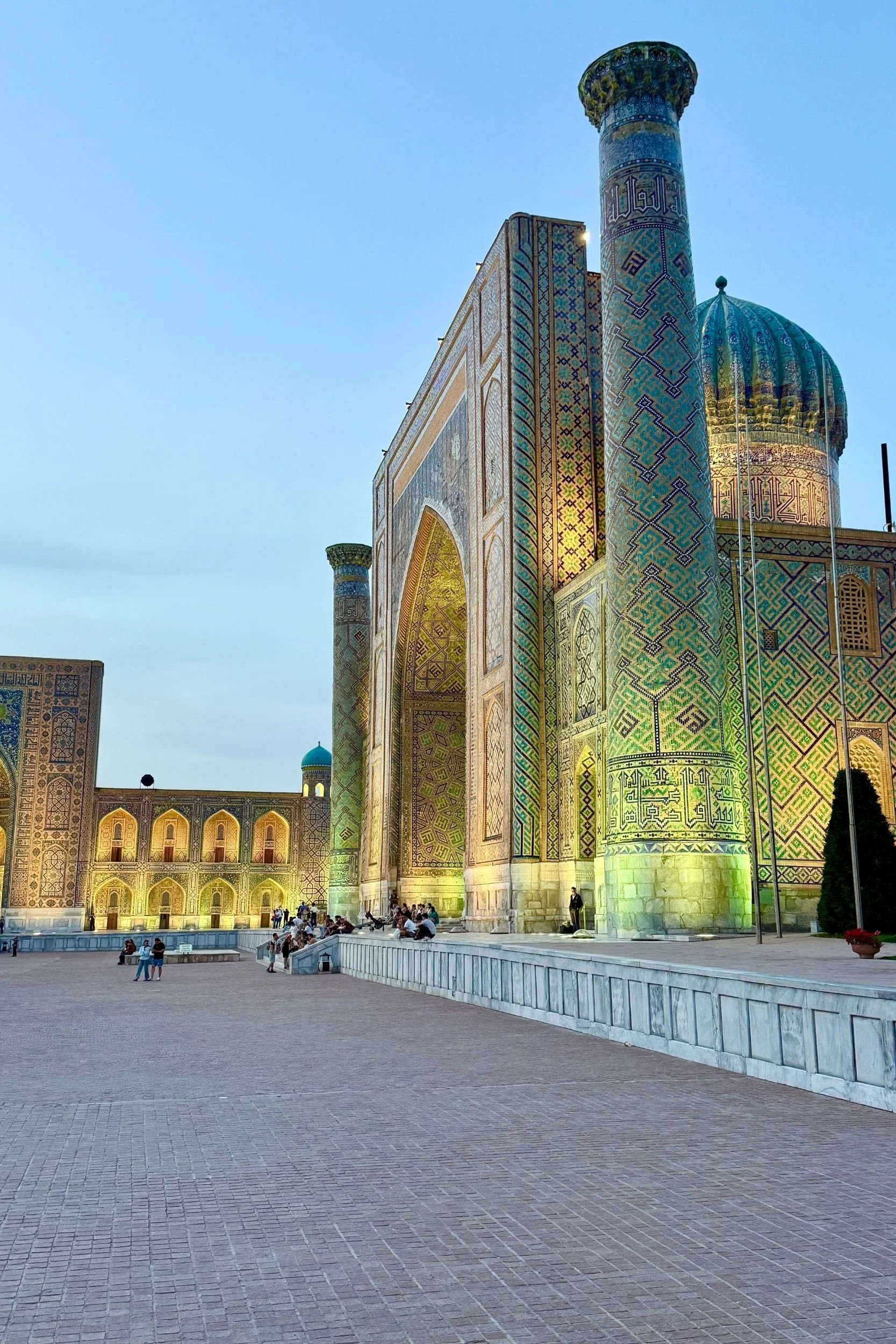
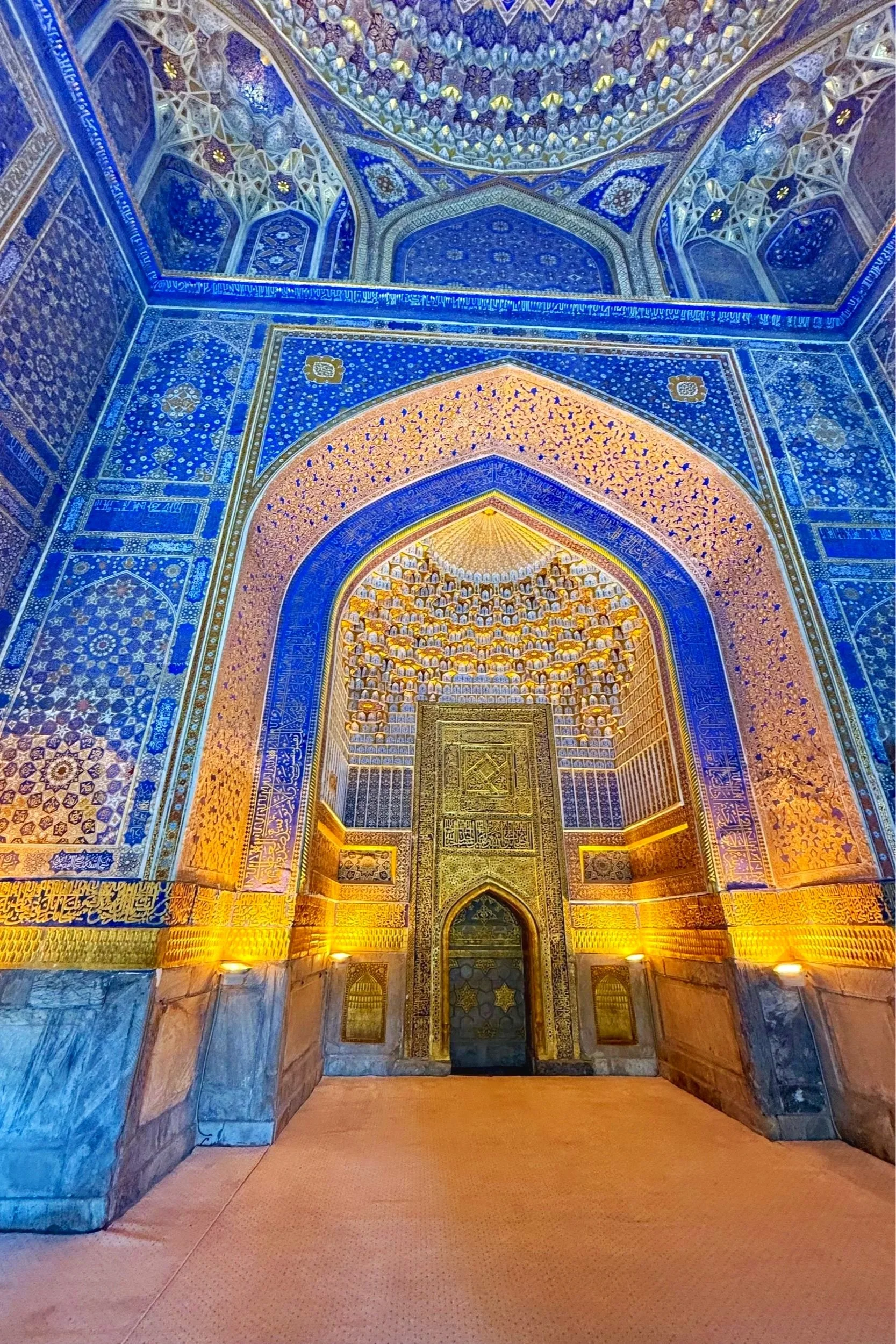
Tip: Don't just visit during the day. The square is surrounded by a lovely park with amphitheater-like seating. Go there before dusk, find a seat, and wait for the sun to set. Watching the lights turn on, illuminating the intricate blue tiles against the night sky, is the magic moment of the entire trip. And go inside for the most spectacular blue tiling!
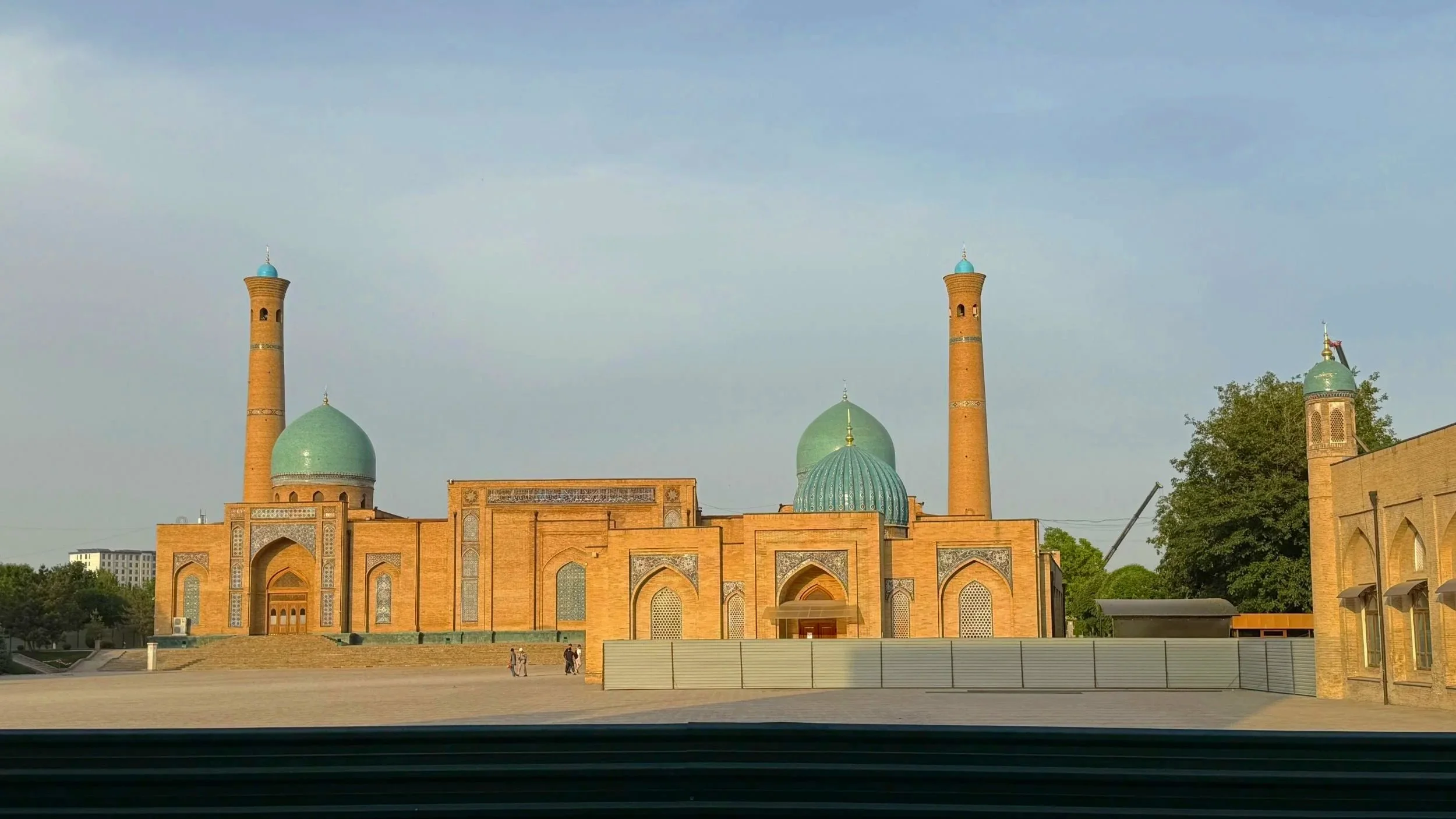
Bibi-Khanym Mosque: A short walk away lies this colossal structure, built by Tamerlane for his favorite wife. It is massive, imposing, and stands right next to the market, anchoring the chaotic energy of the bazaar with ancient silence.
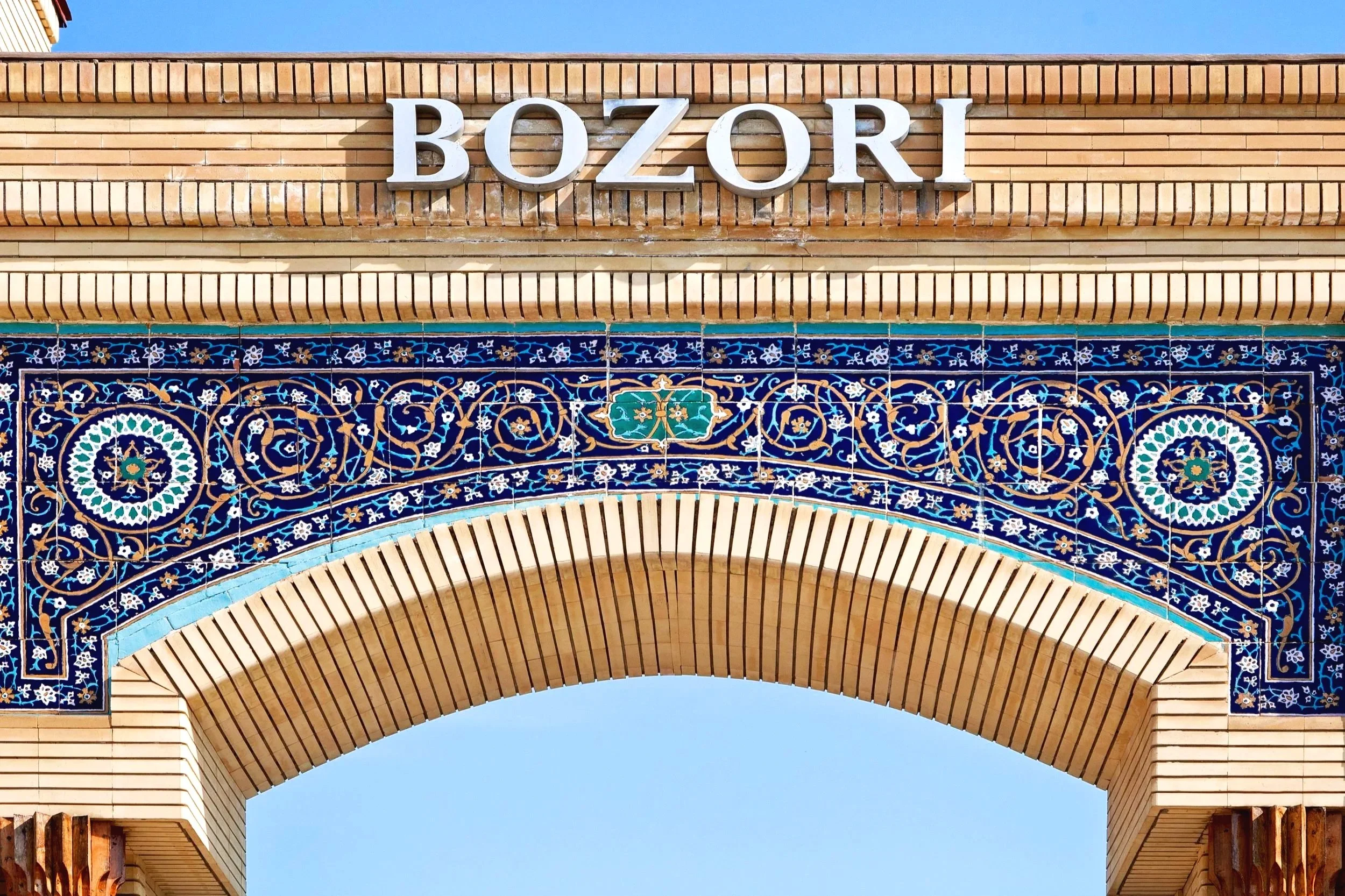
Siyaab Bazar (Siyob Bozori):
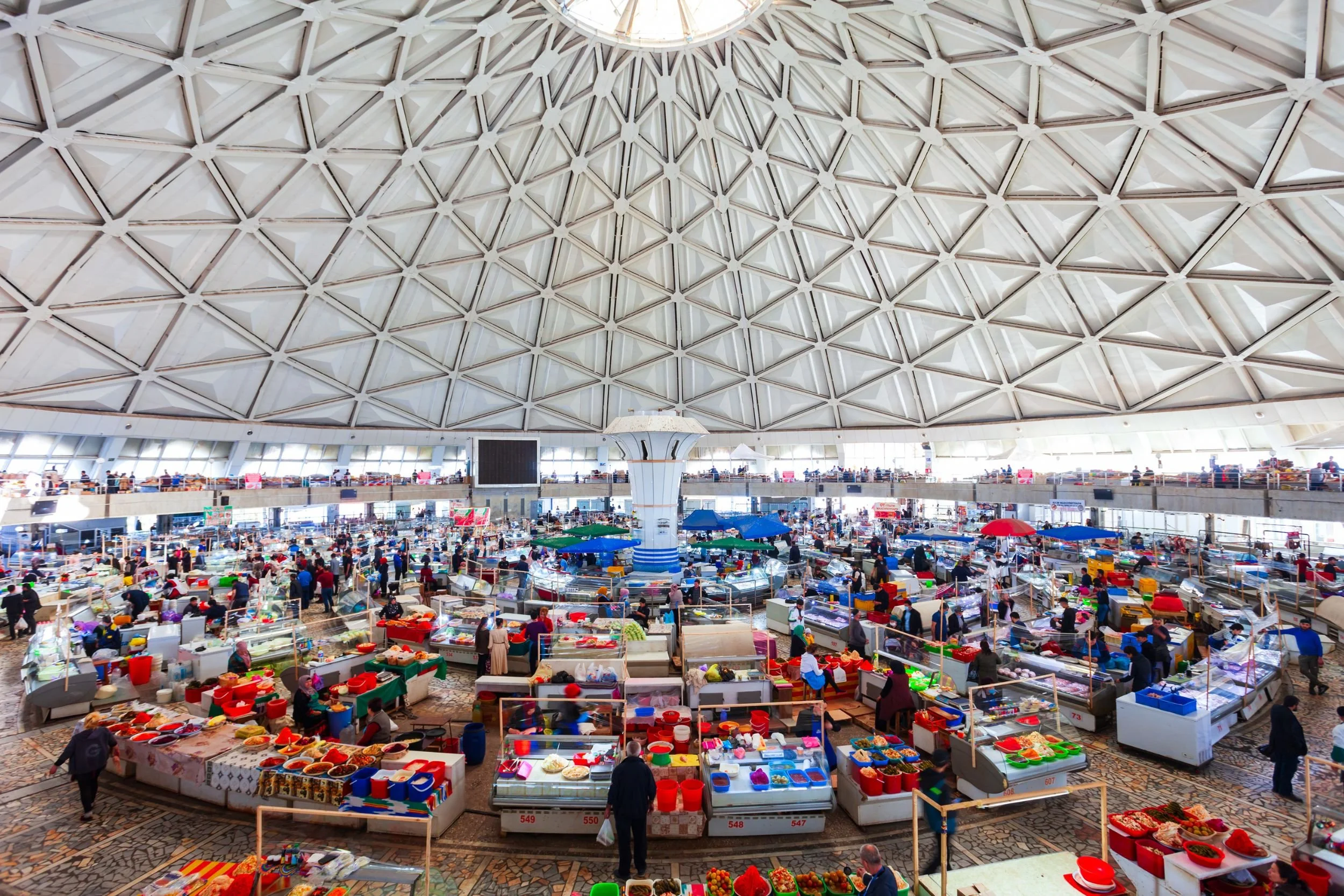
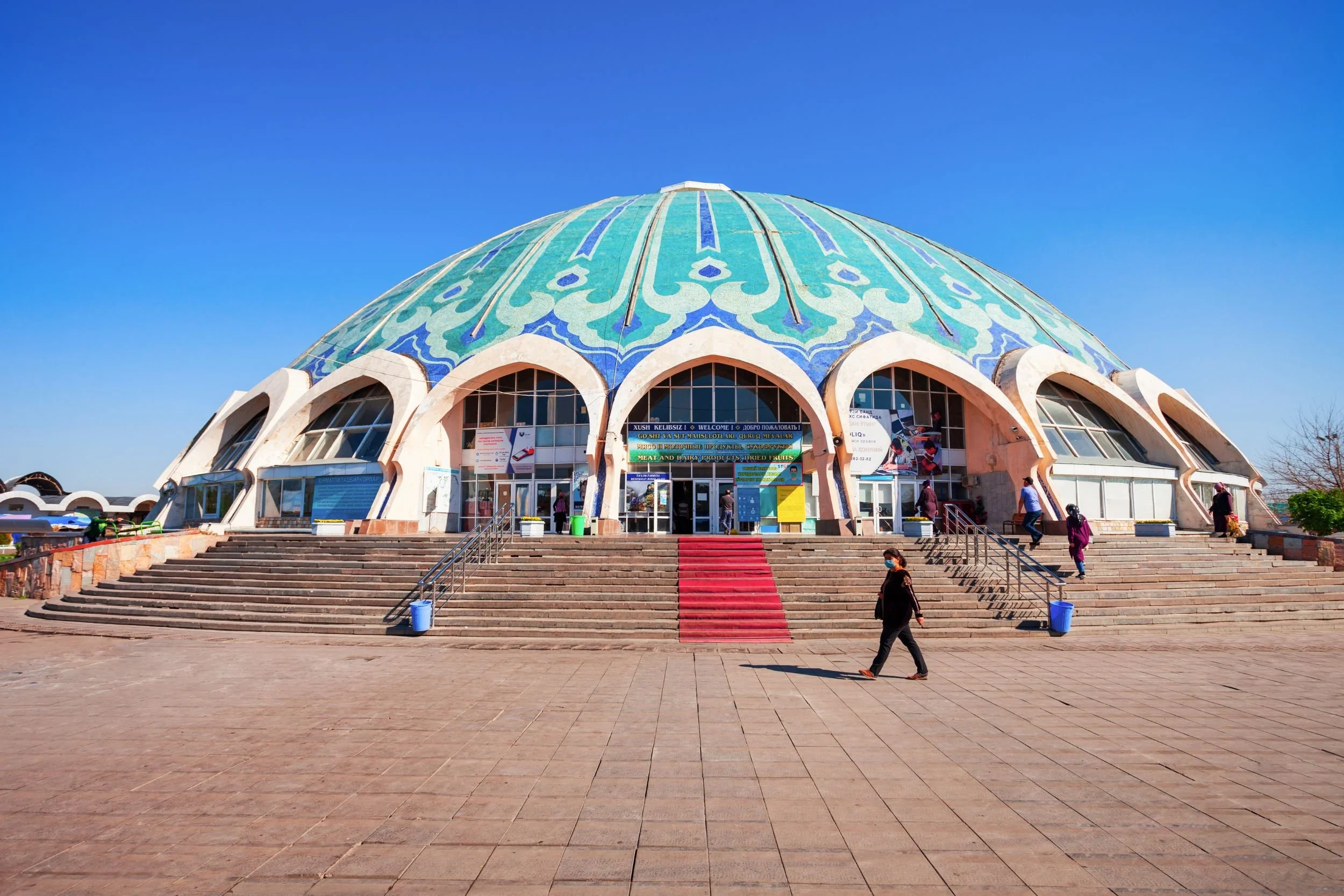
Just next door to Bibi-Khanym. If you are short on time, this is the market to see. It is extensive—fruit, nuts, silks, and for the brave, whole animal heads and intestines on display.
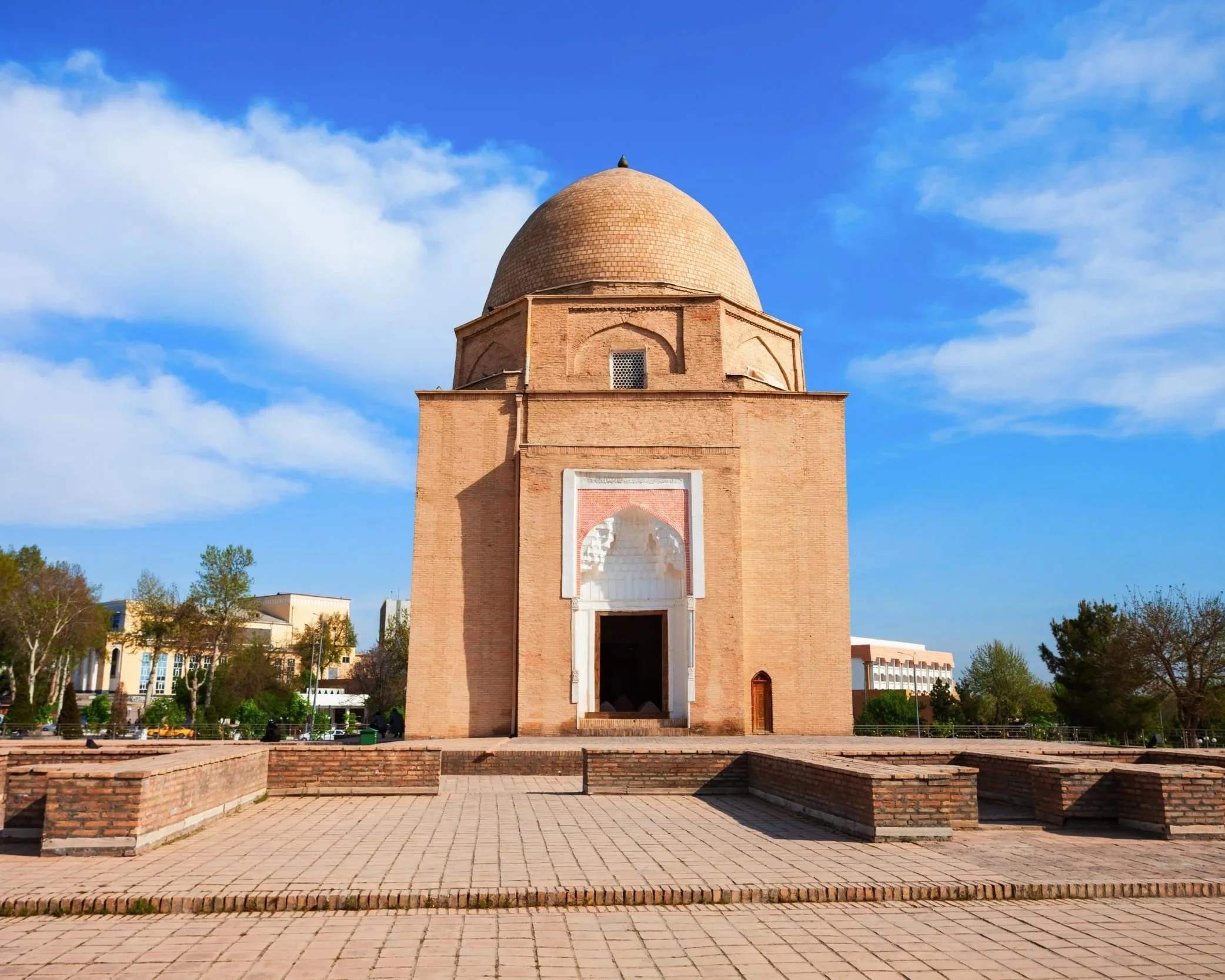
Rukhobod Mausoleum:
Built in 1380 by Tamerlane for his spiritual mentor, this is the city’s oldest surviving monument. Unlike the other glittery, tiled buildings, this one is austere and simple—a cube with a conical dome. It offers a quiet, spiritual counterweight to the flash of the Registan.
Mubarak Mahallah Mosque: Located in the old Jewish quarter, this is a hidden neighborhood gem. It is centered around a hauz (pool) and feels intimate and local, a stark contrast to the tourist-heavy sites.
The Self-Guided Tour We organized our own day to hit the major notes. If you want the blueprint, here is the route:
Gur-e-Amir (Mausoleum of Tamerlane): Start here to understand the man who built the empire.
Registan Square: The main event. Spend time here.
Tashkent Street: Walk this pedestrian thoroughfare for crafts and souvenirs (walk between Registan Square and Siyaab Bazar.
Bibi-Khanym Mosque & Siyaab Bazar: See the mosque, then get lost in the market.
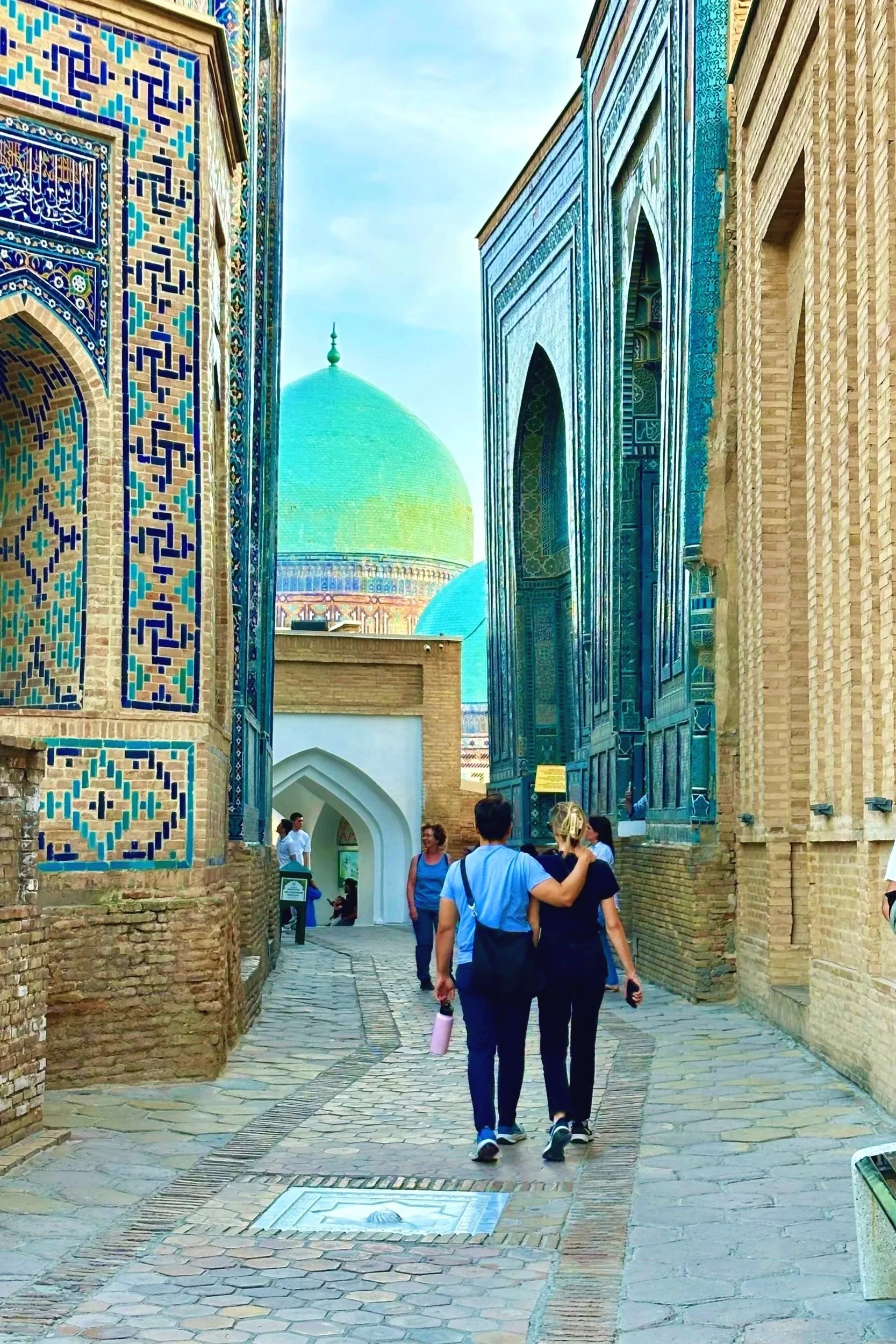
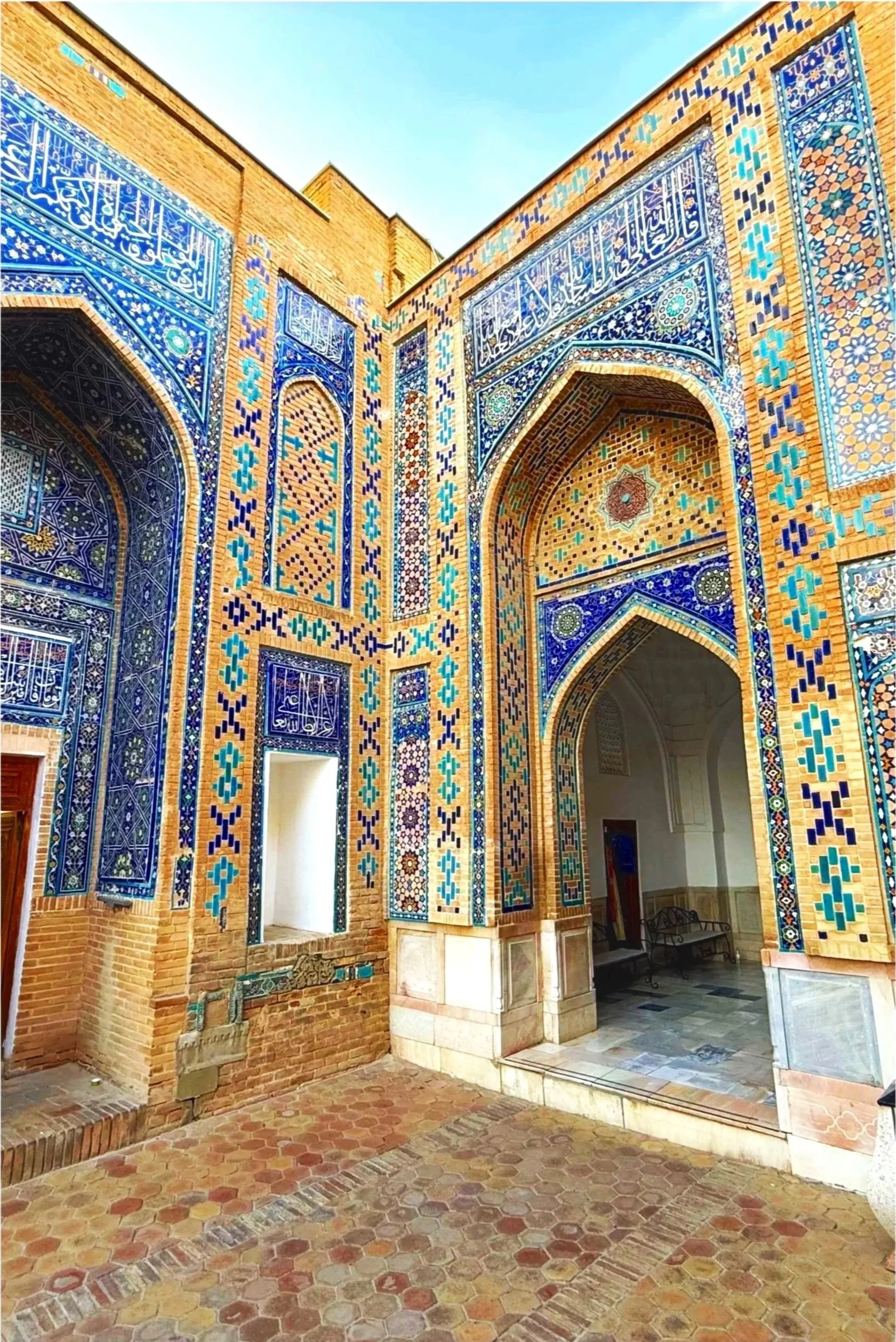
Shahi Zinda: The necropolis (below). A street of blue tombs that is one of the most photogenic spots on earth.
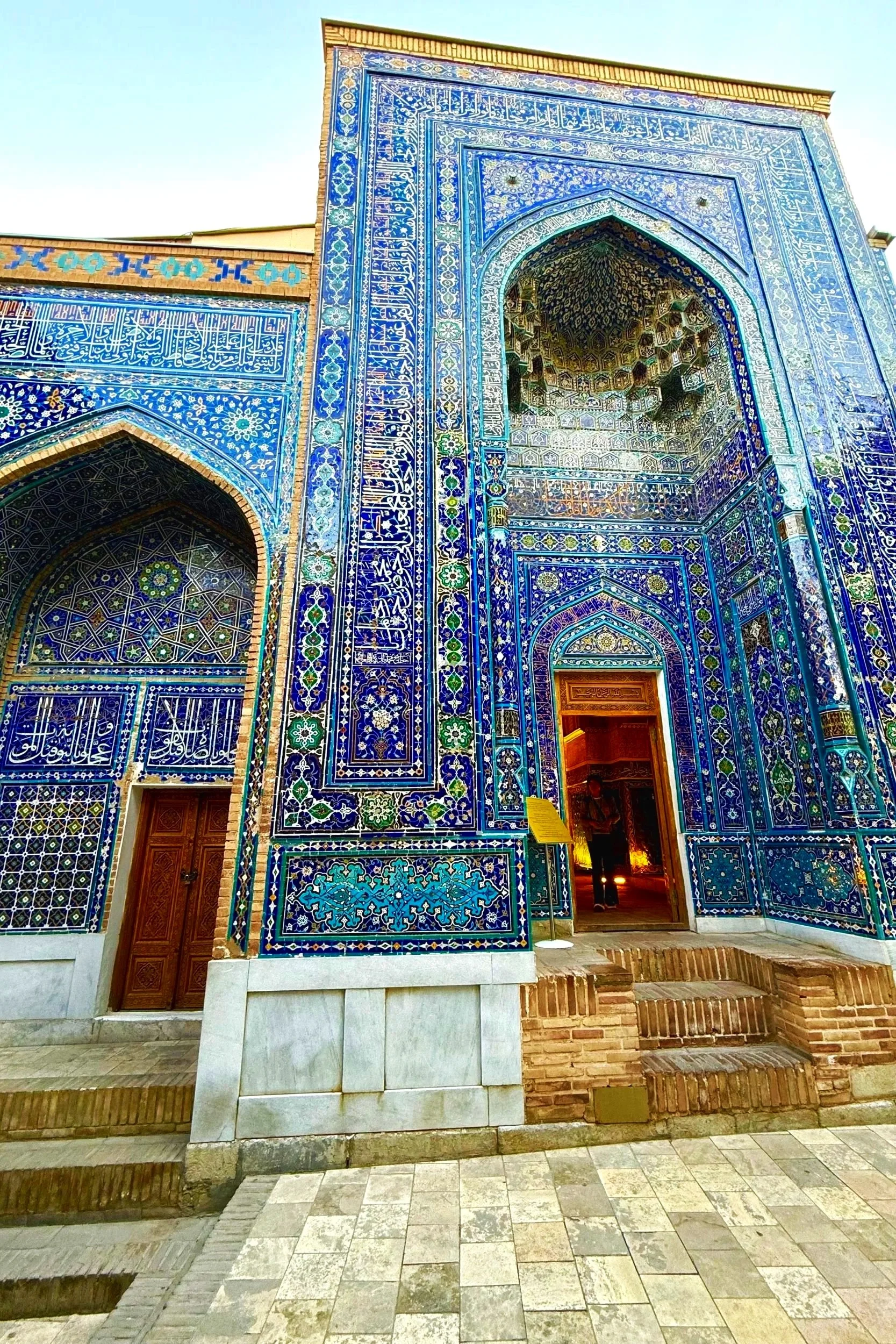
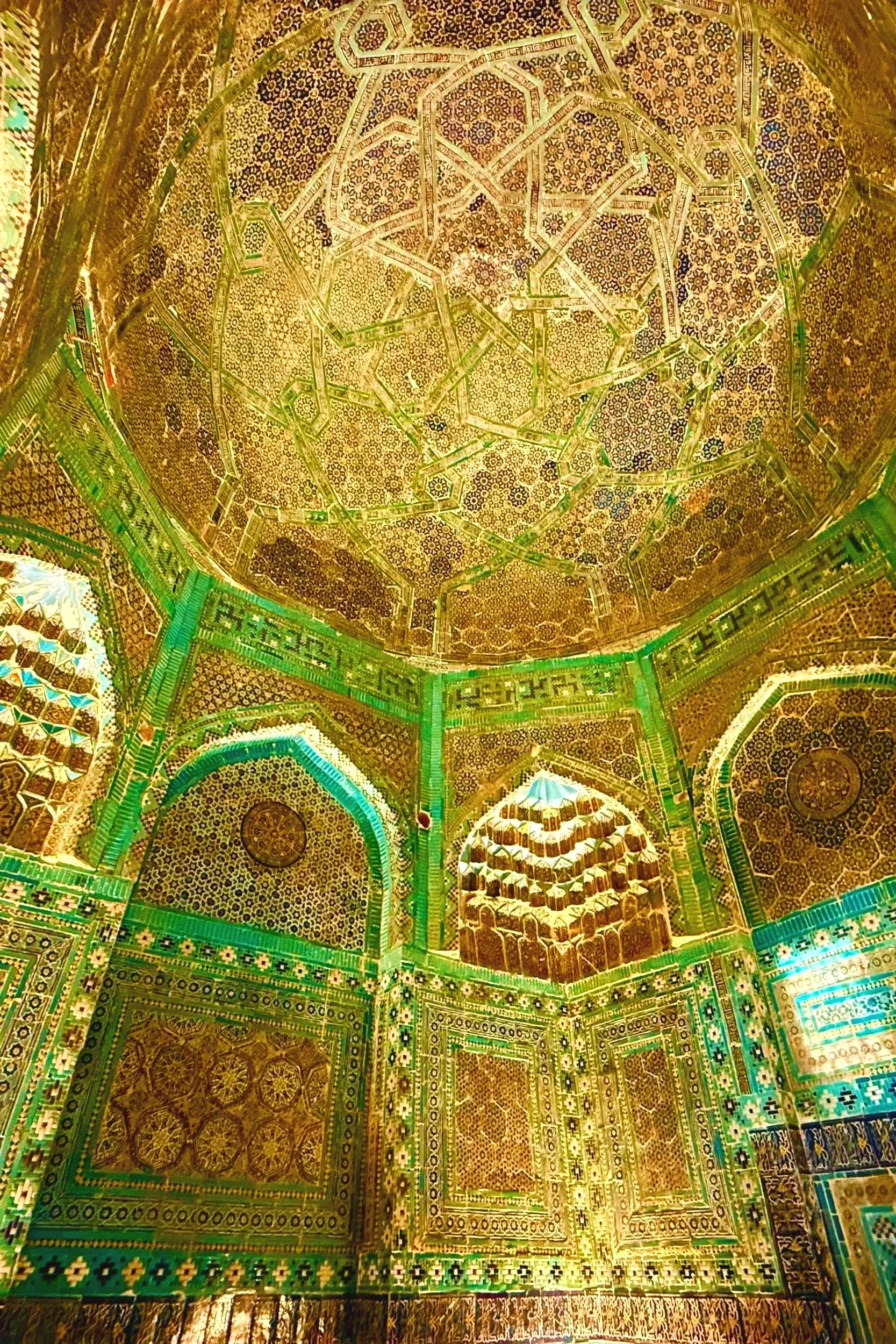
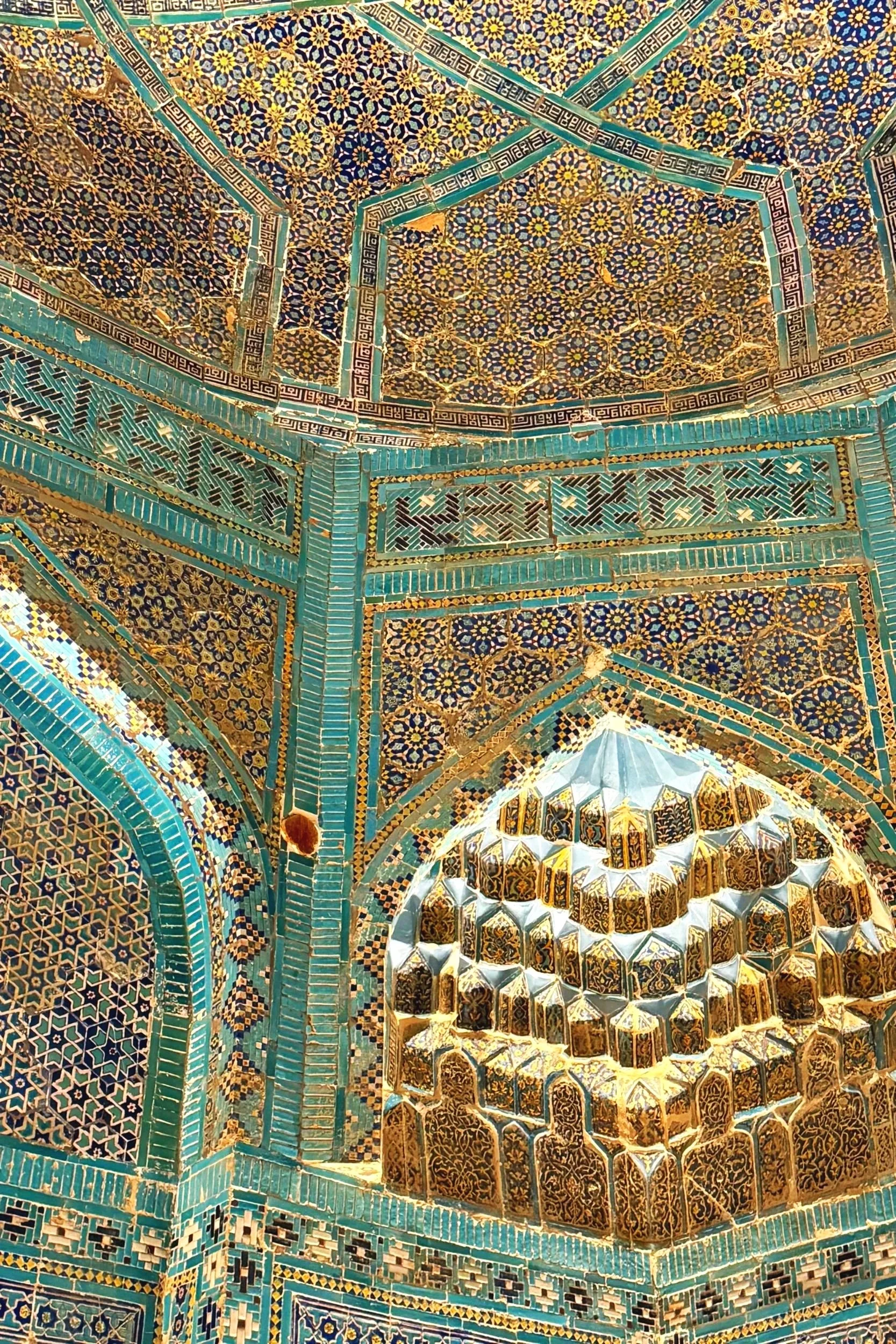
The Culinary Scene: A Mixed Bag
To be blunt: the culinary scene in Samarkand and Bukhara is nothing to write home about. Aside from the mosques, the city can feel a bit unkempt. However, we found our sanctuary.
The Sanctuary: Platan Located in the Platan Boutique Hotel, this restaurant was our lifeline. We ate here four times (one lunch, three dinners). It is elevated, authentic, and critically for me—safe for gluten-free dining.
Order: The lemonades and the tea mixed with fresh orange juice (a revelation I am bringing home).
The Experience: Samarkand Restaurant We went here for the atmosphere. With live music and outdoor seating, it feels like a celebration. The food is great, but the vibe is the real draw.
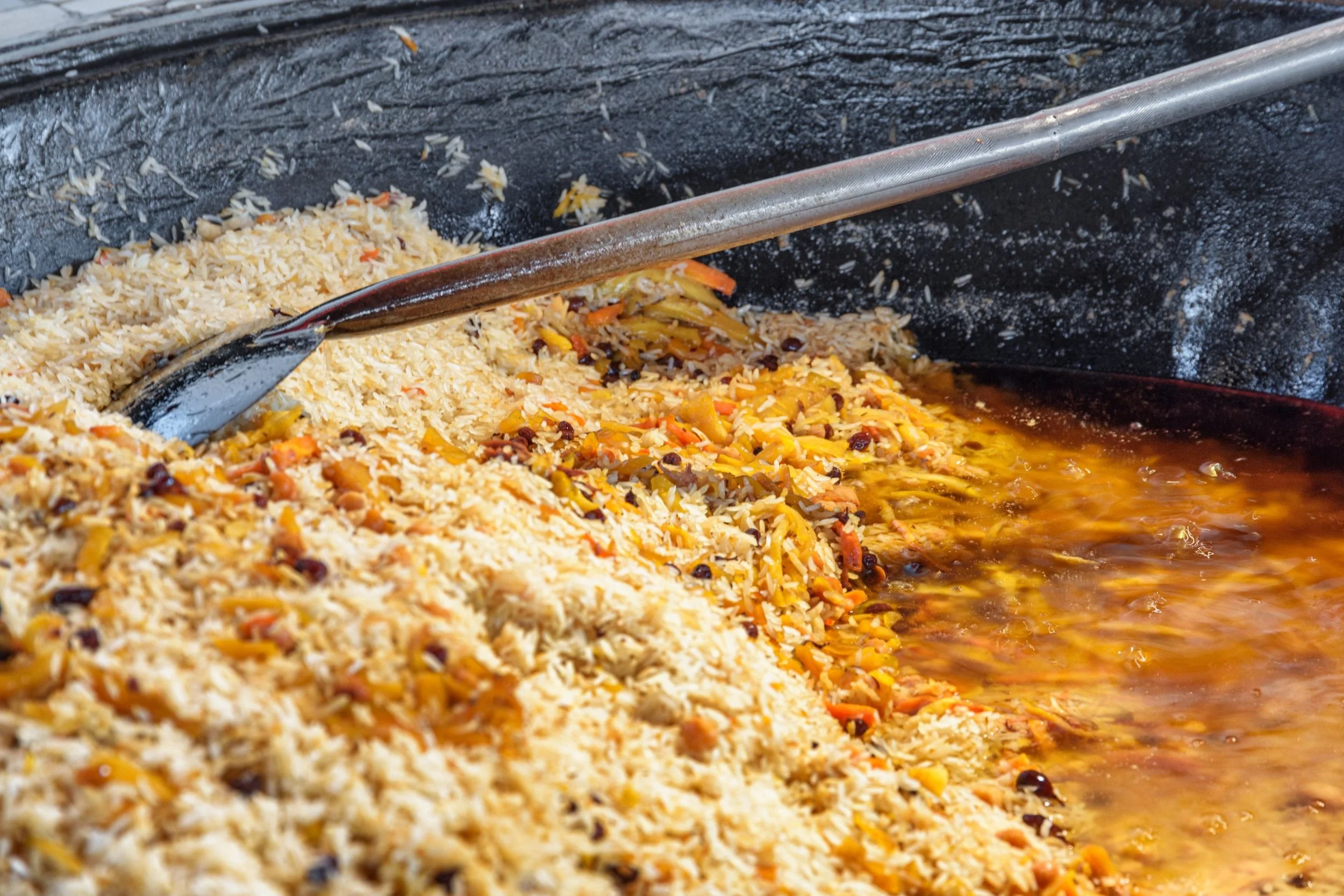
The National Dish: Plov You cannot visit Uzbekistan without hearing about Plov. It is the national obsession—a rice dish cooked with carrots, meat, and spices.
My Verdict:
Plov is overly hyped. To my palate, it was essentially an overly oily fried rice. It is a heavy, soldier’s meal meant for sustenance, not necessarily for gourmet appreciation. Try it for the culture, but manage your expectations.
Bukhara: The Day Trip
We took the high-speed train for a day trip to Bukhara. If Samarkand is the "Monument," Bukhara is the "Market." This is where the Silk Road feels most alive.
The Strategy Hire a guide in the town square. They are readily available and worth every penny. Without one, you are just looking at old buildings; with one, you get the history of the trade routes.
The Shopping: Bukhara is the place to buy silk. The haggling here is expected and is a sport, though, so unless you speak fluent Uzbek (or encounter a seller who speaks Russian), you need your guide to help you navigate this. Otherwise, you will pay the Tourist Tax.
The 4-Hour Blueprint If you only have a day, hit these five spots:
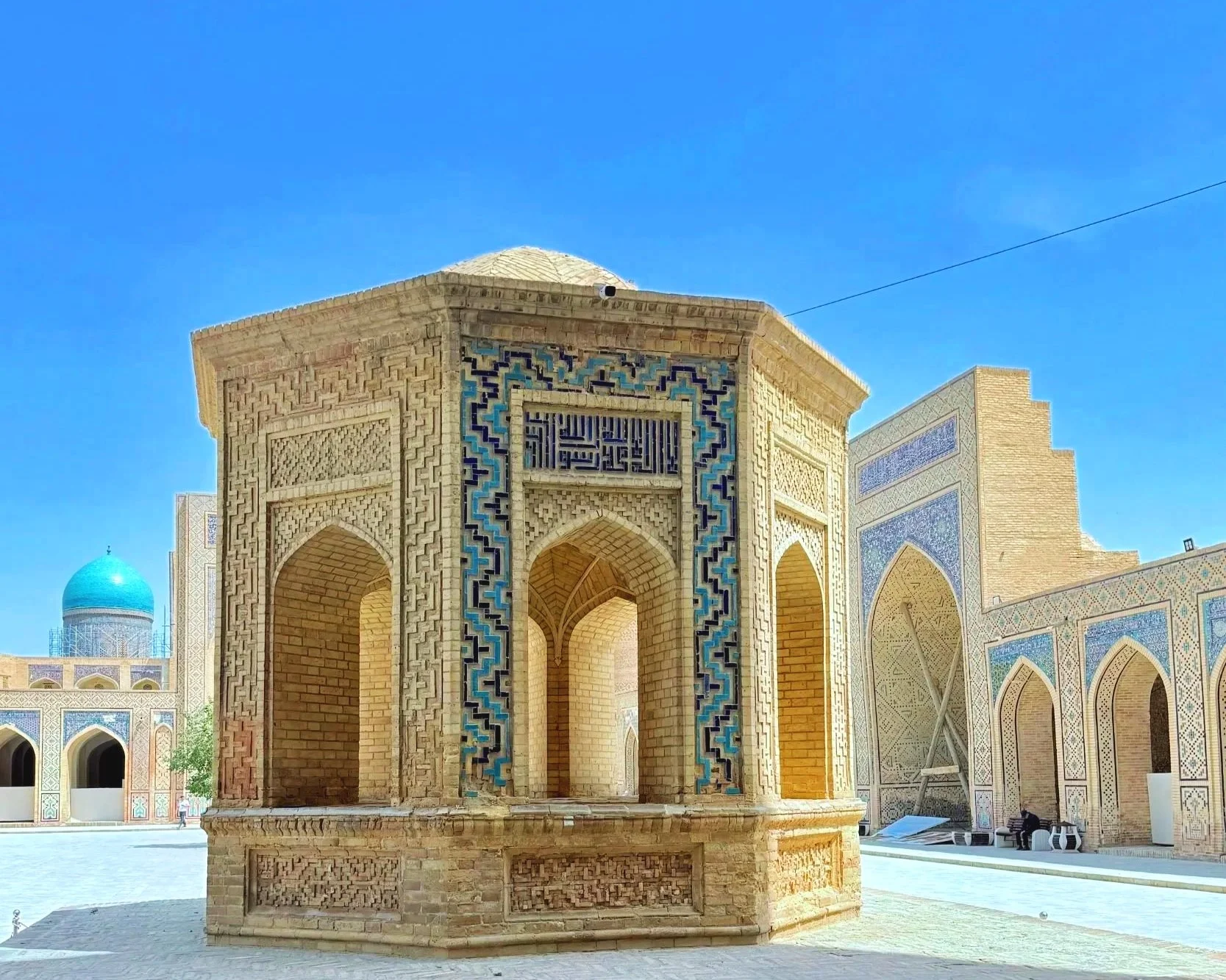
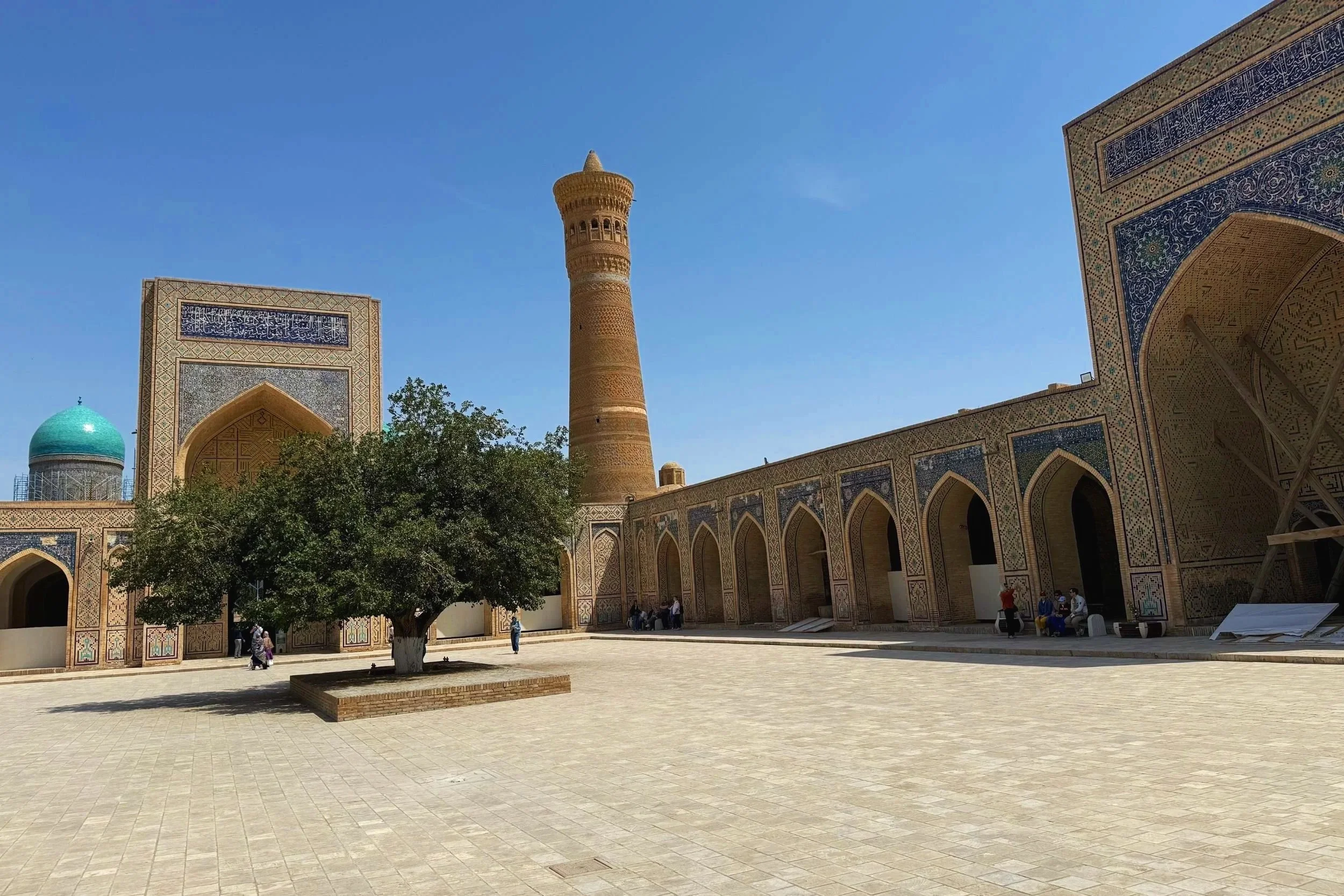
The Po-i-Kalyan Complex:
The symbol of the city. The minaret was so impressive that Genghis Khan spared it when he destroyed the rest of the city.
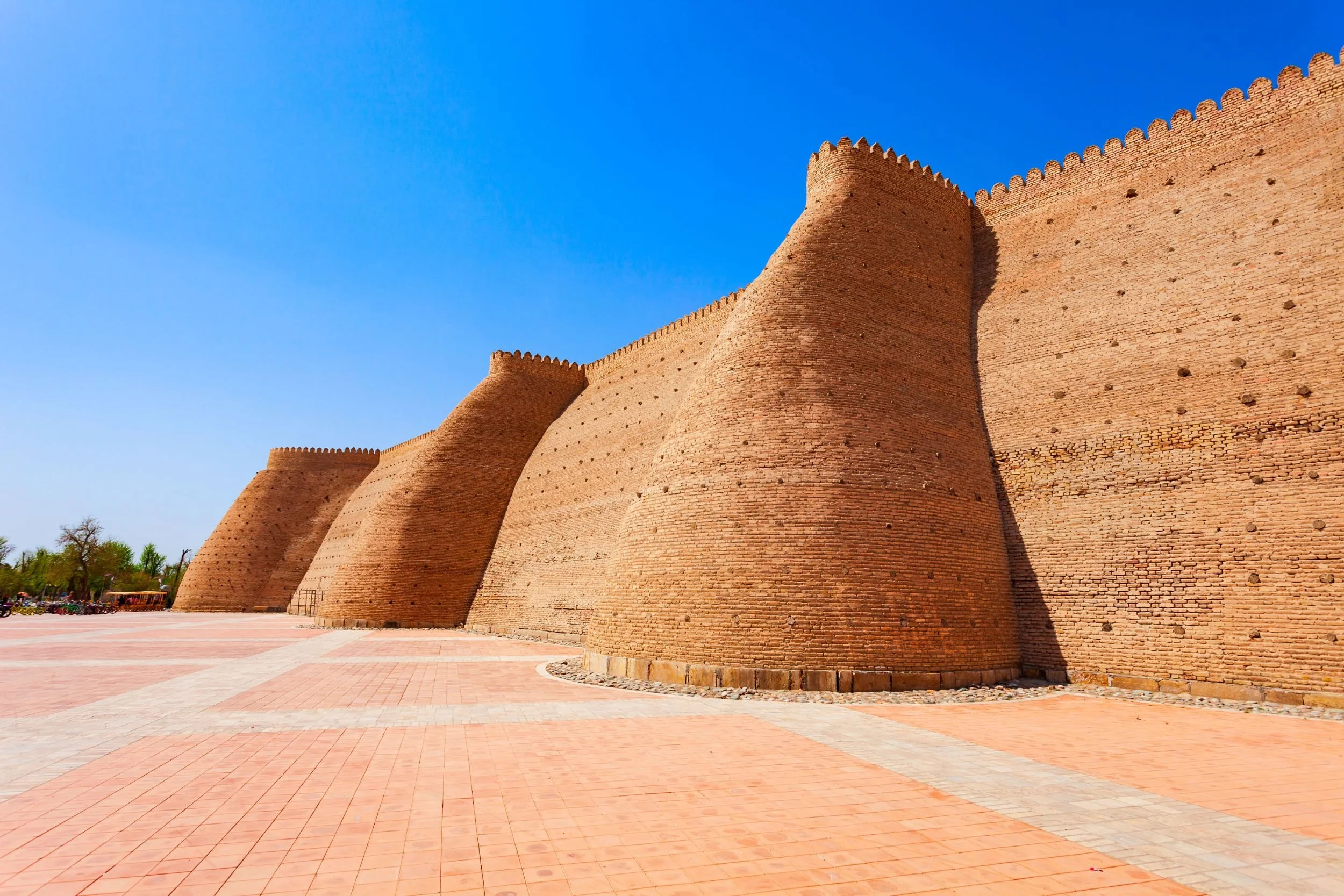
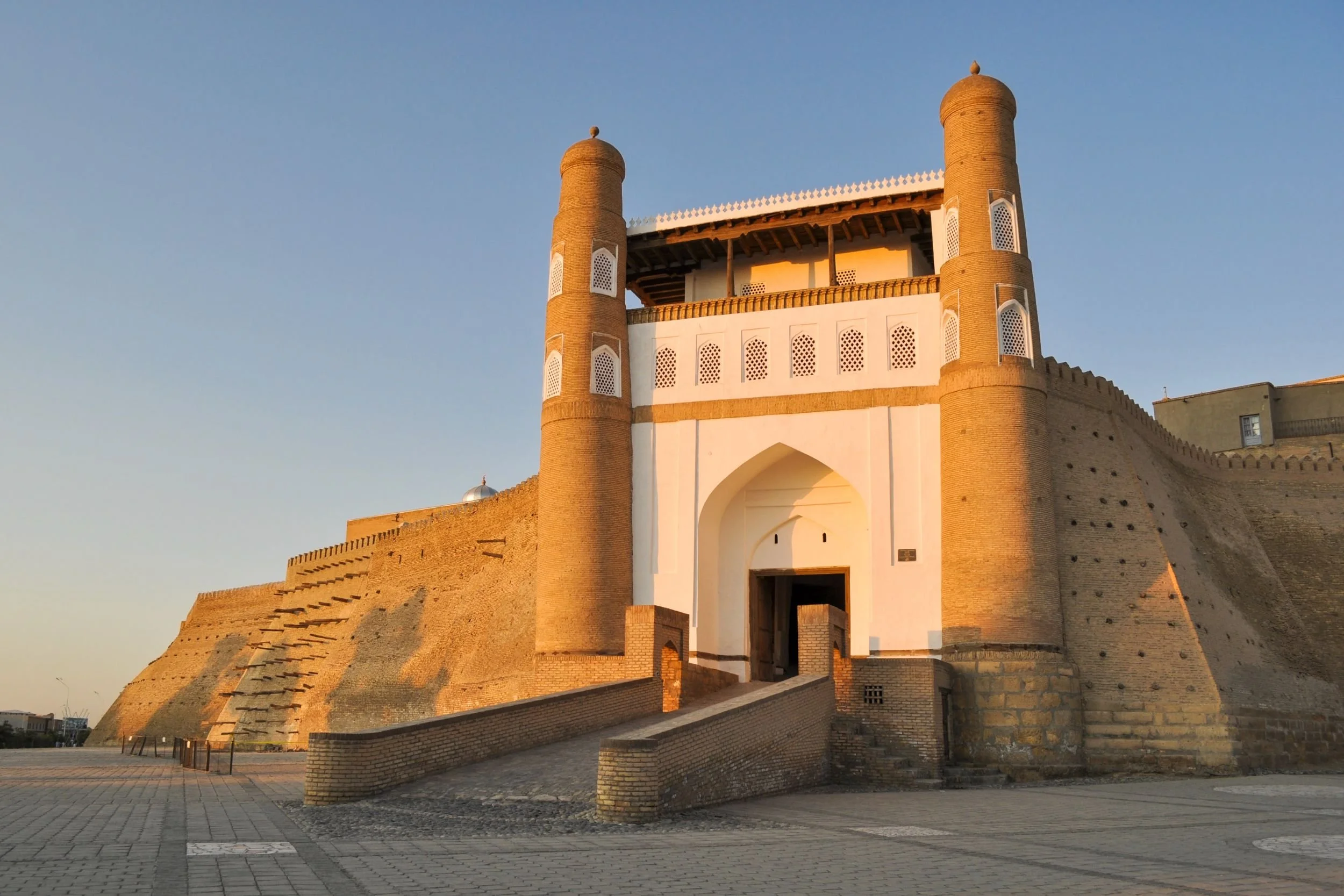
2. The Ark Fortress: The massive walled citadel that served as the residence of the Emirs. Legend credits the epic hero Siyavush with its creation, though these foundations date back to the 5th century. The massive walls bow outward in a distinctive convex curve—a brilliant piece of military engineering designed to deflect the direct impact of enemy battering rams.
3. The Trading Domes: Ancient covered bazaars where you can still buy spices, hats, and knives.
4. Lyabi-Hauz:
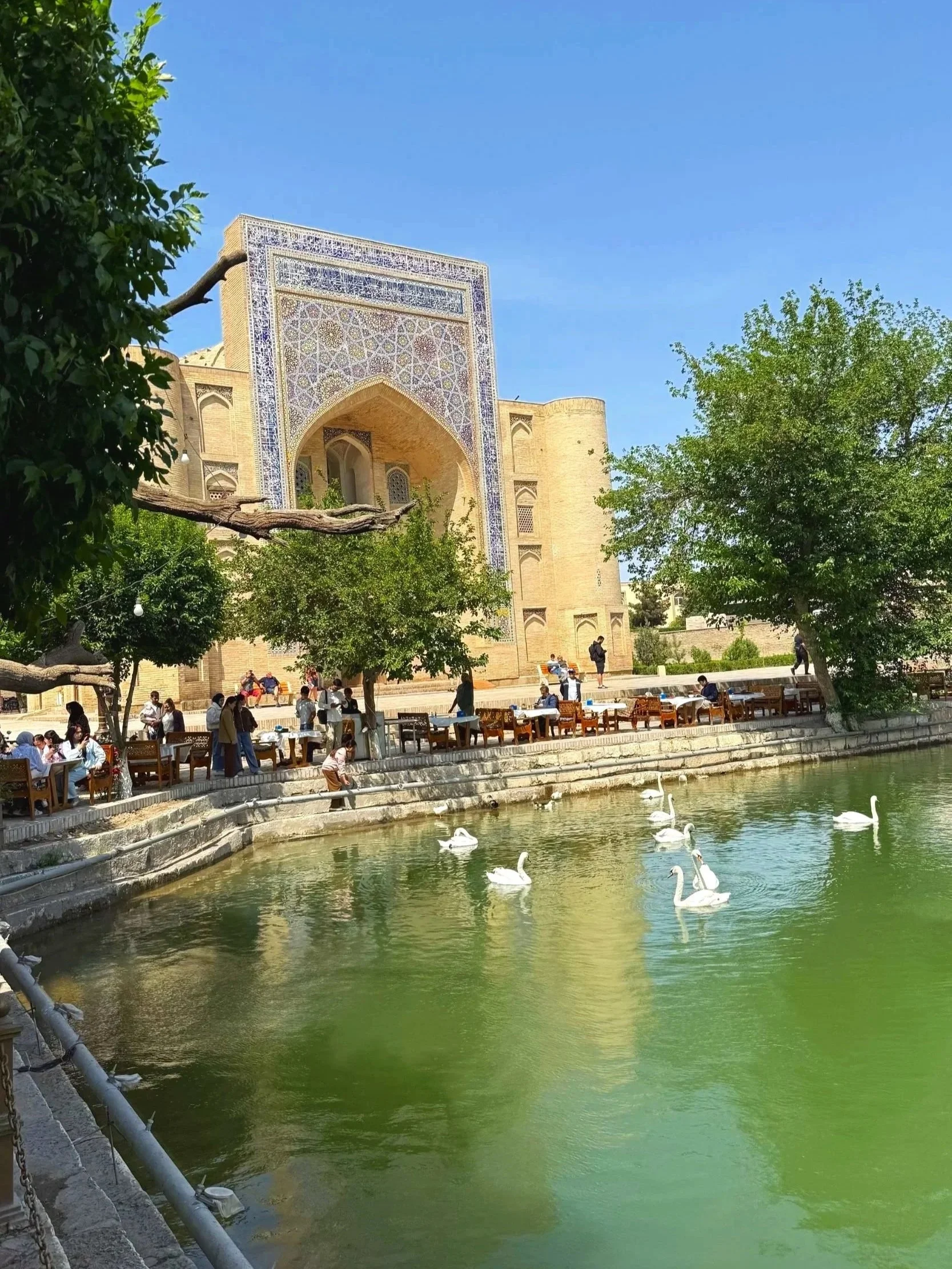
The city center built around a massive pool, shaded by ancient mulberry trees. Constructed in 1620 by the Vizier Nadir Divan-Beghi, this plaza is one of the few water sources to survive the Soviet sanitation campaigns that drained the rest of the city. It remains the social 'living room' of Bukhara, shaded by ancient mulberry trees that date back to 1477—making them older than the complex itself.
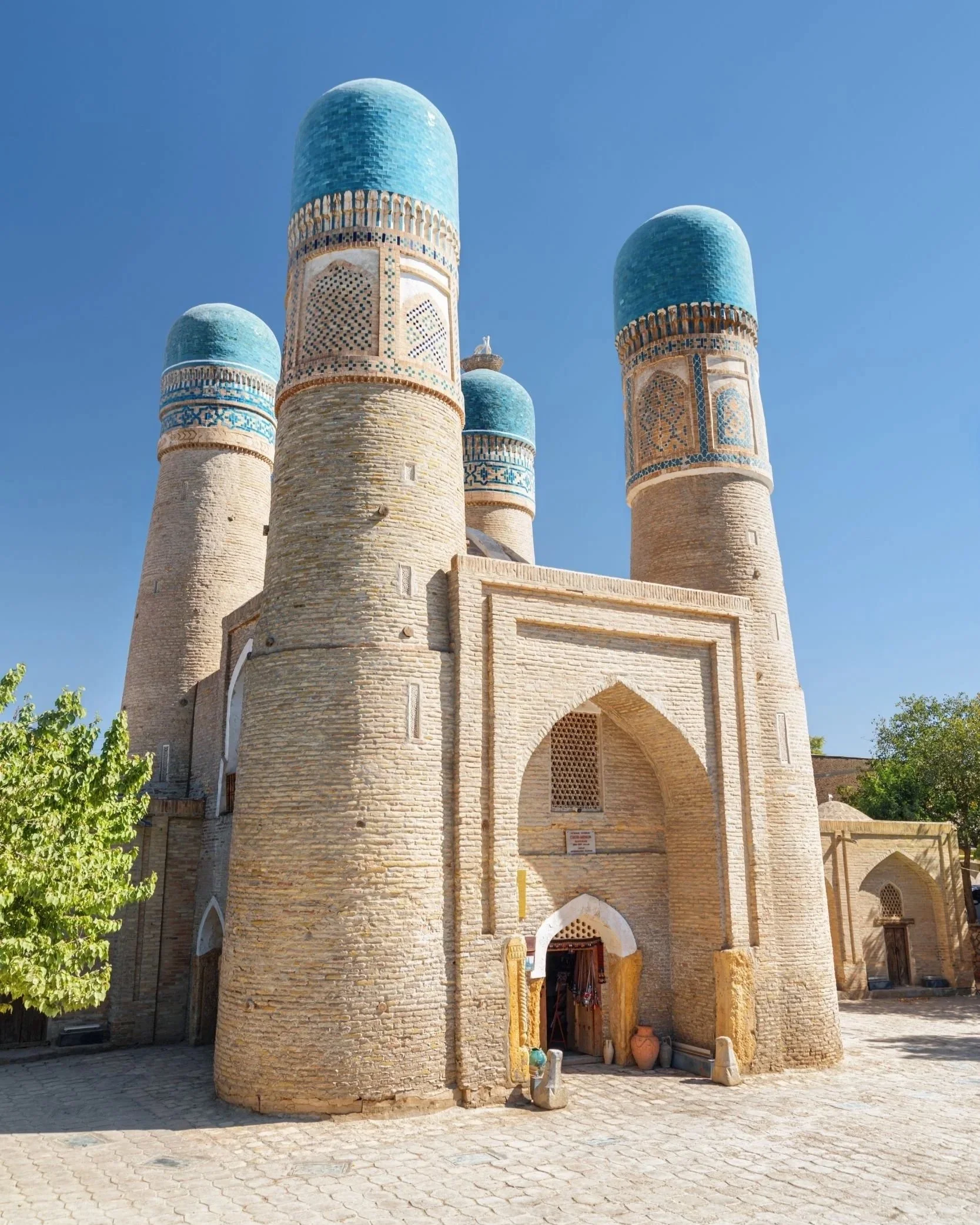
5. Chor Minor:
A tiny, photogenic madrasa with four turquoise towers hidden in the backstreets. “Chor Minor”, which translates to “Four Minarets”, was actually just the gatehouse for a madrasah that has long since disappeared. The four turquoise-domed towers are unique in that they are purely decorative rather than functional, designed strictly for aesthetic symmetry rather than for the call to prayer.
The Departure
Uzbekistan is not an easy country. The language barrier is real (Gluten-free travelers: bring translation cards and stick to whole foods—it is a struggle here). The cities are a mix of breathtaking preservation and Soviet grit. But standing in Registan Square, seeing the scale of human ambition tiled in blue against the desert sky, you realize why travelers have been making this journey for a thousand years.
It is difficult, yes. But it is undeniably grand.