The Dispatch: Kazakhstan
Almaty & The Tian Shan Mountains
True hospitality is circular. Years ago, we hosted a dear friend from Kazakhstan and his husband at my family home. My mother cooked and we sat around the dinner table for hours after long days of skiing. It was one of those visits where cultures mesh effortlessly over shared meals. This year, the invitation was returned.
We traveled to Almaty not as tourists, but as guests of his family. What followed was a lesson in the never-ending negotiation of second helpings at the dinner table, a terrifyingly brilliant ride in a Soviet minivan, and the discovery of a city that feels like a collision between 1980s brutalism and modern Los Angeles.
Logistics: The Long Haul
Kazakhstan is not a weekend trip; it is a commitment. When you travel this far across the globe, the best strategy is to lean into the distance and extend the timeline. We took nearly three weeks in total, using the opportunity to see more than just one country.
We broke up the initial journey with a four-day stopover in Qatar to adjust to the time difference and mitigate travel fatigue [Read more about our time in Qatar and the trip logistics here]. From Kazakhstan, we flew to Uzbekistan for five days to complete the Silk Road experience. [Read the full Uzbekistan dispatch here].
The Language of Respect
My husband was the unspoken star of the trip. He speaks fluent Russian—a skill that won him immediate and deep popularity among the family. In a region where English is not widely spoken by the older generation, his ability to converse in their native tongue was seen as a profound sign of respect. It also gave us the freedom to navigate the city alone, a luxury we wouldn't have had otherwise.
For me, communication was a comedy of errors and affection. I navigated with English, Spanish, and a lot of enthusiastic gesturing. Our host mother, a woman with a sharp, dry wit that kept the table laughing, spoke little English but tried genuinely. We bonded through smiles, pointing, and the universal language of feeding people. The intent was always clear.
The Table: A Never-Ending Negotiation
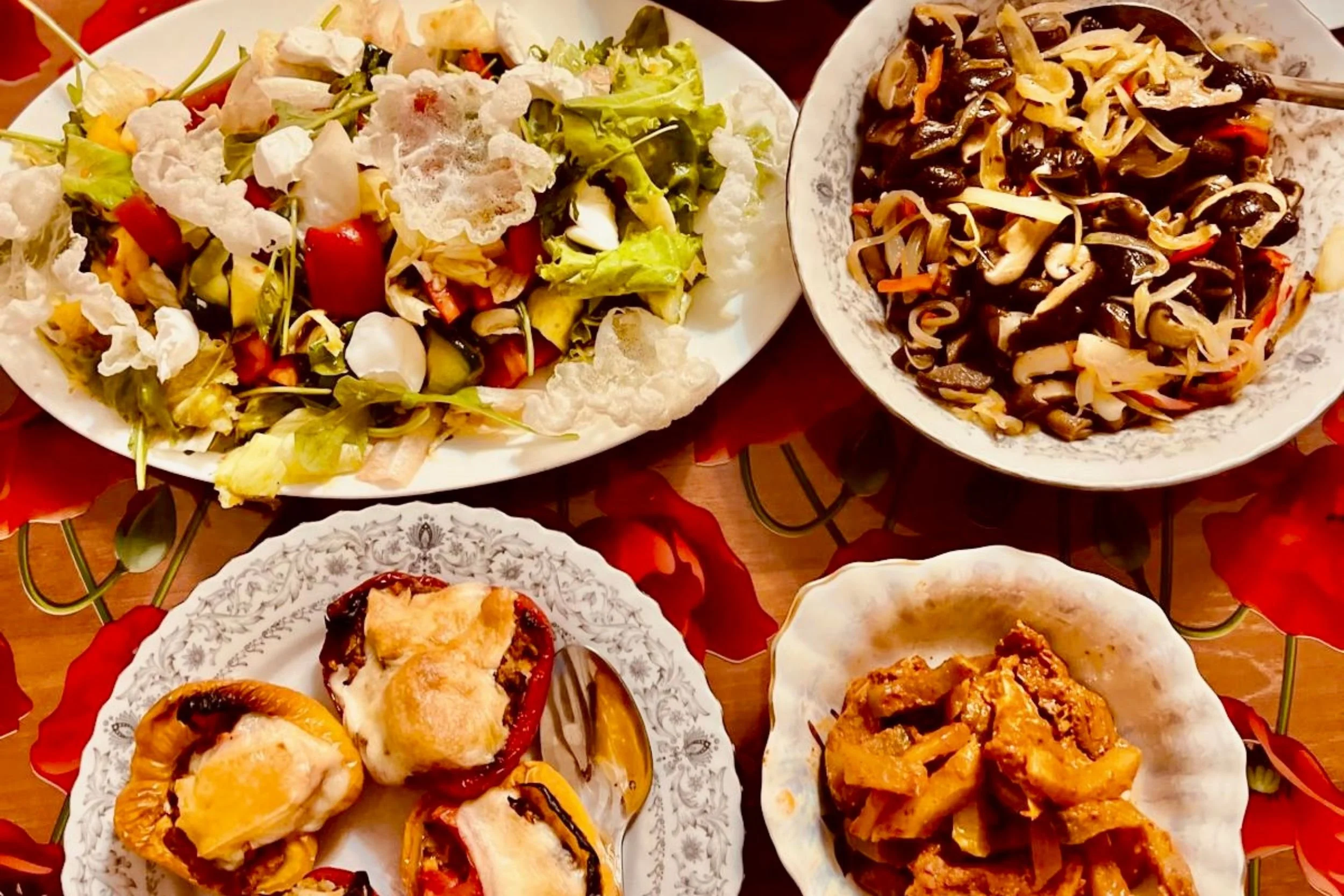
In Kazakhstan, hospitality is a mandate. We stayed in the family’s apartment, where the kitchen was in a perpetual state of production. Our host mother cooked from dawn until dusk, often starting the next meal before the current one had been cleared.
The Main Event
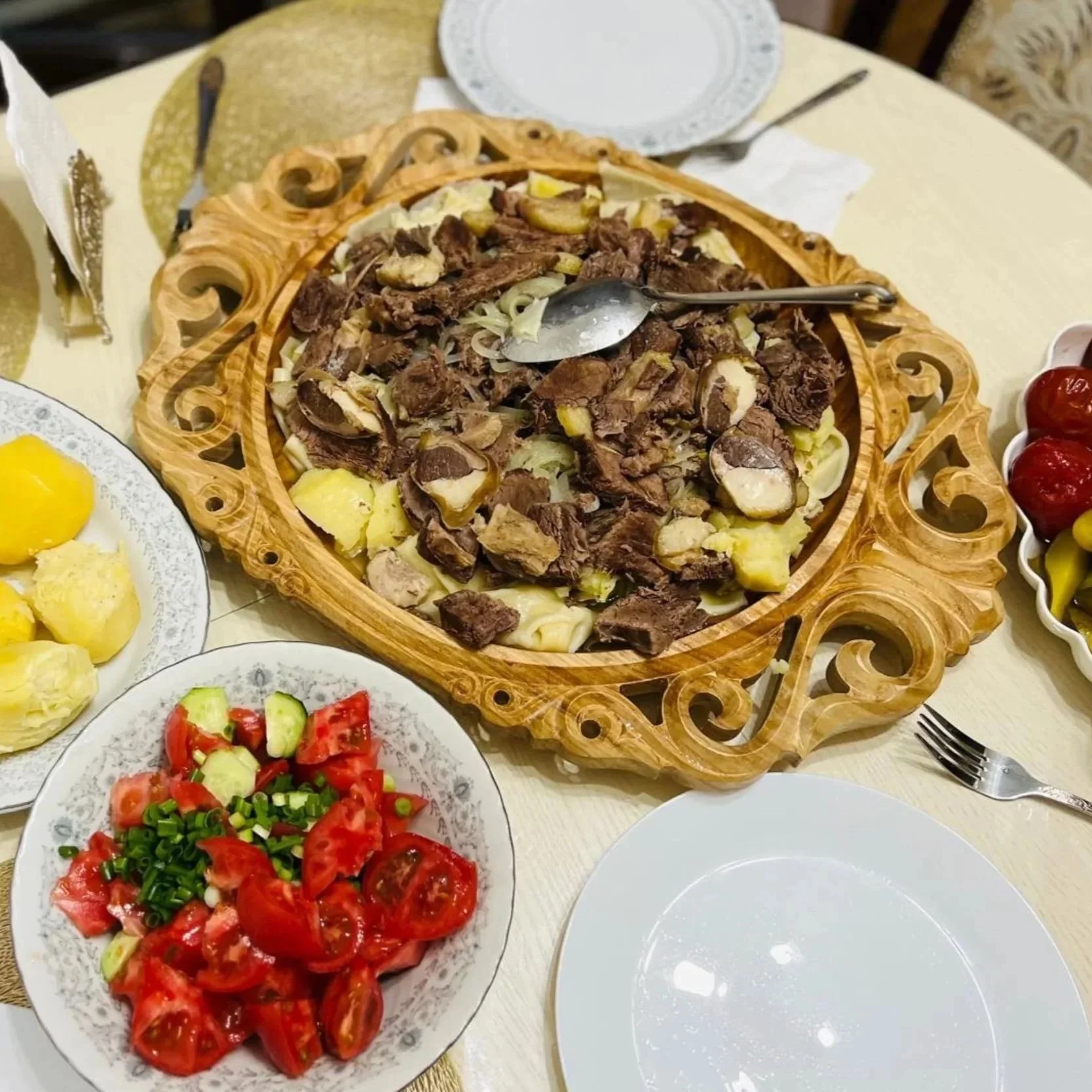
Every meal was a banquet. It is a humble society with echoes of the Soviet era, meaning nothing is wasted. Dinner often featured leftovers from lunch, creating a compounding feast. Horsemeat is a staple here—dense, flavorful, and served either cured (like salami) or braised in stews served over pasta. For those of us navigating gluten allergies, she was incredibly gracious, preparing stuffed peppers filled with lamb, rice, and vegetables.
The Ritual
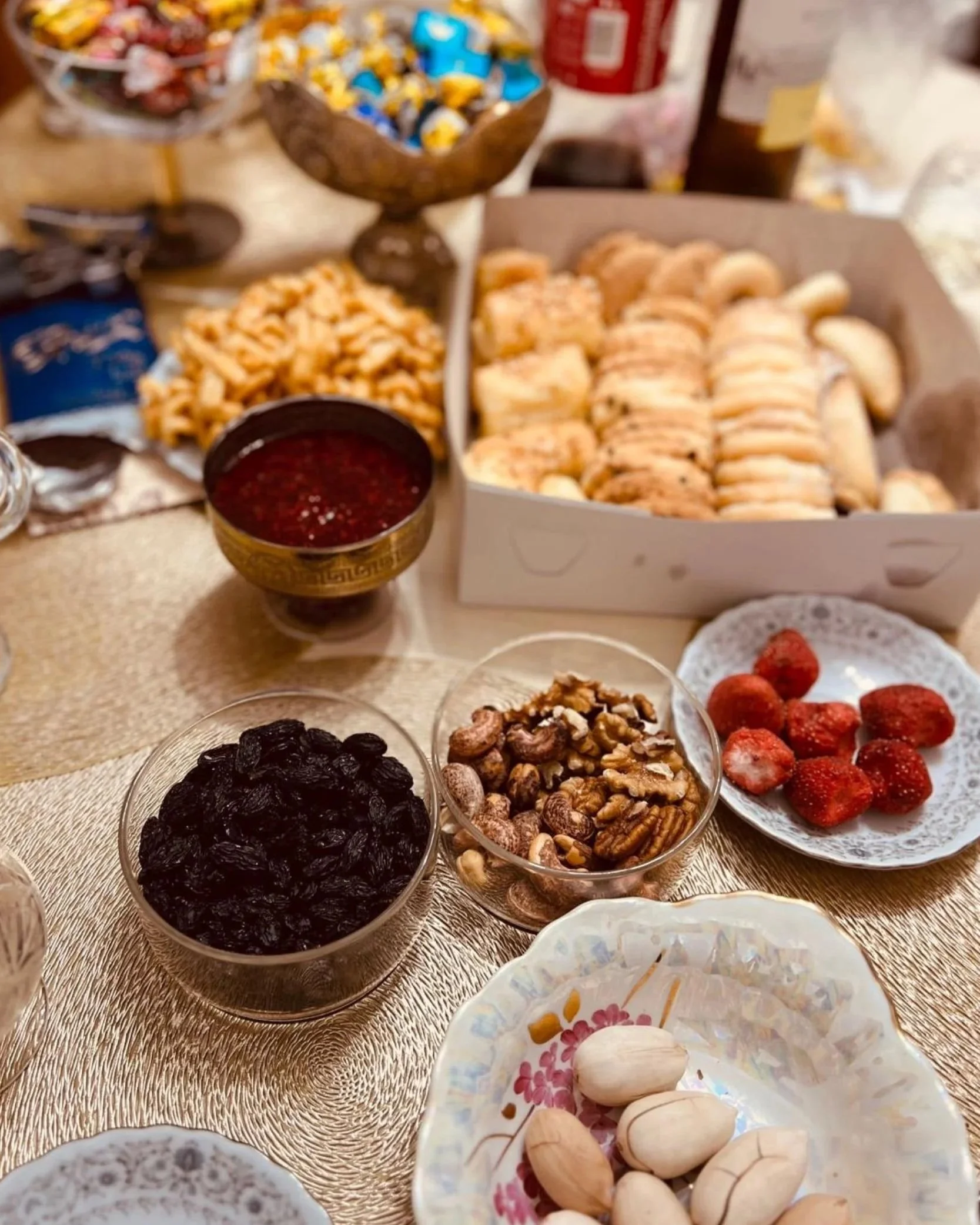
No meal ends without tea. A spread of sweets, cookies, chocolates is served with tea. It is a serious ritual. Whether in a home or a restaurant, tea is served in beautiful glass kettles, steeping with fresh herbs, mountain flowers, and spices.
A note on the nuts: You can buy an unfathomable variety of nuts and dried fruit at the local markets. My favorite were the pecans in their shells (bottom of photo). The white shells are difficult to crack, but the meaty nut is so sweet it tastes like pecan pie and is absolutely worth the sore fingers.
My personal favorite—and one I am still trying to master at home—was a blend heavy on fresh mint with slices of orange and fresh orange juice mixed in. It is fragrant, naturally sweet, and deeply comforting. The Polish: Before we left, the family gifted us a glass tea kettle of our own—a testament to the importance of the ritual and a permanent invitation to partake in it, even from across the world.
The City: A Study in Contrast
Almaty is a city of distinct duality.
The Old Guard
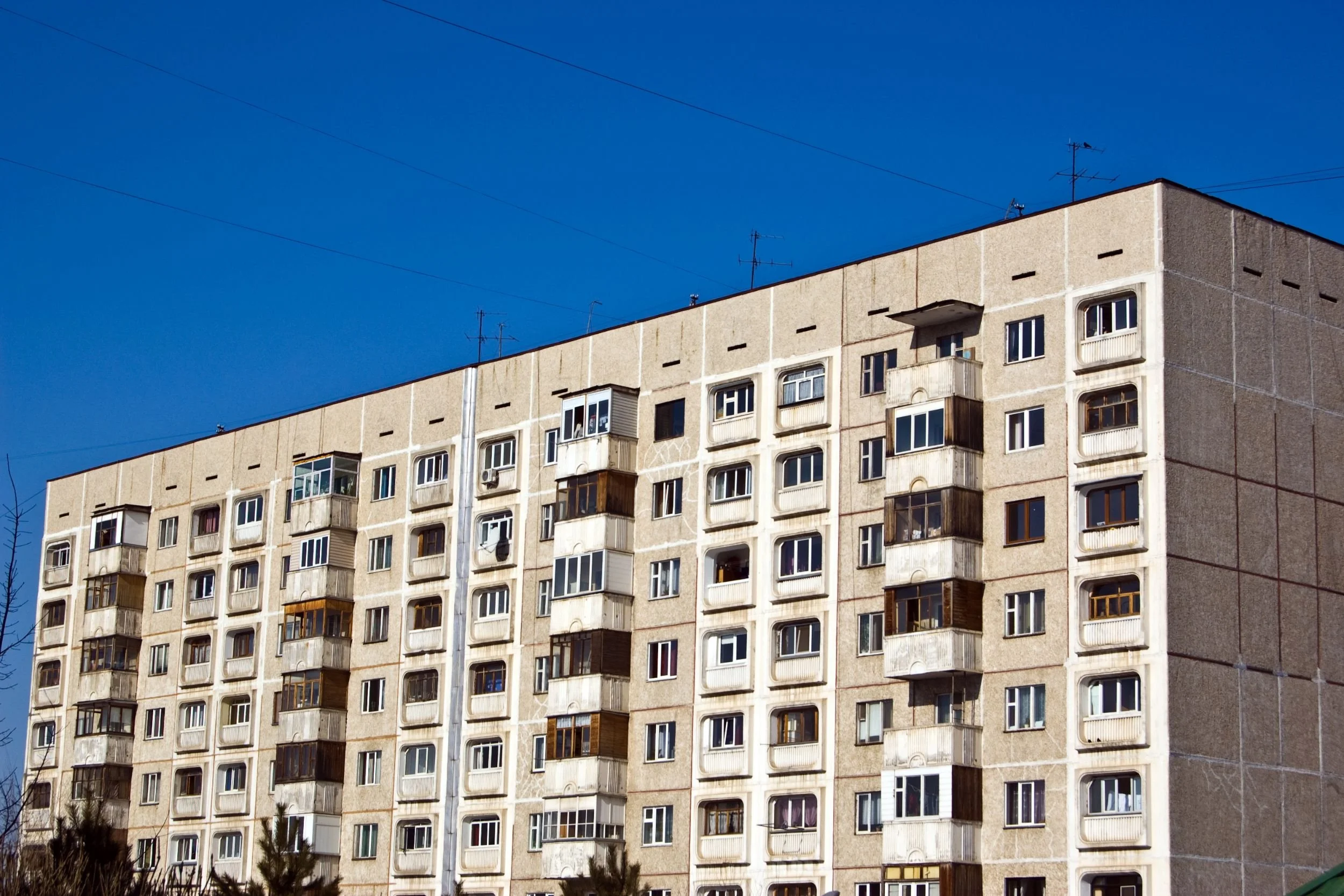
We stayed in a Soviet-era apartment block that felt frozen in time. While the city pulses with youth, these residential blocks feel distinctly elderly. It is the "Quiet Era"—elders sit on benches or walk with their heads down, reserved and keeping to themselves. Children play in the shared central playgrounds, but the atmosphere is hushed and communal.
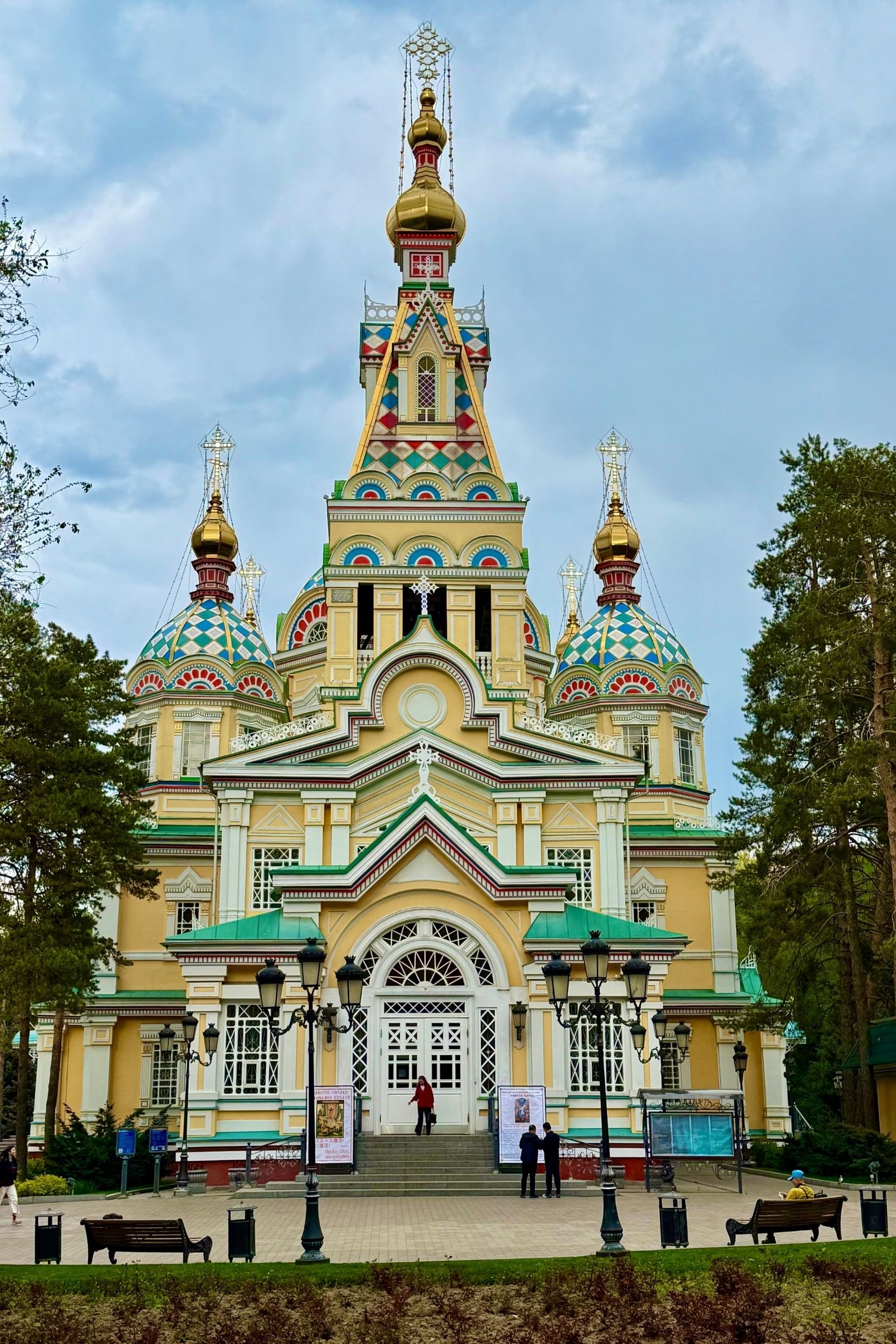
Standing watch over this quiet reverence is the Ascension Cathedral in Panfilov Park—a bright yellow, candy-colored survivor. When the Kebin earthquake of 1911 leveled nearly the entire city, this wooden cathedral, ingeniously built without a single nail to allow for flexibility, was one of the only structures left standing.
The New Wave
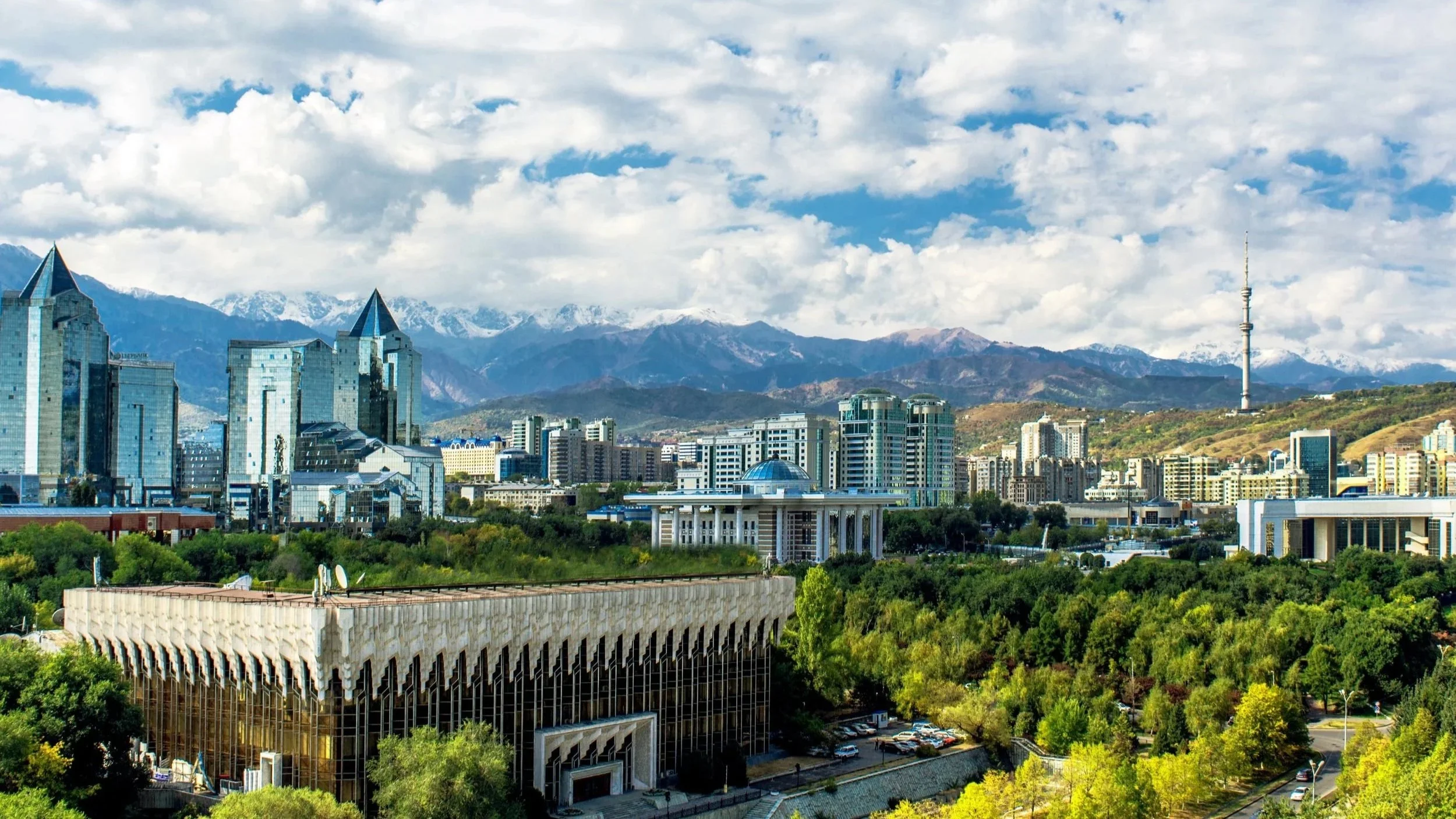
By contrast, the gentrified districts feel like Western Europe. The brunch scene explodes on weekends with live DJs and influencers, complete with gluten-free bread options for eggs on toast. The modernity of the glass skyscrapers sit against the backdrop of the mountains. It is cosmopolitan, loud, and alive.
The Adventure: Lake Kaindy & Charyn Canyon
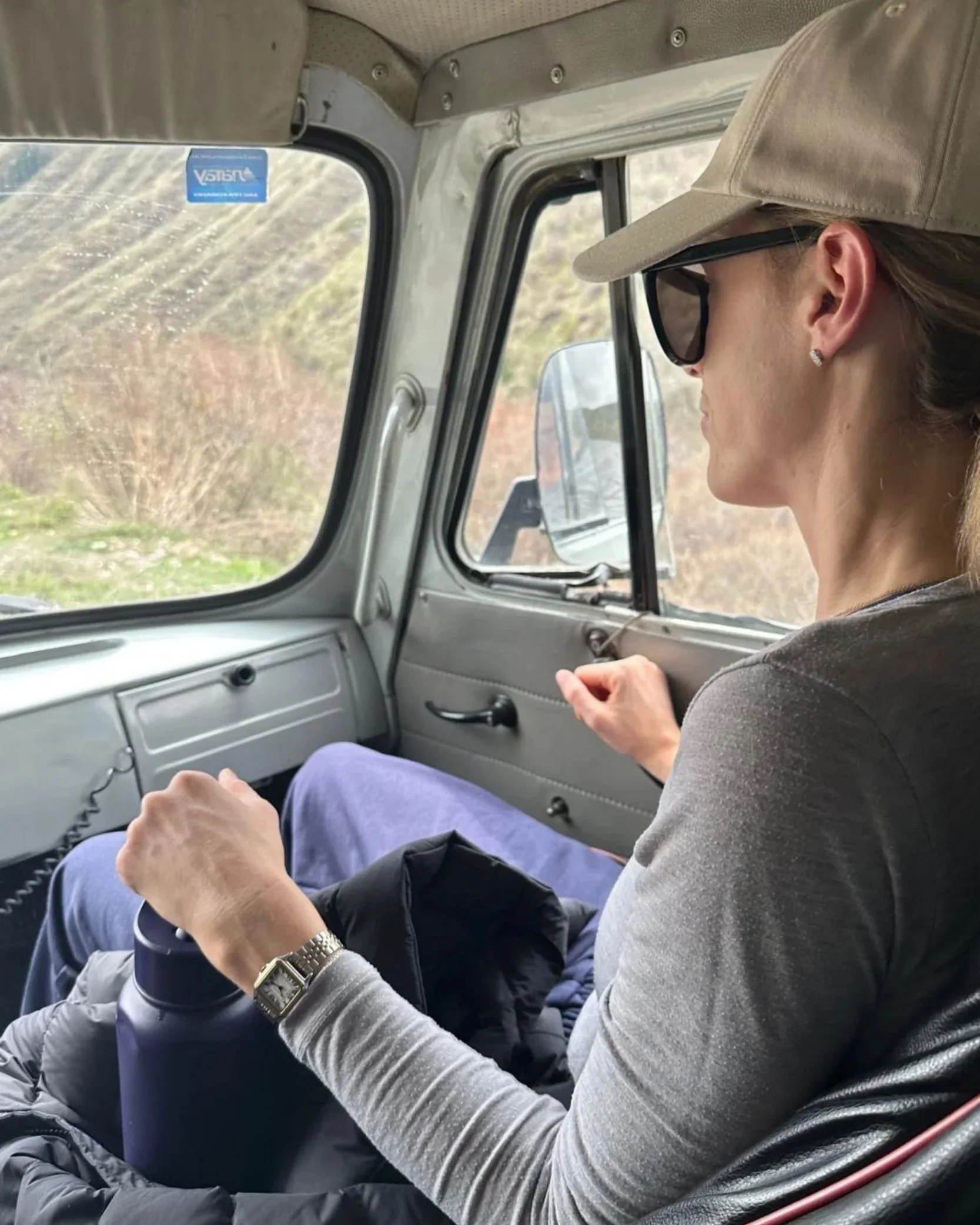
Kazakhstan is a huge country. A "nearby" trip often implies a five-hour drive. We sardined five people into a borrowed car to reach Lake Kaindy, famously known as the "Ghost Forest."
The Transfer
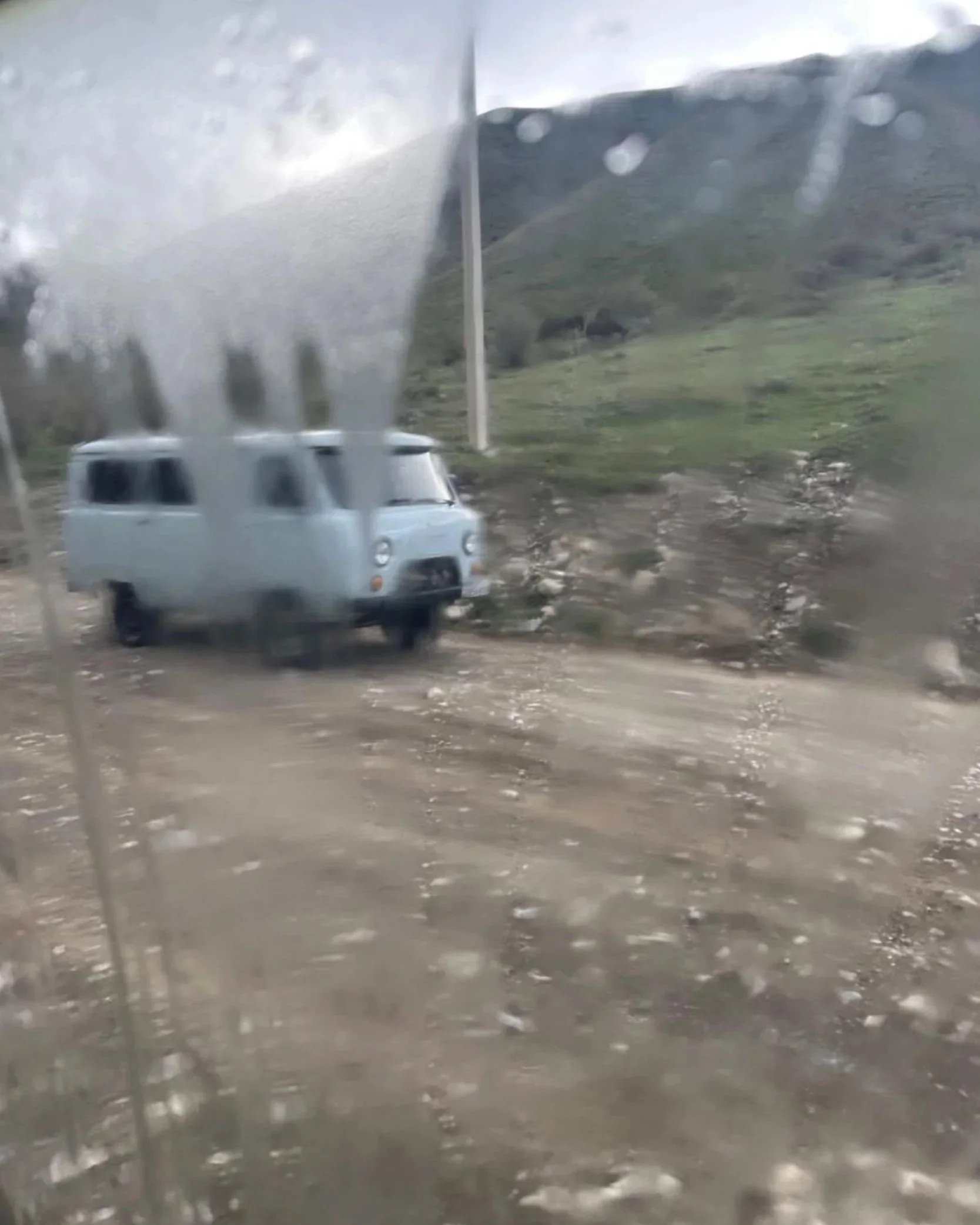
The car only gets you to the outpost. To reach the lake, you must transfer into old Soviet vans that look like they haven’t been serviced since 1989. The drivers, weathered and stoic, navigate mud-slicked roads and chassis-cracking fissures with terrifying precision. There were no seatbelts, and I was bracing everything I could. It feels like the wheel might pop off at any moment, but the drivers never falter.
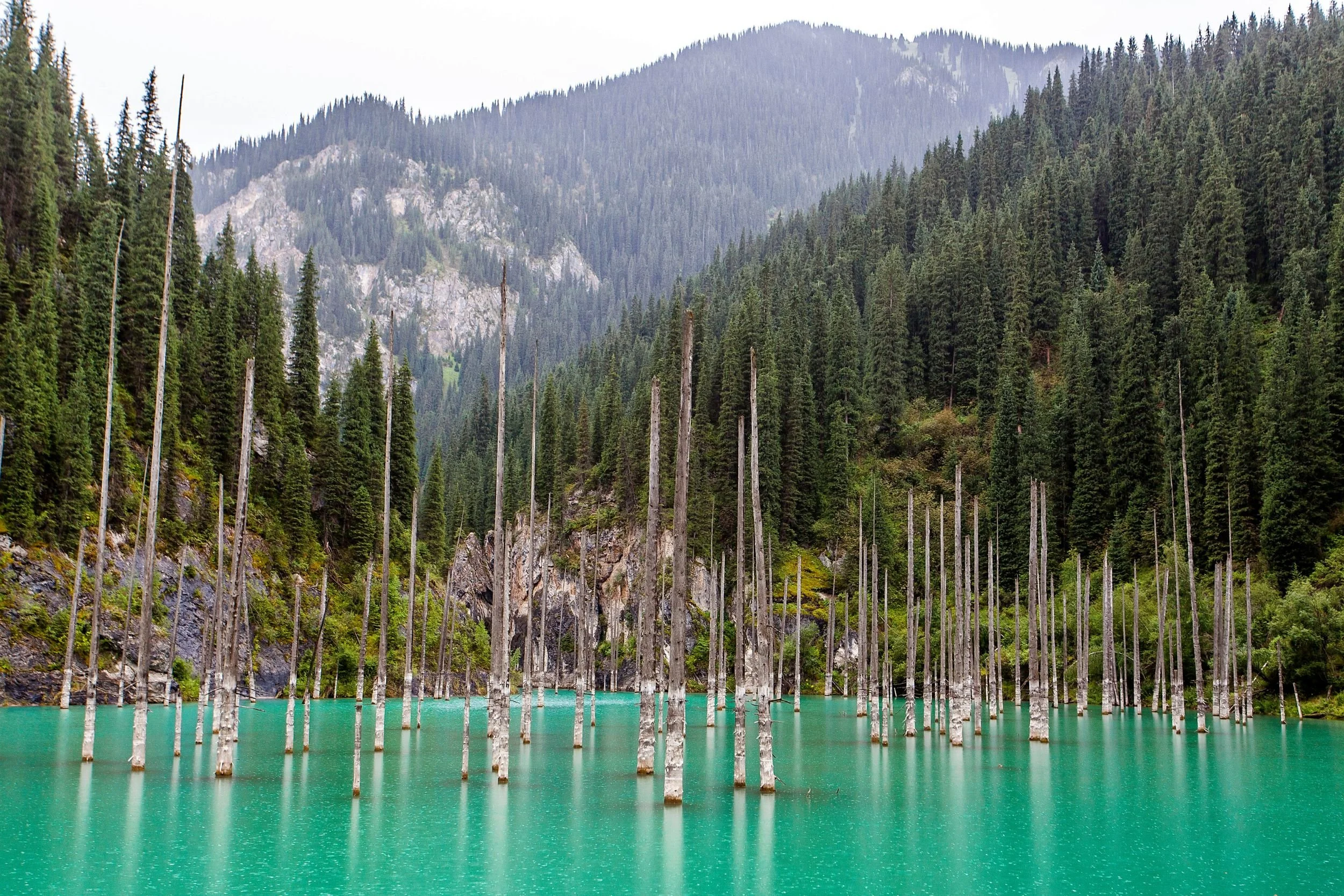
The Sunken Ghost Forest
Once you survive the drive, it is a pristine 30-minute hike (or 10-minute horse ride) to the water. The infrastructure here is surprisingly polished yet does not scare the nature - sturdy bridges, clean facilities, and a cup of tea served with bread from a food truck if you’re feeling peckish. The lake itself is eerie and magnificent: turquoise water punctuated by the bleached, ghost-like trunks of preserved spruce trees.
Kaindy Lake is an accidental monument to the same 1911 earthquake. The tremors triggered a massive limestone landslide that dammed the gorge, flooding the valley floor. Because the water at this altitude is so frigid, the submerged Schrenk’s spruce trees never rotted. Instead, they were perfectly preserved, their bleached tips jutting out of the turquoise water like the masts of ghost ships, while beneath the surface, the branches remain eerily intact. It’s worth a Google image search.
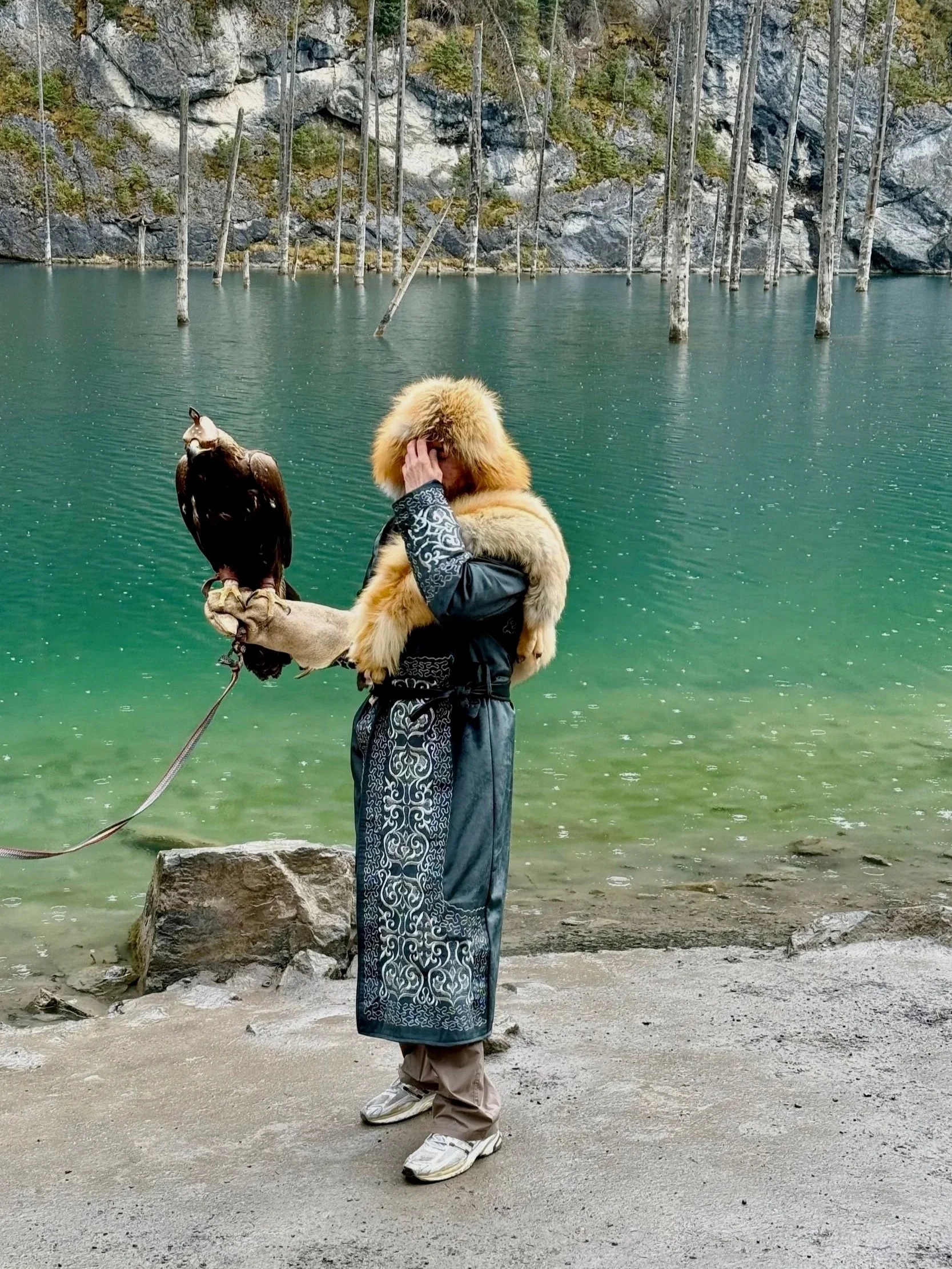
The Falconers
At the lake edge, you might find locals playing cards at a picnic table, a falcon resting nearby. If you pay them (an obscure amount), you can take a photo, but only when they finish their hand. It is confusing, transactional, and utterly memorable.
Charyn Canyon
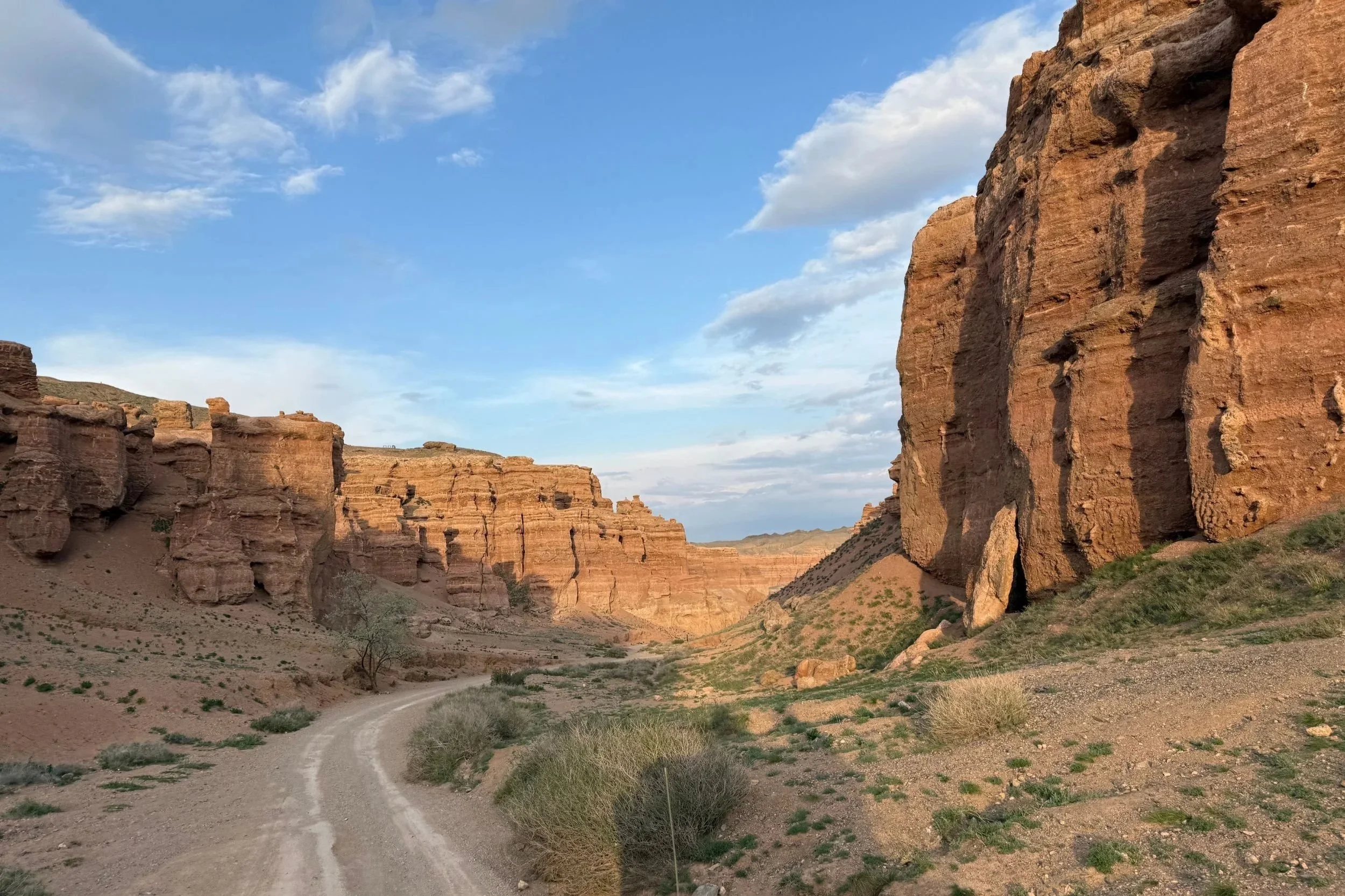
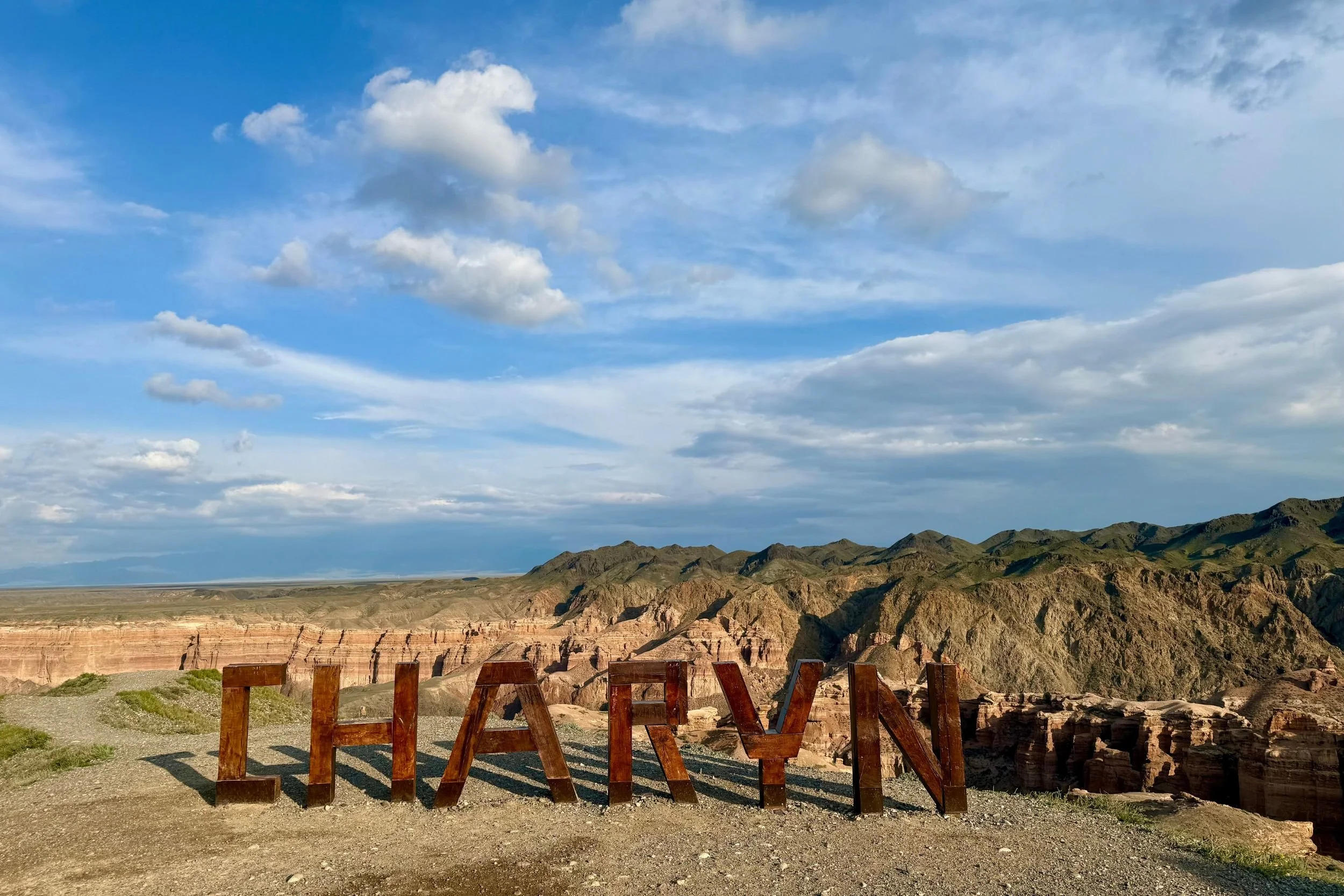
On the five hour return journey, we stopped at Kazakhstan’s most famous natural attraction. The spectacular Charyn Canyon is considered the Grand Canyon of Central Asia and is nicknamed the Valley of Castles for the red and golden sandstone formations that mimic ancient fortifications.
We arrived at sundown as the park was closing. The rides were technically finished, but a driver agreed to take us on one last run. We piled into the back of a pickup truck outfitted with bench seats—no seatbelts, no regulations.
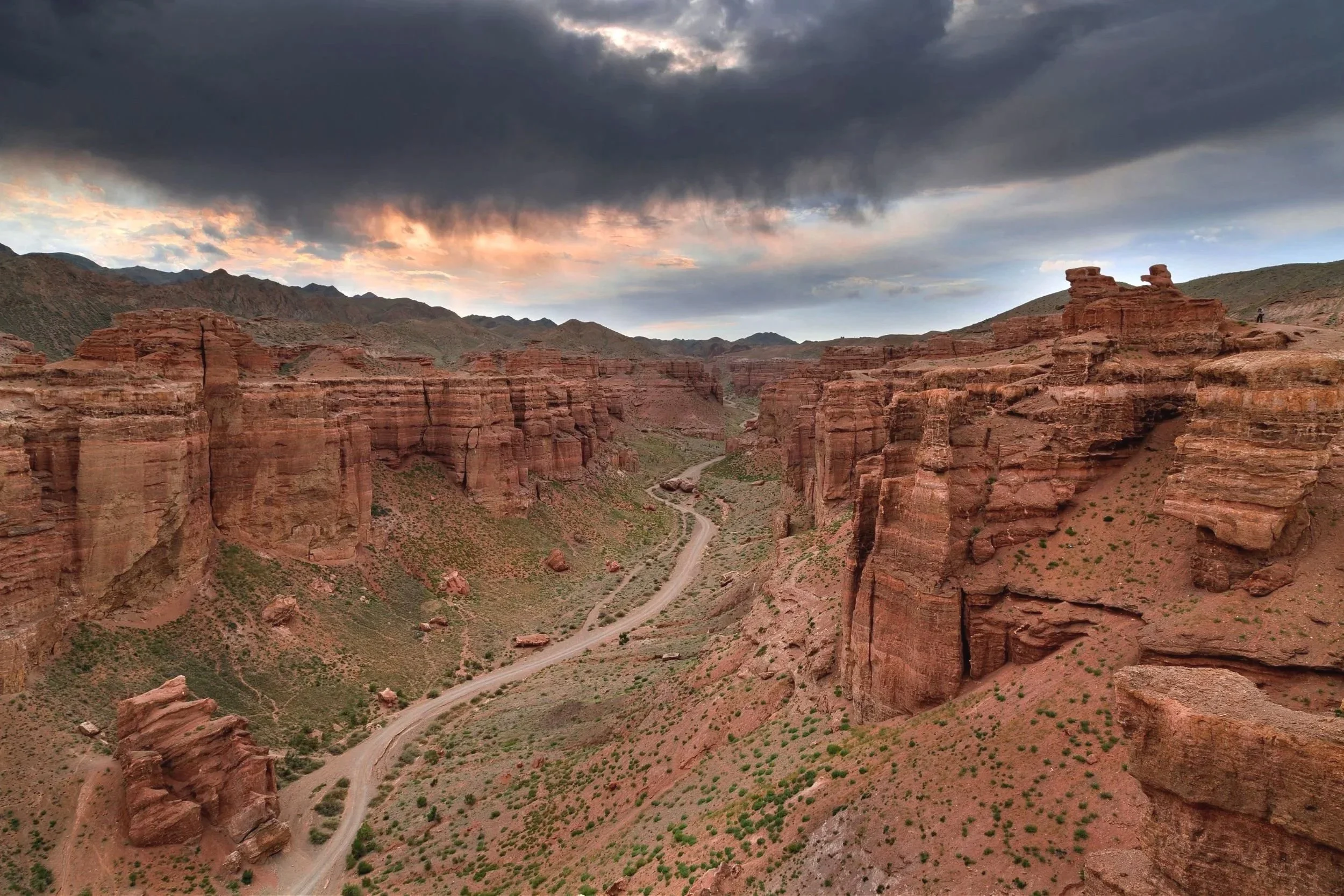
An Experience
You hold on for dear life, tucking your fingers in as you speed through narrow rock tunnels. It felt refreshingly liberating—a "participate at your own risk" thrill that has been regulated out of existence in the West.
The Alpine Legacy: Shymbulak & Medeu
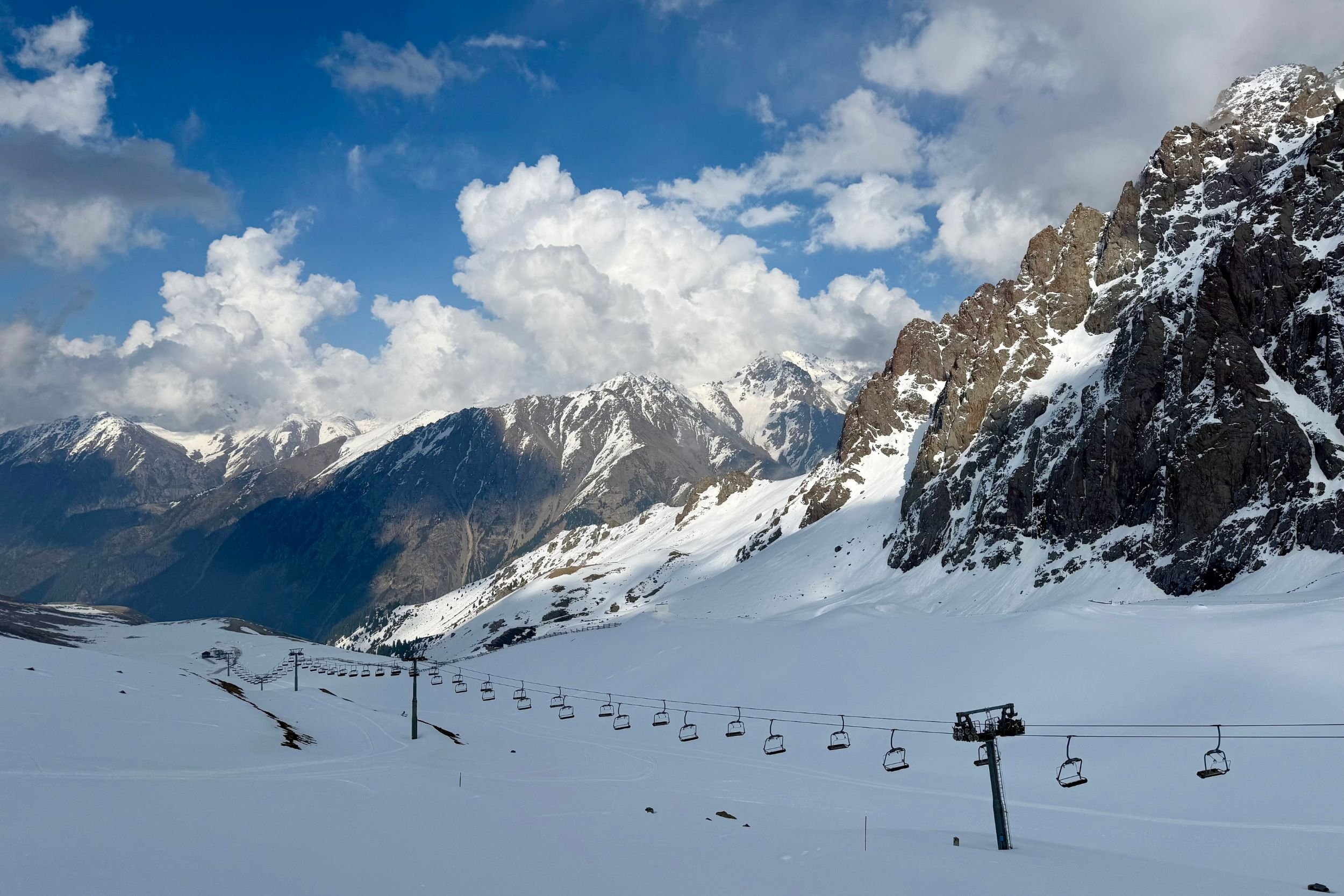
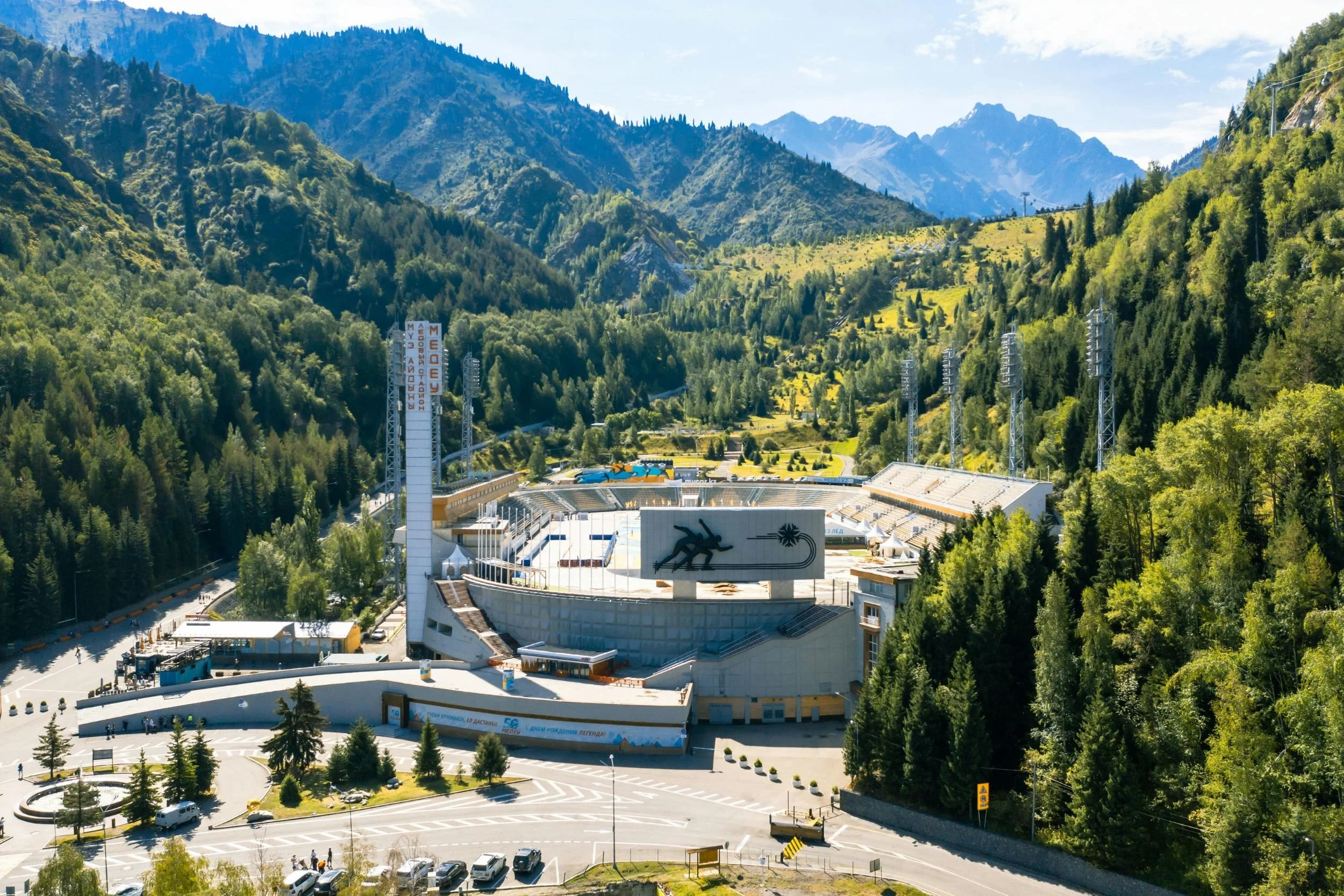
Almaty is cradled by mountains. We spent a day exploring the legacy of the 2011 Asian Winter Games, visiting the massive Medeu ice skating rink and taking the gondola up to the Shymbulak ski resort.
The Summit Lunch
It was a beautiful spring day at base camp. We sat on the patio for lunch, surrounded by snow but warmed by the sun. The chairs were draped in animal furs, and the staff provided blankets—a perfect example of that practical, cozy luxury that cold climates do so well.
The Glacier Hike
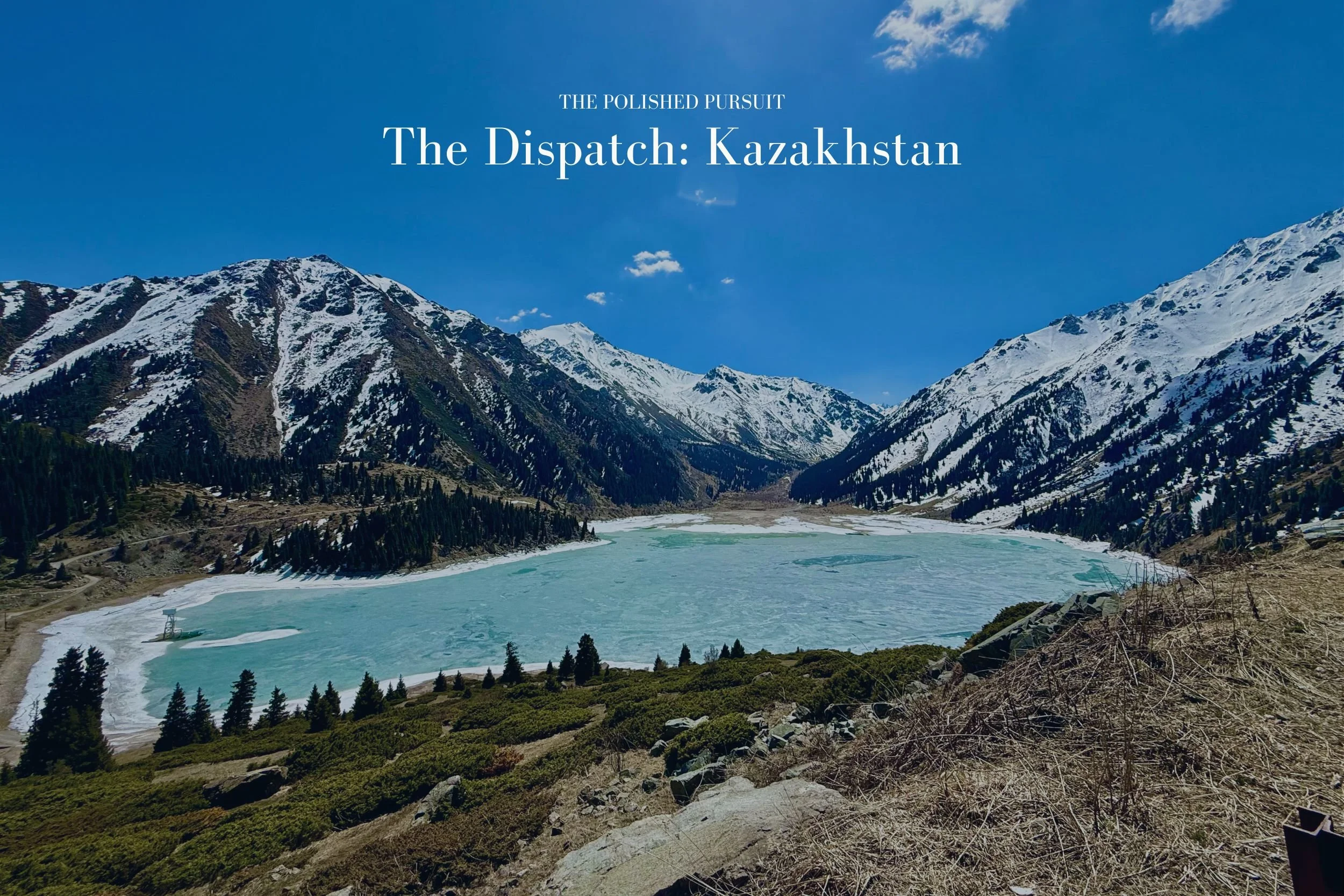
On our final morning, we committed to a strenuous hike up to the famous Big Almaty Lake (pictured at the beginning of this post). We rose early and loaded up on a breakfast spread before driving up the winding mountain roads. The sun was scalding and the trail was lonely. For hours we saw no one, until we’d run into a hiker coming down. Regardless of the language barrier, they all conveyed the same optimism: "You're close! It's worth it!" Most of the time we were not close. But they were right—it was worth it.
The Farewell
It is easy to write off the far-flung corners of the map as too distant or too different. And truthfully, the logistics are heavy. It takes flights, stopovers, language gaps, and uncomfortable drives to get those far destinations.
But the reward for that effort is a specific kind of peace.
It is a reminder that family is not just born; it is chosen. It is built across continents and time zones, defying language barriers and generational divides. Standing in that kitchen, communicating through gestures and laughter, or hiking a lonely glacier trail, we find that the world is both vast and incredibly small.
We went to Kazakhstan to see something new, to stand on different soil and witness a different history. And we did. But what stays with us isn't just the difference - it’s the familiarity of it all. It’s the universal language of a mother feeding her guests, the warmth of a shared pot of tea, and the quiet, grounding feeling of being truly welcome.
No matter where you go in the world, love and friendship look exactly the same.