Pushing past Unexplained Infertility

There is perhaps no diagnosis more frustrating in the world of reproductive medicine than "unexplained infertility."
It is a label that feels less like a medical conclusion and more like a surrender - a polite way for the clinic to say that the standard checklist has been exhausted, and the answers remain unknown. For a long time, that was where my story stalled. But I refused to accept a blanket diagnosis when I knew my body was trying to tell me something far more complex.

I was 34 and my husband was 38 when we decided we were ready to have children.
We had been together for three years, and while we had both gone into the relationship knowing we wanted a family, we had a lot to sort through first. Getting to know each other, traveling the world, navigating emotional ups and downs, and finding our footing again. When we finally agreed to try, I got pregnant immediately. It felt magical, exactly as it should.
But at eight weeks, we were told there was an irregular heartbeat. By ten weeks, there was no heartbeat at all.
We were given a choice: miscarry naturally or go in for a D&C (Dilation & Curettage) to manually remove the embryo so it could be tested. Desperate for answers, I chose the procedure. It revealed a chromosomal abnormality. Blessing or not, we found solace in the fact that my body naturally let go of what could only have caused more heartache down the line. So, we put on a brave face and tried again. And again. Six months went by, and still, nothing.
We were living in Manhattan, and I had arguably the best care available. My husband’s family specializes in in vitro fertilization; his father began practicing in the early 1980s when IVF was still cutting-edge, frontier science, and they now travel the world speaking to the medical community. I was in incredibly good hands, with top doctors at my disposal in NYC, Mexico City, Buenos Aires, and beyond (in case you’re new here: we travel A LOT!) I could not have asked for a better network.
After six months of trying naturally, we began the IVF process. I had frozen eggs, and my husband had frozen sperm from our younger days, but we were advised that a fresh round was the best route, keeping our frozen reserves as a fallback. We retrieved six healthy embryos from that first cycle, and after extensive genetic testing, we moved forward with our first transfer. And we waited. Nothing.
Our odds were 50/50. But no matter what your odds are, and no matter how well you understand the math or the science, you always think the odds are tilted in your favor. They just have to be with something like this. But again: nothing.
The logical questions led to routine tests. In the beginning, the standard, surface-level testing showed absolutely nothing wrong. On paper, everything looked fine, but the gap between looking fine on paper and a successful implantation is vast. Reminded of the odds, our doctor suggested a second transfer with a different timeline of hormone preparation. We went ahead with it, and two weeks later I saw the faintest ghost of a line on the pregnancy stick. It was real.
Unfortunately, that faint line correlated with slow growth, and ultimately, a loss at five weeks. They call it a chemical pregnancy.
My husband started gently bringing up surrogacy. Our doctor simply proposed a third prep cycle. But I was becoming increasingly uncomfortable with the entire approach. I didn’t buy into the idea that being over 35 made me inherently geriatric; I was 36 by then, with a strong AMH count. To be clear: I know that true, biological infertility exists. There are absolute realities - like ovarian failure, missing anatomy, or a genuine biological clock - that cannot simply be bio-hacked away. I am not suggesting infertility is a myth. What I am saying is that for me, and for so many women like me, "unexplained" is often just a placeholder for "undiscovered." But my doctor’s face told me my perspective was controversial when I stated in no uncertain terms: "I fundamentally do not accept unexplained infertility. It is just a matter of finding the explanation." Crickets.
Instead of accepting the unknown, I decided to treat my fertility like the intricate, interconnected system it actually is. An acupuncturist I had been seeing recommended an Upper East Side OBGYN who also held a degree in functional medicine. I am a firm believer in the wonders of conventional medicine, but I also know there is immense nuance to human health. I’ve had to do my own medical sleuthing in the past when conventional routes weren't giving me the full picture. It wasn't about turning to alternative medicine; it was about realizing that if I was going to find answers, I needed to dive all the way in and educate myself. Determined to push past standard diagnostics and hunt for root causes, I started working closely with Dr. P. (I am using an initial here to protect his privacy, but if you are in the NYC area and looking for a second opinion, my DMs are always open.)
That decision marked my turning point from a passive patient to an active investigator. We initiated comprehensive autoimmune and nutrient panels, seeking out anything that might be quietly throwing my system off balance. When the initial tiers of testing weren't enough, we went deeper into reproductive immunology - a relatively new, highly debated field of medicine. Given my history with celiac disease, Dr. P. explained that a systemic inflammatory response could be playing a major role. We looked at DHEA-S levels, tested for hidden hurdles like Ureaplasma, and closely analyzed my TH1/TH2 cytokine ratios. I had never heard of a TH1/TH2 ratio, but mine was off the charts. It turns out the exact inflammatory response that is largely the reason I so rarely get sick might have also been causing my body to actively attack my embryos.
Dr. P. introduced me to intralipid therapy. Used off-label for unexplained recurrent miscarriage, it utilizes an intravenous fat emulsion to suppress overactive natural killer cells and lower the inflammatory proteins that mistakenly attack an embryo. Because large-scale clinical trials offer mixed results, major reproductive organizations still classify it as experimental rather than standard care. But I was entirely up for experimenting. I did the infusions every four to six weeks for a few months. While I didn’t get pregnant during that time, the intralipids - combined with low-dose naltrexone (an oral medication used off-label as an immune modulator) - successfully brought my TH1/TH2 ratio down to a normal range. It was a small win, but still not the final answer.
The definitive breakthrough came when we finally looked closely at the uterine environment itself. For decades, my OBGYNs had casually mentioned I might have endometriosis, but nobody had ever seen it on an ultrasound, nor had they offered a solution beyond warning me it could complicate a future pregnancy. Incredibly helpful. While there is no simple test for endometriosis, there are tests for the specific inflammatory markers that flare when it is present. Dr. P. ordered the ReceptivaDx test alongside an endometrial biopsy for CD138.
Those results turned out to be the missing puzzle pieces I had been fighting for. The testing revealed elevated BCL6 markers and confirmed the presence of CD138-related endometritis.
Dr. P. helped connect the dots: BCL6 flares can indicate the presence of endometriosis. However, CD138 - a marker for endometritis (an acute or chronic infection of the inner uterine lining) - can also cause BCL6 to flare. It was highly likely the BCL6 flares were being driven by the underlying endometritis. Regardless of the exact sequence, the "unexplained" finally had a name: silent, chronic inflammation.
Having the data changed everything. The elevated markers weren't just random anomalies; they were red flags pointing directly to the root cause of the implantation failures. With actual biomarkers in hand, we transitioned from generic advice to a highly targeted, physiological protocol. We used a strategic course of antibiotics to clear the infection, alongside the intra-lipid immune-modulating therapies to calm my body's inflammatory response.
In the end, it turns out endometritis is often caused by bacterial infections relating to miscarriages or medical procedures. It is hard for me not to think, "What if I hadn’t elected to do the D&C?" but I know that isn't helpful. Instead, I think about what my IVF doctor said when I first brought her the panel of tests Dr. P. had recommended: "A bit of overkill in my opinion, and expensive, but it won’t do any harm."
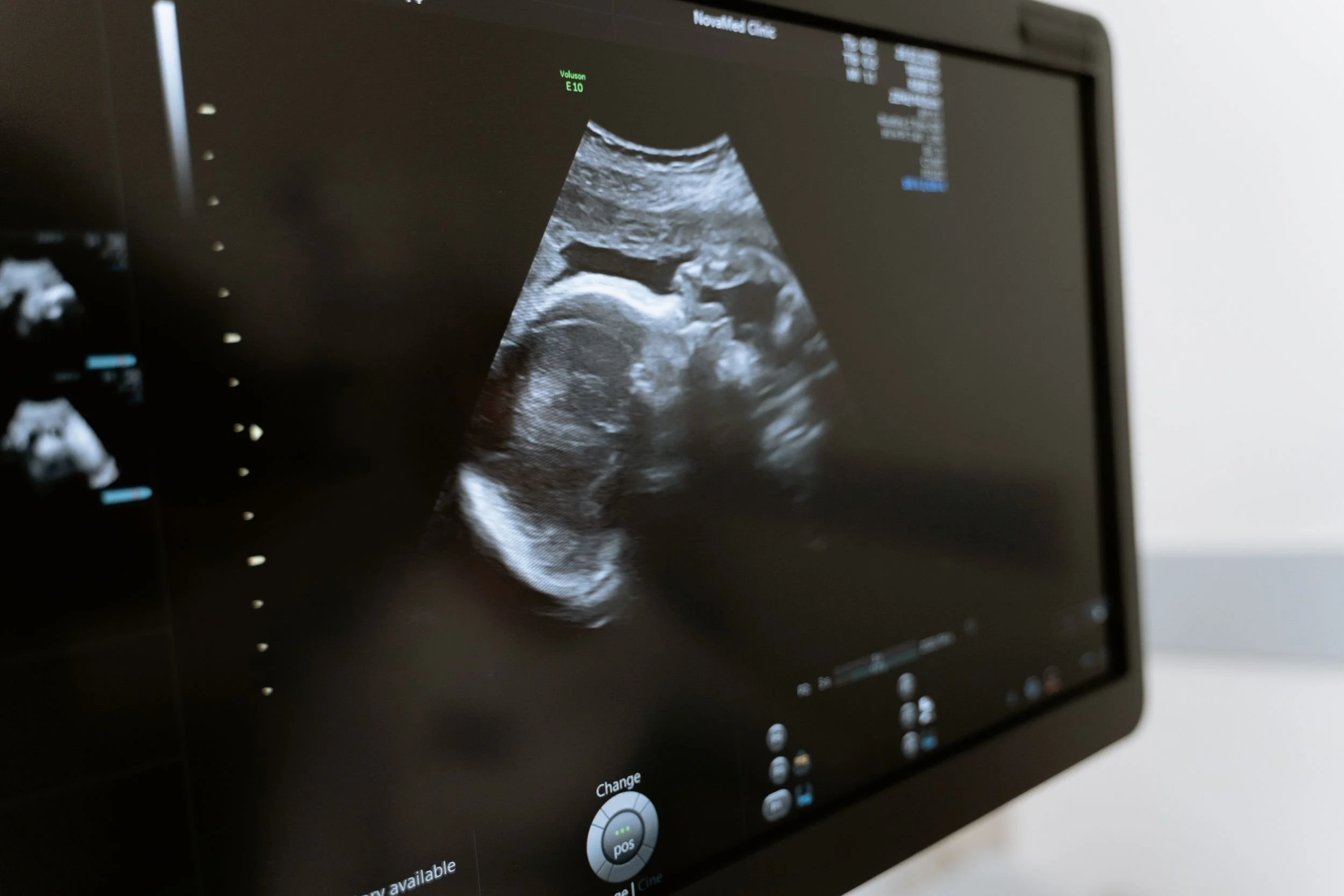
Two years later, I am at the end of my first trimester, having conceived naturally just two months after clearing that silent infection.
Had I continued blindly with IVF, I likely would have lost 6 perfectly good embryos to “unexplained infertility”.
Advocating for this level of testing was exhausting, but it was the only way through the dark. Throughout this journey, I have spoken to countless women who were told they would never have kids, only to get a second opinion, dig deeper, and end up with healthy children. Moving past an "unexplained" diagnosis means refusing to settle for no. The female body can do amazing things, but sometimes it needs our help to remove the roadblocks. For me, that meant tracking down hidden inflammation, asking the harder questions, and demanding to treat the root cause rather than the symptoms. Perhaps most importantly, it meant pushing onward when the only answer I was getting was, "There is nothing you can do."
For anyone currently stuck in the waiting room of an unexplained diagnosis, my greatest lesson is this: keep digging. The answers are often there, waiting for the exact right test to bring them into the light.