Define your Color Season
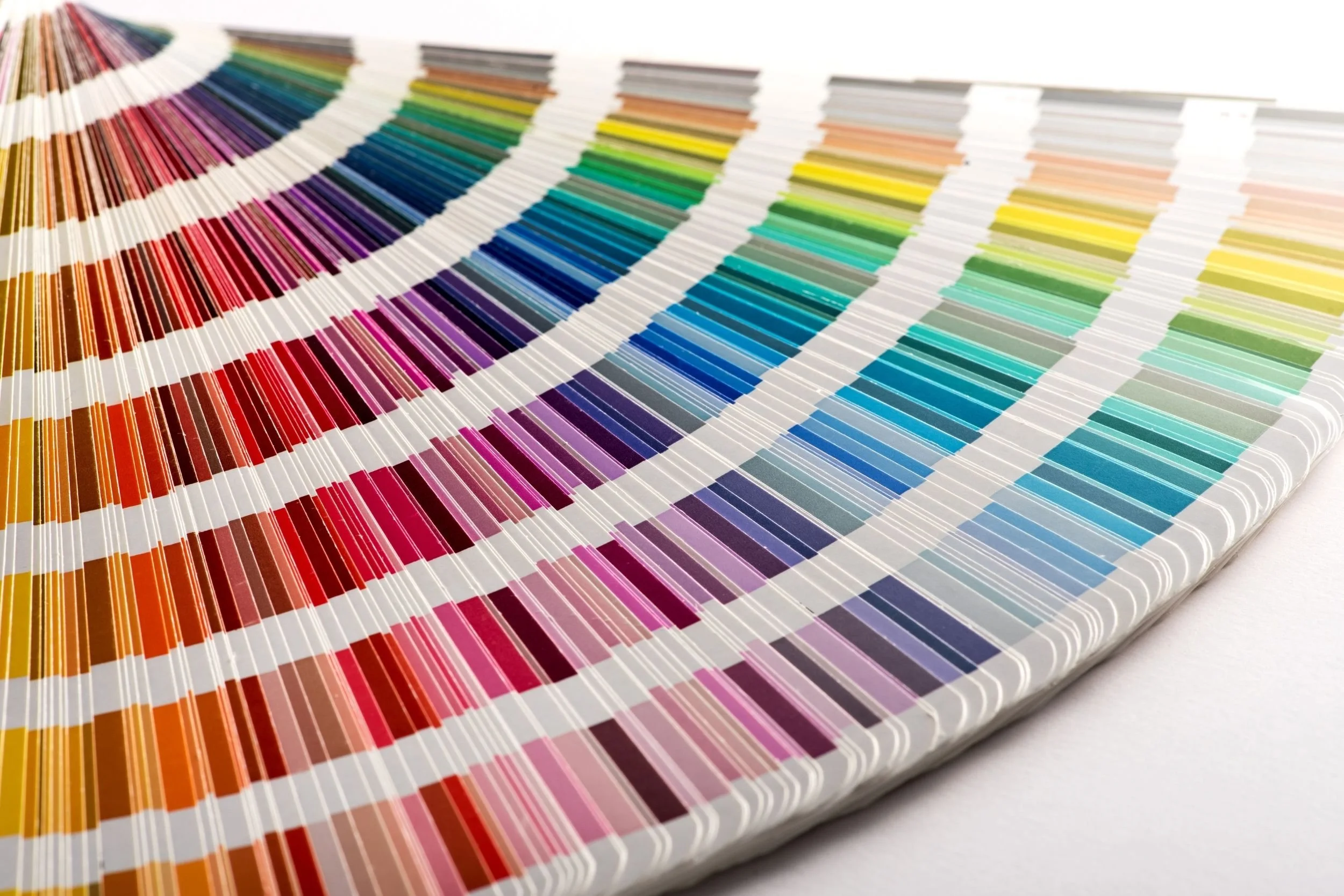
The Edit: Defining Your Standard Through Color Theory
Defining Your Standard Through Color Theory
True style is rarely an accident. It is a discipline.
For years, I operated under the assumption that neutral meant safe. My closet was a sea of camel, beige, black, and cream - the tones we are told are timeless, expensive, and effortlessly chic. I would put on a monochromatic cream look and love the outfit, but I wouldn't love the way I looked in it.
I didn't know I looked tired. I just knew something wasn't right. The clothes were beautiful, but on me, they lacked power.
The turning point wasn't a stylist; it was my own rigorous deep dive into color analysis. I didn't just want to know what to wear; I wanted to know why certain tones commanded attention while others faded into the background.
The AI Advantage
Forget the expensive apps.
Traditionally, this process involves expensive consultants and hours of draping fabrics. Even the modern "color analysis apps" charge a premium for what is essentially a filter.
I took a smarter route: Generative AI (Gemini & ChatGPT).
You don't need to pay for a specialized service. I simply uploaded photos of myself in natural lighting - wearing everything from mustard yellow to icy blue - and asked the AI for a critique. It didn't just give me a season; it explained the physics of the clash. It pointed out shadows on my jawline created by the wrong orange or the way a specific gray made my green eyes look muddy while a different tone of gray made my eyes pop. It allowed me to learn in real-time.
The Celebrity Trap
One of the biggest hurdles in finding your season is the "Celebrity Comparison." We are often told to find a celebrity lookalike and copy their palette. The problem is the subtlety of color analysis. At its core, seasonal color analysis is not about trends; it is about harmony. It evaluates your skin’s undertone (cool vs. warm), value (light vs. deep), and intensity (muted vs. clear) to find the palette that naturally amplifies your features rather than fighting them.
For years, people likened me to Blake Lively or, to a lesser extent, Jennifer Aniston. I assumed that since I shared some of their features, I shared their season (likely Spring or Soft Autumn). But this is a trap. First, their skin tone or hair may vary from yours (Aniston is more tan or olive than my pale complexion, while Lively has a red tint in her hair that I do not share).
Second, and most importantly: Celebrities don't always dress in their season.
Celebrities look stunning in nearly everything not because everything matches their season, but because they have a team of world-class makeup artists and hair stylists creating the necessary contrast artificially. If a dress washes her out, her glam team adds a bolder lip or a bronzer to force the look to work. They often drastically change hair color to achieve a desired look. Celebrities are a tool, not a rule. You don't have a glam squad following you to the office; you need colors that do the heavy lifting for you.
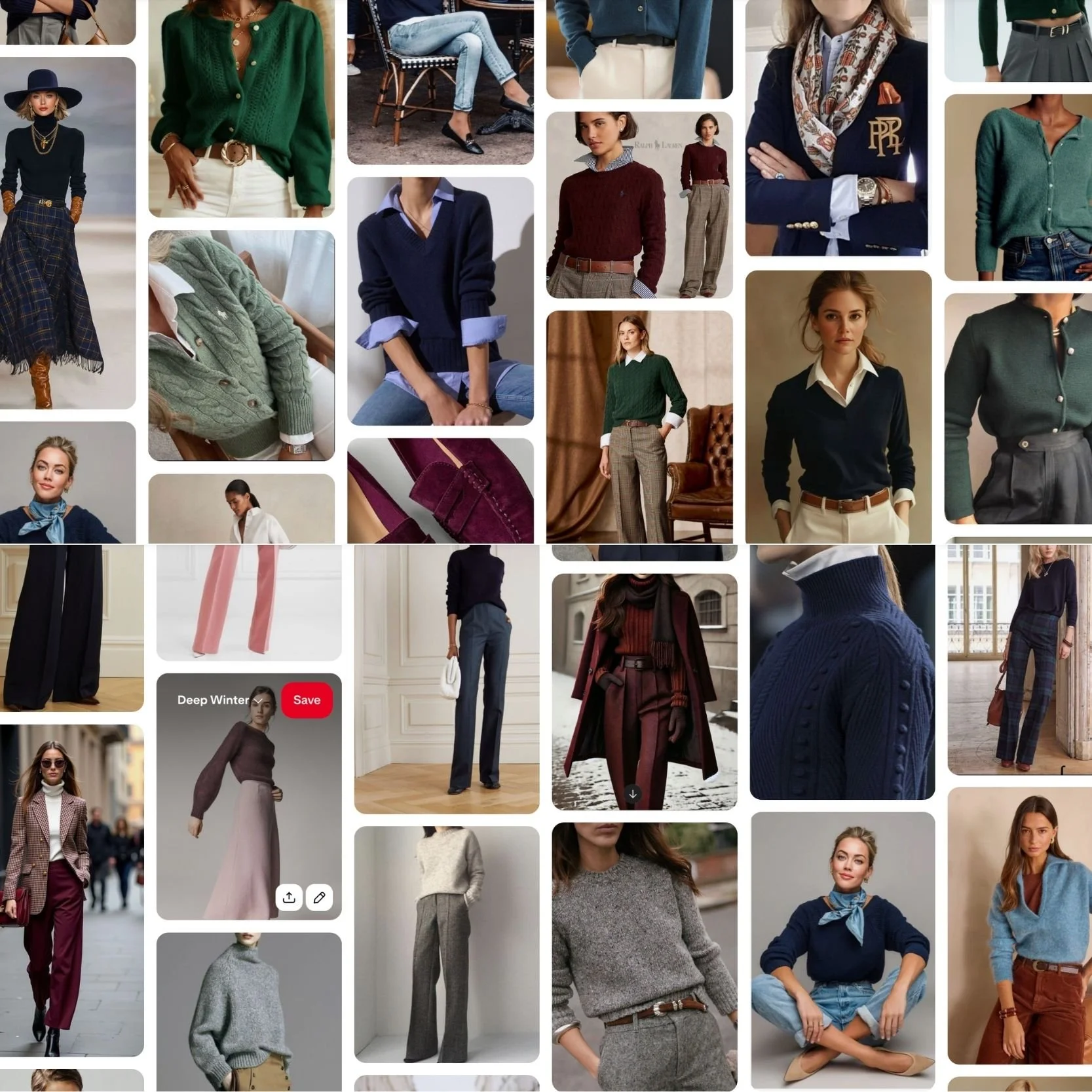
The Deep Winter Revelation
Here is where the data surprised me.
With my green eyes, dark blonde hair, and pale skin, traditional charts would never place me in Deep Winter. That category is usually reserved for the high-contrast "Snow White" types with black hair. Think Anne Hathaway and Kendall Jenner. I couldn't find a single example online of a Deep Winter with my specific coloring.
But the AI was right. When I swapped the beige for Espresso, the camel for Charcoal, and the cream for Crisp White, the shift was undeniable. I realized that my features needed contrast to pop. Those "safe" warm neutrals were actively working against me.
Today, my standard is defined by the Deep Winter power players: Emerald Green, Ink Navy, Burgundy, and bright, blue-based Reds. I never touched jewel tones before; now, I rarely leave the house without them.
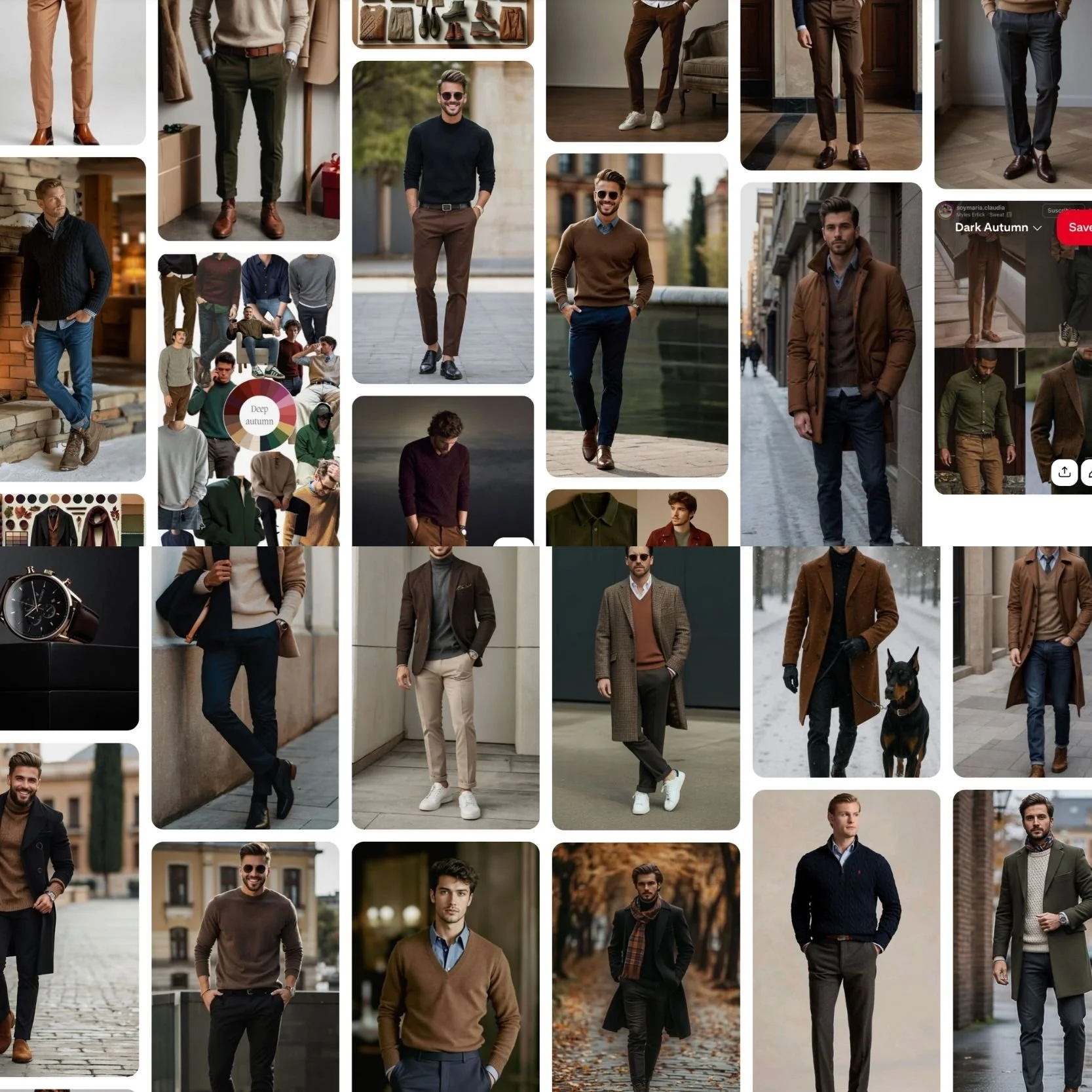
The Dark Autumn
Of course, the standard applies to him, too.
My husband fits the classic Tall, Dark, and Handsome archetype: deep brown - almost black - eyes, tan skin, and dark brown hair. Naturally, he gravitates toward the executive staples: Navy, Light Blue, Black, and White.
Our analysis pinned him as a Dark Autumn.
The irony? Dark Autumn palettes are heavy on warm browns, rusts, and moss greens - colors he doesn't particularly love. And this brings us to the most important rule of color analysis: You don't have to wear the whole palette.
He indexes toward the coolest end of the Dark Autumn spectrum. He leans into the deep blues and the darkest chocolates, ignoring the pumpkin oranges and rusts. You don't have to wear a color just because it's on your card. You just have to find the intersection of Your Season and Your Taste.
At the end of the day, confidence is the ultimate metric. If you look in the mirror and feel powerful, wear it. Feeling good is what gives you presence.
(In his case, though... he can wear what he wants, so long as I approve.)